Tell us about the job
Takes about a minute. No obligation.
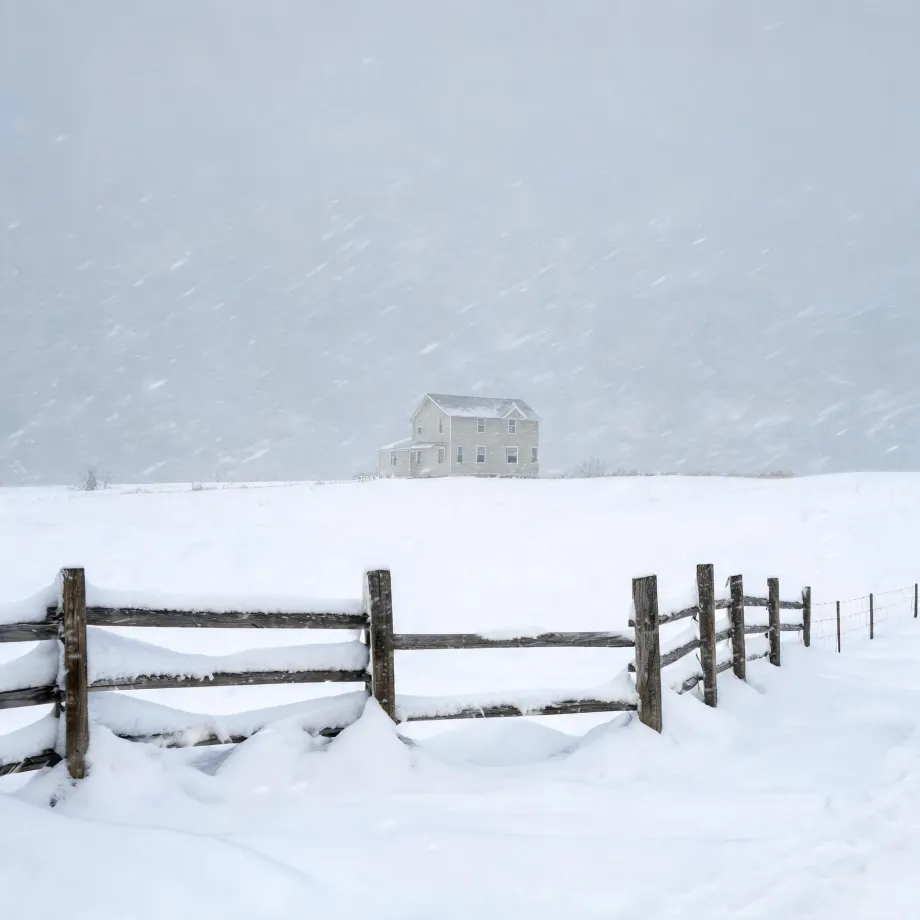
Burner assemblies and ignition systems in Slope County take a long, unbroken run of cycling every year. Homes in Slope County, ND run heat about nine months a year, from September through May. A contractor diagnosing a furnace here checks the heat exchanger for fatigue cracks and the ignitor for brittleness before moving to anything downstream, because those are the parts that bear the load directly. A system that has been undersized or poorly maintained shows that wear sooner than the homeowner expects.
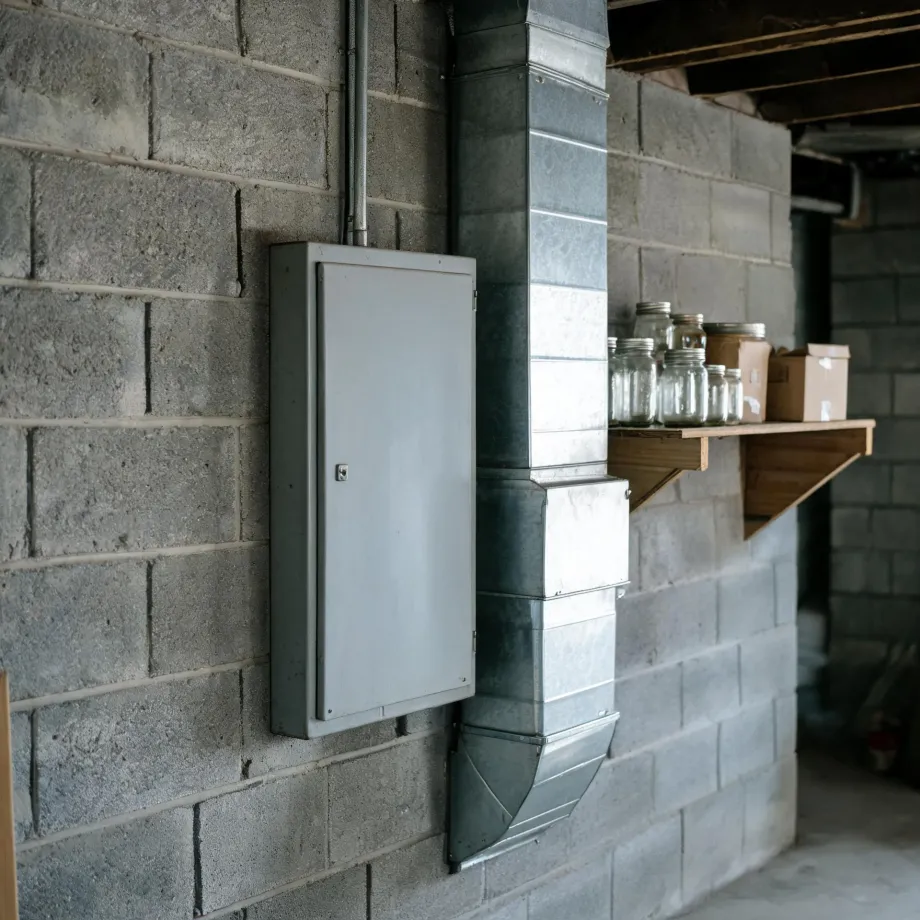
Furnace work in houses this old often stalls at the parts question. Half the homes in Slope County, North Dakota were built in 1961 or earlier (2020-2024 ACS 5-year). A system that went into a house built then has likely been replaced once or twice since, but the replacement equipment in the oldest homes can itself be a generation behind current production runs, and sourcing components for it takes longer than it does for current-generation units. When a contractor opens a furnace here, what they are looking for is whether the heat exchanger, the igniter, or the control board has a supply chain still behind it.
The Parts of a Furnace a Contractor Checks First
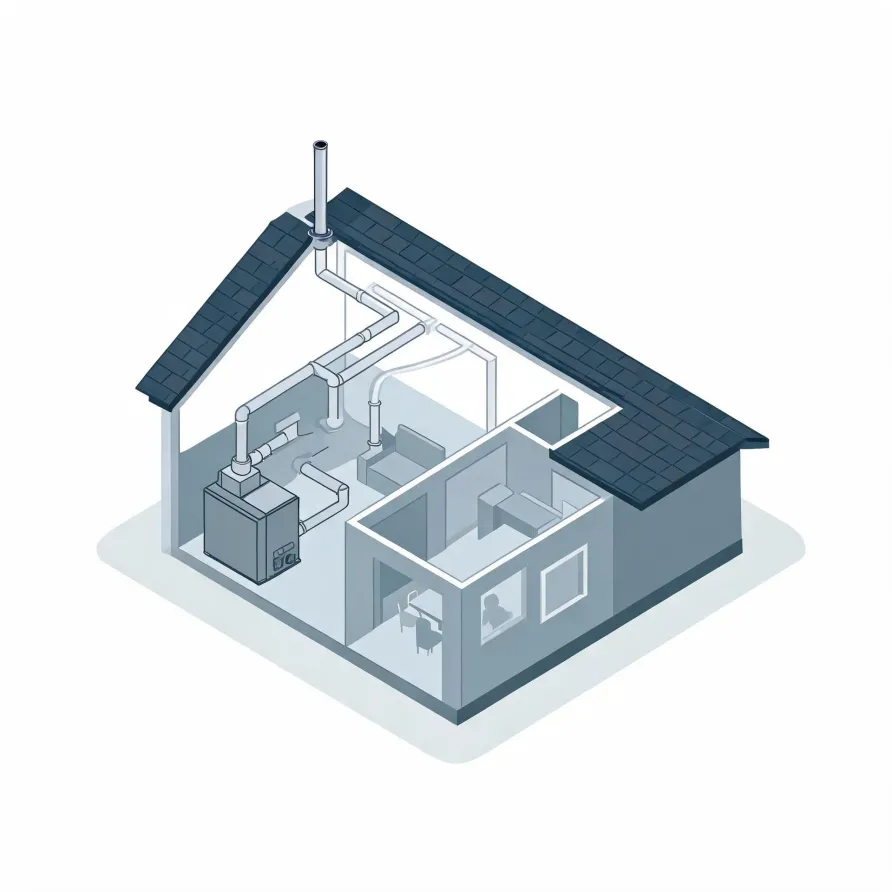
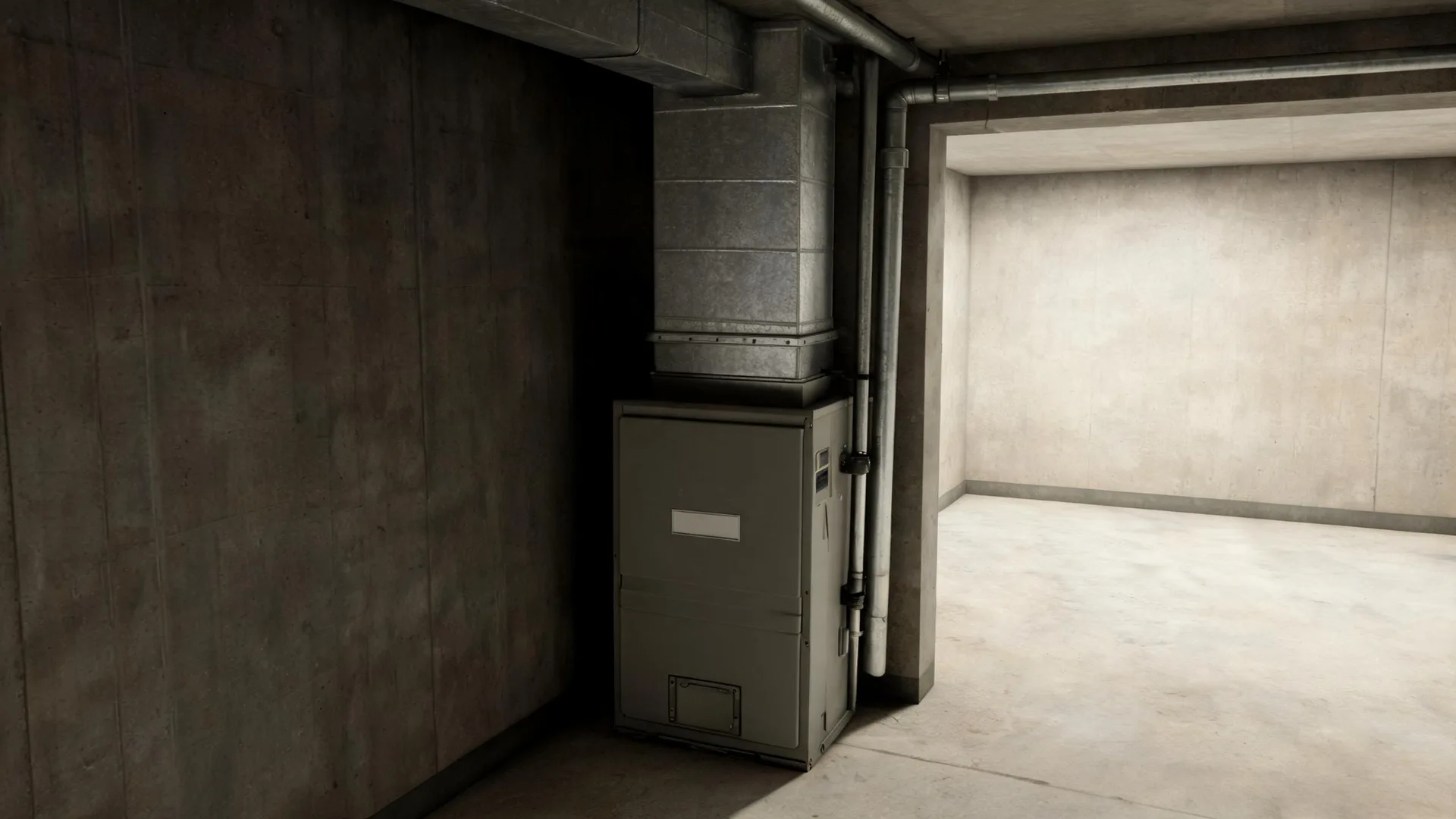
The furnace itself sits in a basement, utility room, or closet and is the piece a contractor goes to first. Inside it, the heat exchanger is what a contractor looks at closely: cracks or corrosion there let combustion gases into the living space. The burners, the igniter, and the flame sensor are the other components inside the cabinet that fail most often and are examined early.
The blower motor and its fan wheel push conditioned air out through the supply ducts and sit in the lower section of the furnace cabinet. The flue pipe runs from the furnace to an exterior wall or roof and carries exhaust gases out. The thermostat on the wall is where a contractor starts to rule out a controls problem before opening anything up.
The drawing shows a typical furnace layout, and a licensed contractor determines which components apply to the specific system and installation in your home.
Find a contractor in Slope CountySlope County by the Numbers
117 severe weather events were recorded in Slope County, North Dakota between 2015 and 2024.
NOAA National Centers for Environmental Information, Storm Events Database, bulk CSV export, events 2015-01-01 through 2024-12-31.Half the homes in Slope County, North Dakota were built in 1961 or earlier (2020-2024 ACS 5-year).
U.S. Census Bureau, 2020-2024 American Community Survey 5-Year EstimatesSlope County, North Dakota holds 456 housing units (2020-2024 ACS 5-year).
U.S. Census Bureau, 2020-2024 American Community Survey 5-Year EstimatesOwners occupy 80.7% of the occupied homes in Slope County, North Dakota (2020-2024 ACS 5-year).
U.S. Census Bureau, 2020-2024 American Community Survey 5-Year EstimatesCodes & Standards Governing Furnace Repair in Slope County, North Dakota5 sourced rules and standards
What the repair visit looks like
Non-weatherized gas furnaces manufactured on or after November 19, 2015 must reach 80.0 percent AFUE.
Non-weatherized oil-fired furnaces manufactured on or after November 19, 2015 must reach 83.0 percent AFUE.
Mobile home gas furnaces manufactured on or after November 19, 2015 must reach 80.0 percent AFUE.
Non-weatherized gas furnaces manufactured on or after December 18, 2028 must reach 95.0 percent AFUE, up from the 80.0 percent minimum that applies to units manufactured before that date.
Licensing Rules for HVAC Repair in Slope County, North Dakota
North Dakota requires a contractor licence once the cost, value or price of a job exceeds four thousand dollars, and an unlicensed contractor may not bring a claim or a lawsuit in a North Dakota court over the work.
Severe Weather Events in Slope County
Extreme weather puts real hours on a furnace. The more a system is forced to run hard against cold, the more repair work it accumulates over time, and that pattern is shaped by what the local climate actually does.
117 severe weather events, 2015–2024. Source: NOAA National Centers for Environmental Information, Storm Events Database.