Tell us about the job
Takes about a minute. No obligation.
Sizing a furnace for Slope County means sizing it for a burner and heat exchanger that cycle all the way through winter, deep into spring, and back again before fall. Homes in Slope County, ND run heat about nine months a year, from September through May. A contractor quoting an install here has to work out what that sustained demand puts on the ignition system and heat exchanger before settling on equipment capacity, because a unit that is marginal for the load will degrade faster on those components than the homeowner will expect. Idle time does not save a furnace that was never right for the job.
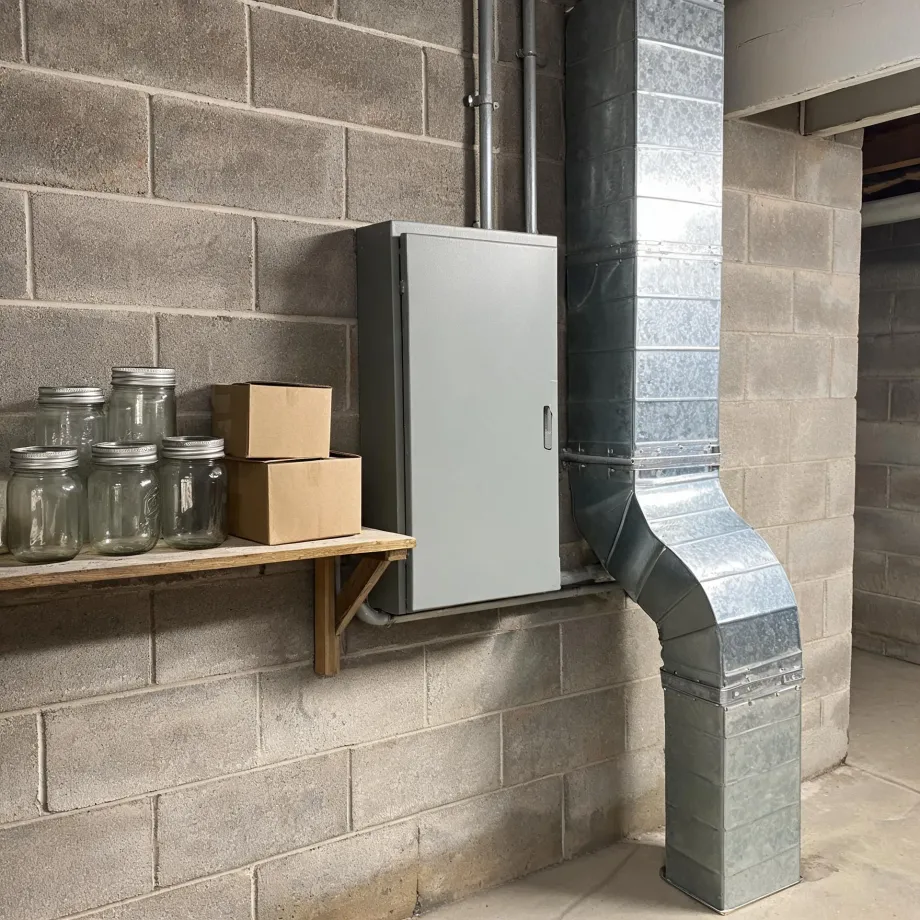
Existing ductwork in this county's homes shapes a furnace installation more than the unit itself. Half the homes in Slope County, North Dakota were built in 1961 or earlier (2020-2024 ACS 5-year). Ductwork laid out for earlier equipment was routed and sized for different air volumes, and a contractor putting in a modern furnace has to establish whether what is already in the walls will carry it. If the runs are undersized or the layout creates dead zones, the new unit performs against the ductwork rather than with it. The electrical is a separate check: service panels in houses of this vintage were not configured for current draw requirements, so that gets confirmed before anything is quoted.
What Gets Installed With a New Furnace
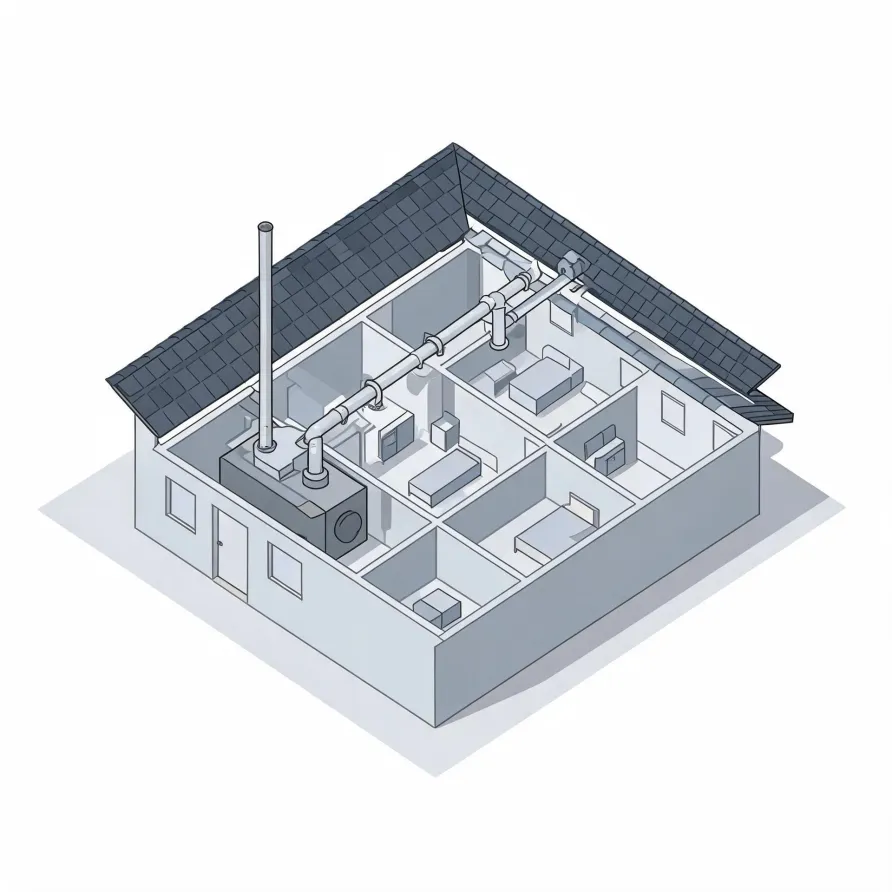
The furnace itself sits in a mechanical room, basement, or utility closet and is the heart of what gets purchased. Attached to it is the flue or vent pipe, which runs through the wall or roof to carry combustion gases outside. The air handler fan assembly inside the furnace cabinet moves conditioned air into the duct system.
The thermostat mounts on an interior wall and is the control point the homeowner touches every day. A new furnace installation also brings a fresh filter housing and, in most setups, a condensate drain line that routes moisture away from the unit to a nearby floor drain or outside.
The drawing beside this text shows a typical layout, and a licensed contractor determines exactly what applies to your house.
Find a contractor in Slope CountySlope County by the Numbers
117 severe weather events were recorded in Slope County, North Dakota between 2015 and 2024.
NOAA National Centers for Environmental Information, Storm Events Database, bulk CSV export, events 2015-01-01 through 2024-12-31.Half the homes in Slope County, North Dakota were built in 1961 or earlier (2020-2024 ACS 5-year).
U.S. Census Bureau, 2020-2024 American Community Survey 5-Year EstimatesSlope County, North Dakota holds 456 housing units (2020-2024 ACS 5-year).
U.S. Census Bureau, 2020-2024 American Community Survey 5-Year EstimatesOwners occupy 80.7% of the occupied homes in Slope County, North Dakota (2020-2024 ACS 5-year).
U.S. Census Bureau, 2020-2024 American Community Survey 5-Year EstimatesFurnace Installation Rules for Slope County, North Dakota5 codes and standards
What Happens During a Furnace Installation in Slope County
Non-weatherized gas furnaces manufactured on or after November 19, 2015 must reach 80.0 percent AFUE.
Non-weatherized oil-fired furnaces manufactured on or after November 19, 2015 must reach 83.0 percent AFUE.
Mobile home gas furnaces manufactured on or after November 19, 2015 must reach 80.0 percent AFUE.
Non-weatherized gas furnaces manufactured on or after December 18, 2028 must reach 95.0 percent AFUE, up from the 80.0 percent minimum that applies to units manufactured before that date.
Licensing and Legal Requirements in Slope County, North Dakota
North Dakota requires a contractor licence once the cost, value or price of a job exceeds four thousand dollars, and an unlicensed contractor may not bring a claim or a lawsuit in a North Dakota court over the work.
Severe Weather Events in Slope County
Slope County's climate puts real pressure on heating equipment, and that pressure compounds over time. A furnace sized and installed for local conditions holds up differently than one that was not.
117 severe weather events, 2015–2024. Source: NOAA National Centers for Environmental Information, Storm Events Database.