Tell us about the job
Takes about a minute. No obligation.
A contractor quoting a furnace installation in Stark County has to get the sizing right before anything else, because the equipment they put in has very little time off. Homes in Stark County, ND run heat about ten months a year, from September through June. The burner, heat exchanger, and ignition system cycle through that season without the long summer reprieve that masks marginal installs in milder regions. A unit that is undersized runs longer per cycle to meet the thermostat, and a poorly sealed duct system makes the same demand worse. Both failures show up in the components that work hardest, and a thorough load calculation before the job is the only way to avoid writing them into the install from day one.
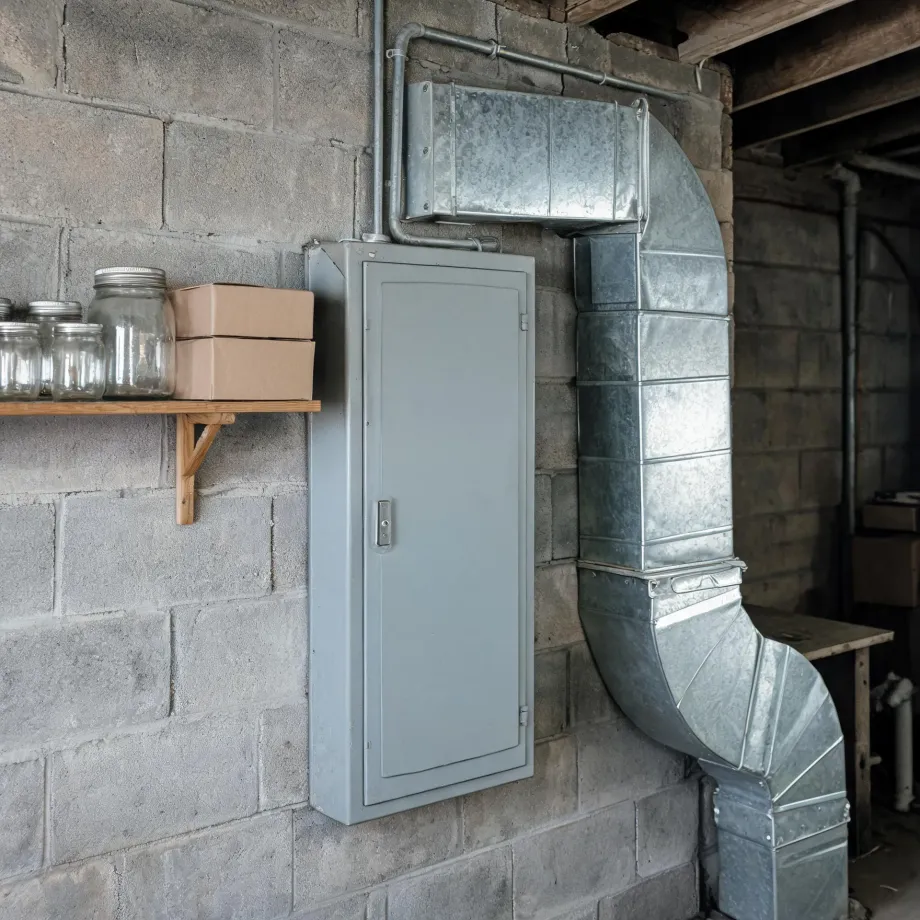
Ductwork laid down for a furnace that is no longer in the house shapes what a new installation actually costs and how long it takes. Half the homes in Stark County, North Dakota were built in 1986 or earlier (2020-2024 ACS 5-year). That generation of residential ductwork was sized and routed around equipment with different output and different airflow demands than what a contractor is putting in today. When the runs are too narrow or the layout does not match the new unit's requirements, the ductwork becomes the job, and the furnace itself is secondary to solving it.
What Gets Installed With a New Furnace
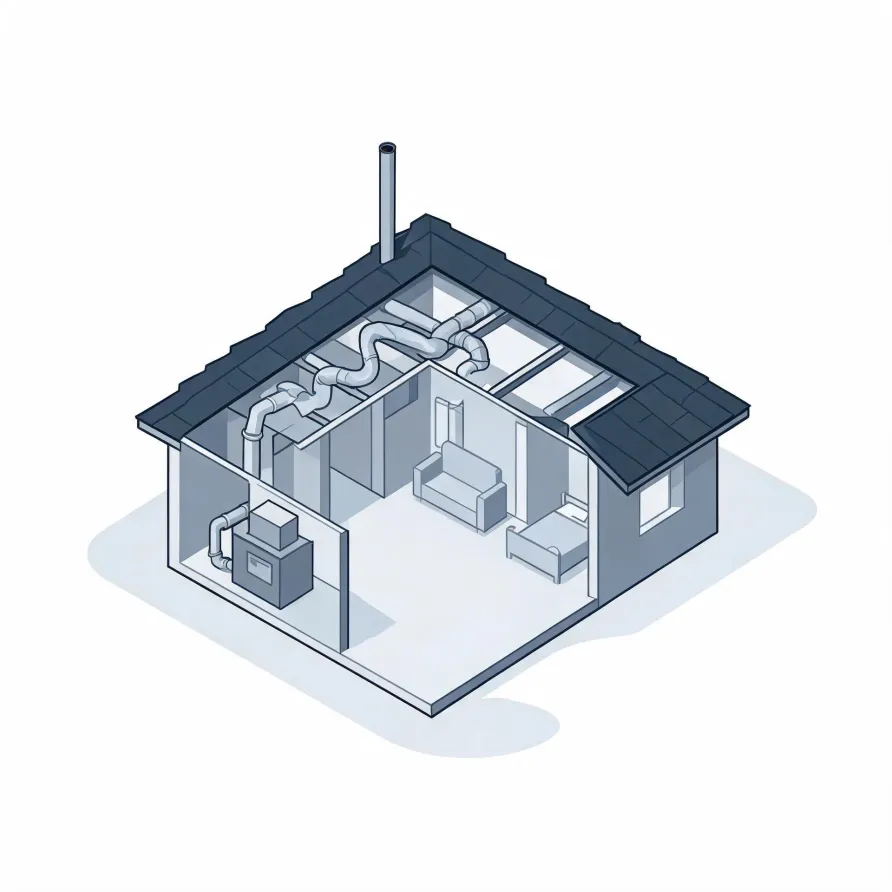
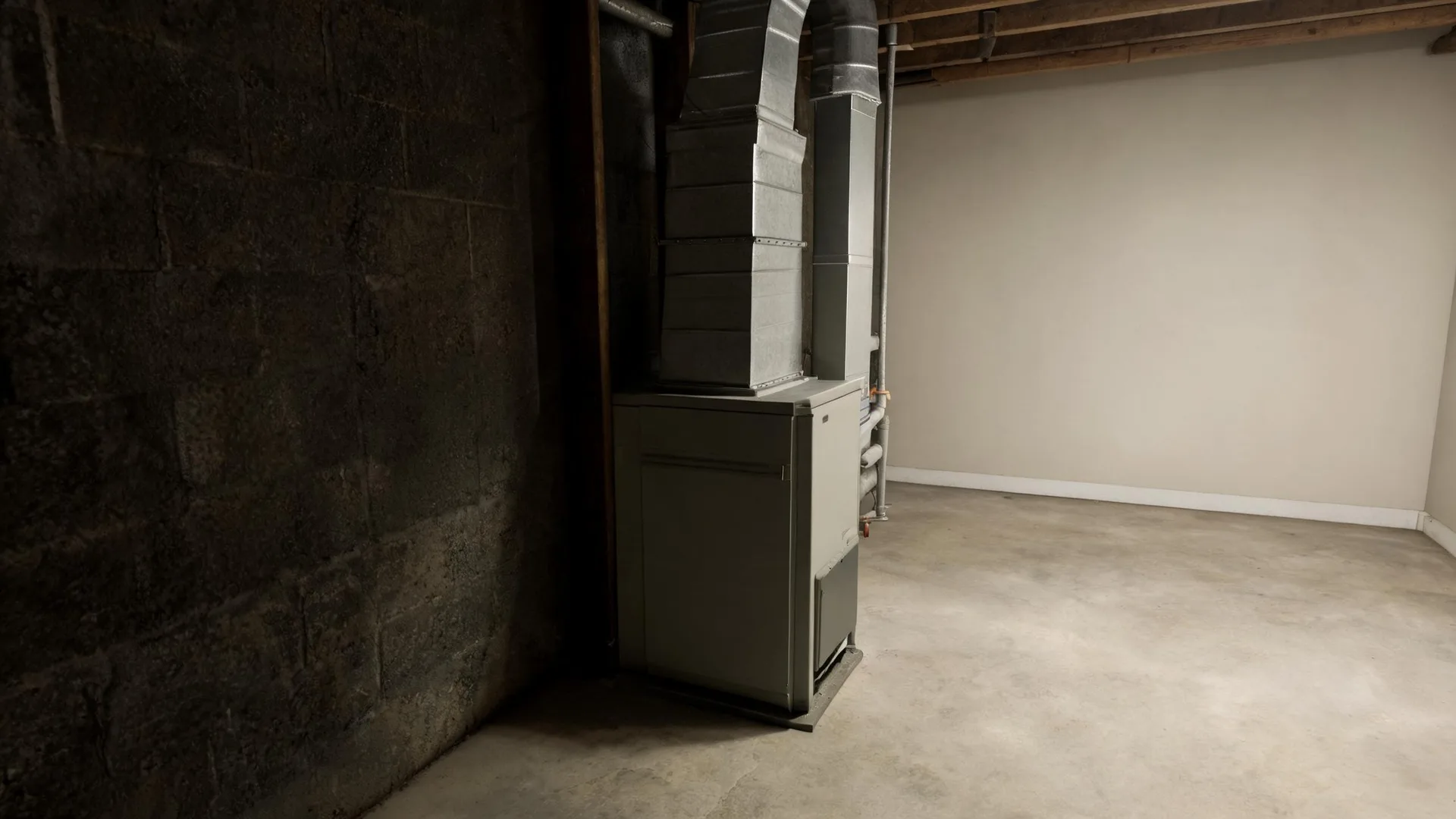
The furnace itself sits in a utility room, basement, or mechanical closet and is the box that produces the heat. A burner assembly inside it ignites fuel, and a heat exchanger transfers that heat to the air moving through. A blower motor, housed inside the same cabinet, pushes that warmed air out into the supply side of the system.
The flue pipe runs from the furnace to an exterior wall or through the roof, carrying combustion gases out of the house. A thermostat mounts on an interior wall and serves as the control point, telling the furnace when to fire and when to stop. Some installs also include a filter housing or media cabinet, positioned where return air enters the furnace cabinet.
The drawing shows a typical layout, and a licensed contractor determines exactly what applies to your house and its existing setup.
Find a contractor in Stark CountyStark County by the numbers
185 severe weather events were recorded in Stark County, North Dakota between 2015 and 2024.
NOAA National Centers for Environmental Information, Storm Events Database, bulk CSV export, events 2015-01-01 through 2024-12-31.Half the homes in Stark County, North Dakota were built in 1986 or earlier (2020-2024 ACS 5-year).
U.S. Census Bureau, 2020-2024 American Community Survey 5-Year EstimatesStark County, North Dakota holds 15,514 housing units (2020-2024 ACS 5-year).
U.S. Census Bureau, 2020-2024 American Community Survey 5-Year EstimatesOwners occupy 66.8% of the occupied homes in Stark County, North Dakota (2020-2024 ACS 5-year).
U.S. Census Bureau, 2020-2024 American Community Survey 5-Year EstimatesFurnace Installation Rules for Stark County, North Dakota5 sourced rules and standards
What Happens During a Furnace Installation in Stark County
Non-weatherized gas furnaces manufactured on or after November 19, 2015 must reach 80.0 percent AFUE.
Non-weatherized oil-fired furnaces manufactured on or after November 19, 2015 must reach 83.0 percent AFUE.
Mobile home gas furnaces manufactured on or after November 19, 2015 must reach 80.0 percent AFUE.
Non-weatherized gas furnaces manufactured on or after December 18, 2028 must reach 95.0 percent AFUE, up from the 80.0 percent minimum that applies to units manufactured before that date.
Licensing and Legal Requirements in Stark County, North Dakota
North Dakota requires a contractor licence once the cost, value or price of a job exceeds four thousand dollars, and an unlicensed contractor may not bring a claim or a lawsuit in a North Dakota court over the work.
Severe Weather Events in Stark County
Stark County winters put real demands on heating equipment, and the workload compounds when storms roll through. A furnace sized and installed for local conditions holds up differently than one that was not.
185 severe weather events, 2015–2024. Source: NOAA National Centers for Environmental Information, Storm Events Database.