Tell us about the job
Takes about a minute. No obligation.
Sizing a furnace for Hettinger County is not a calculation a contractor runs once and forgets. The burner, the heat exchanger, and the ignition system cycle through nearly the whole calendar, and a unit that is undersized for the actual load runs longer each cycle to compensate. Homes in Hettinger County, ND run heat about nine months a year, from September through May. A contractor quoting a replacement here has to establish what the house genuinely demands before settling on equipment, because an installation that looks adequate in October reveals its shortfall by February. Wear on the heat exchanger accumulates against that workload, and the ignition system shows it first.
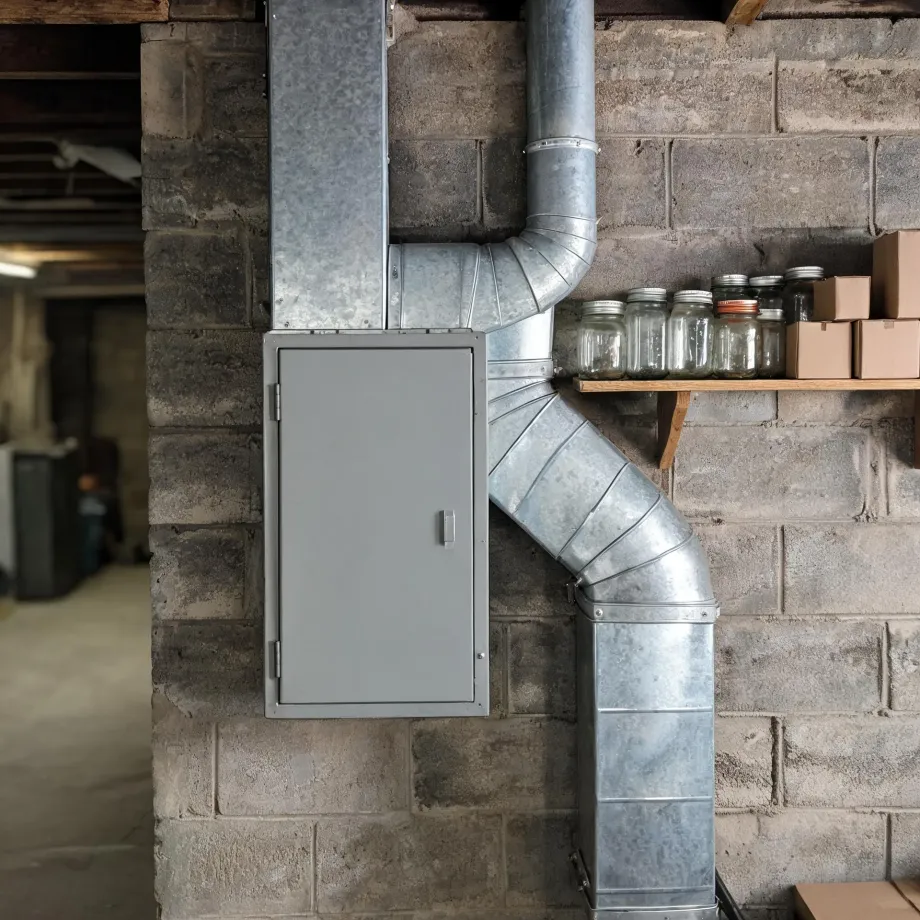
Ductwork sized for a previous generation of heating equipment is what shapes a furnace installation here more than anything else a contractor encounters. Half the homes in Hettinger County, North Dakota were built in 1964 or earlier (2020-2024 ACS 5-year). That means a large share of the houses in this county were ducted for systems long since replaced, and the duct runs, trunk sizes, and return-air paths they left behind were not laid out with today's furnaces in mind. A contractor pricing a furnace installation has to assess those runs before the equipment selection means anything, because a new furnace pushing against undersized or poorly routed ductwork will underperform regardless of its rated output.
What Gets Installed With a New Furnace
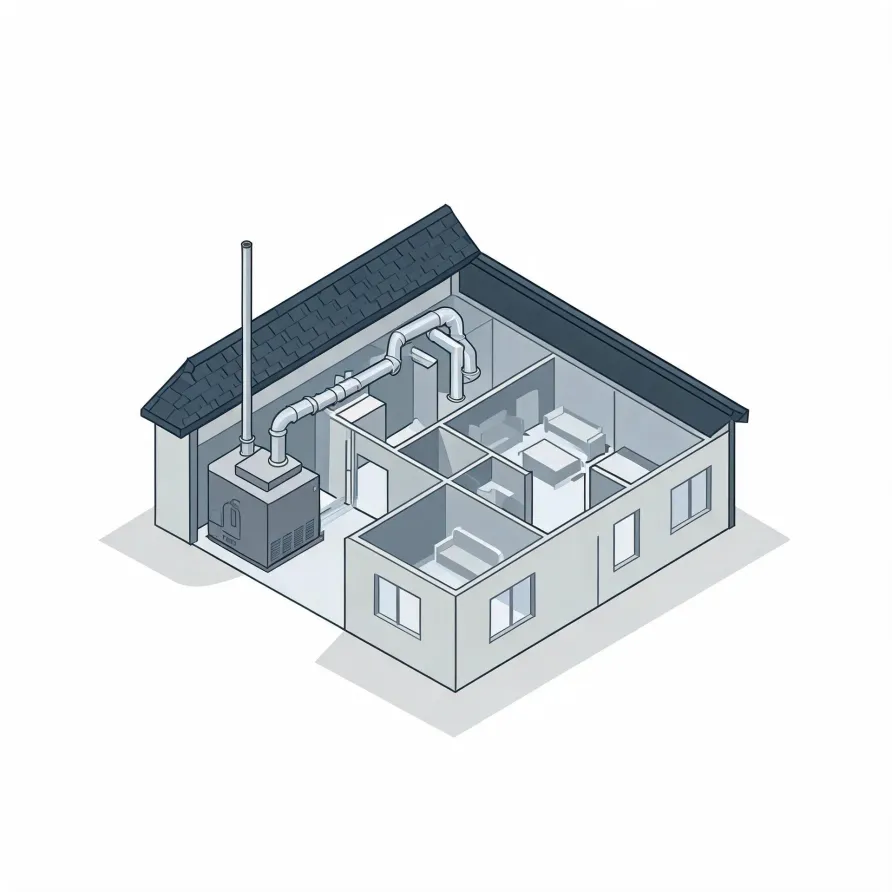
The furnace itself sits in the basement, utility room, or mechanical closet and is the unit that produces heat. A contractor mounts the air handler or blower assembly inside or directly beside it, and this is the piece that pulls air from the house, moves it across the heat exchanger, and pushes warm air back out.
The flue pipe runs from the furnace up through the house and out through the roof or an exterior wall, carrying combustion gases out of the living space. The thermostat goes on an interior wall and is the control point that tells the furnace when to fire and when to stop.
The drawing shows a typical layout, and a licensed contractor determines what applies to the specific configuration of your home.
Find a contractor in Hettinger CountyHettinger County, by the numbers
148 severe weather events were recorded in Hettinger County, North Dakota between 2015 and 2024.
NOAA National Centers for Environmental Information, Storm Events Database, bulk CSV export, events 2015-01-01 through 2024-12-31.Half the homes in Hettinger County, North Dakota were built in 1964 or earlier (2020-2024 ACS 5-year).
U.S. Census Bureau, 2020-2024 American Community Survey 5-Year EstimatesHettinger County, North Dakota holds 1,444 housing units (2020-2024 ACS 5-year).
U.S. Census Bureau, 2020-2024 American Community Survey 5-Year EstimatesOwners occupy 76.8% of the occupied homes in Hettinger County, North Dakota (2020-2024 ACS 5-year).
U.S. Census Bureau, 2020-2024 American Community Survey 5-Year EstimatesFurnace Installation Rules for Hettinger County, North Dakota5 codes, standards, and laws
What the Installation Actually Looks Like
Non-weatherized gas furnaces manufactured on or after November 19, 2015 must reach 80.0 percent AFUE.
Non-weatherized oil-fired furnaces manufactured on or after November 19, 2015 must reach 83.0 percent AFUE.
Mobile home gas furnaces manufactured on or after November 19, 2015 must reach 80.0 percent AFUE.
Non-weatherized gas furnaces manufactured on or after December 18, 2028 must reach 95.0 percent AFUE, up from the 80.0 percent minimum that applies to units manufactured before that date.
Licensing Rules for Hettinger County, North Dakota
North Dakota requires a contractor licence once the cost, value or price of a job exceeds four thousand dollars, and an unlicensed contractor may not bring a claim or a lawsuit in a North Dakota court over the work.
Severe Weather Events in Hettinger County
Hettinger County weather puts real demands on residential heating equipment, and those demands shape what a furnace installation here needs to handle. A system sized and specified for local conditions lasts longer and works harder when it counts.
148 severe weather events, 2015–2024. Source: NOAA National Centers for Environmental Information, Storm Events Database.