Tell us about the job
Takes about a minute. No obligation.
A contractor diagnosing a furnace repair in Adams County starts with the burner assembly and ignition system, because those are the parts that cycle every time the equipment fires. Homes in Adams County, ND run heat about nine months a year, from September through May. That kind of sustained runtime accumulates wear on the components that light and sustain combustion, and by the time a homeowner notices a problem, the ignition system has often been straining for weeks. Cracks in the heat exchanger are worth checking too, since a part under long seasonal load can fail quietly before it becomes obvious.
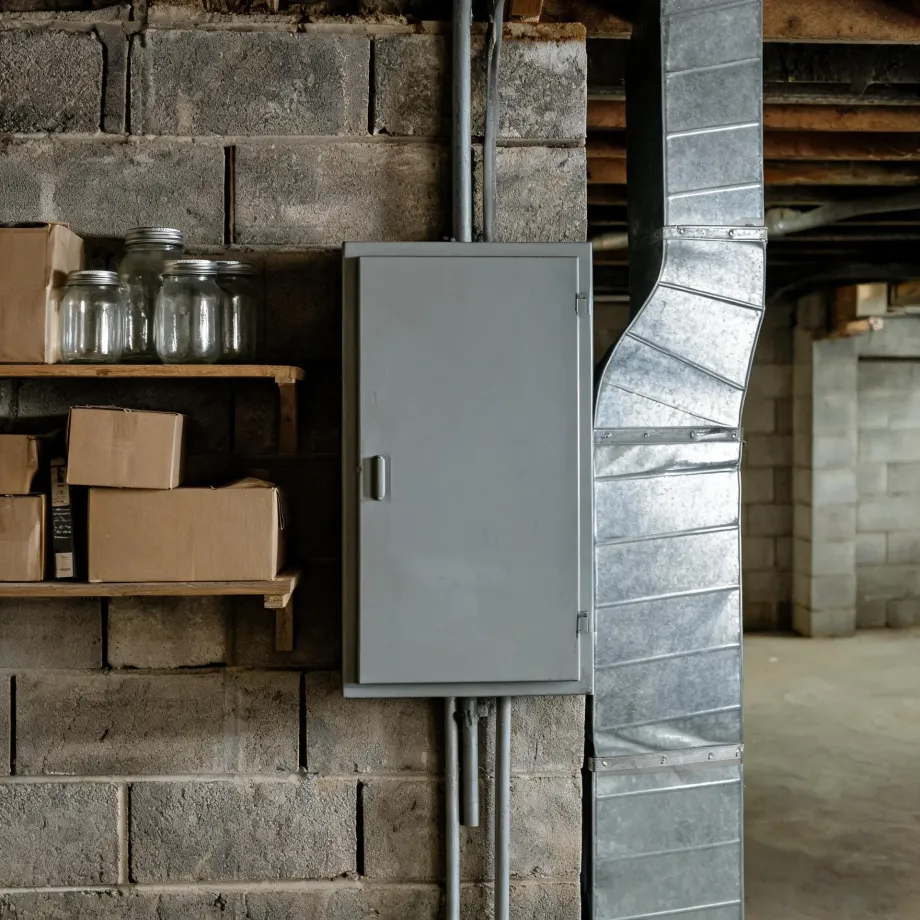
Furnace parts availability is the variable that most often determines how a repair job goes in this county. Half the homes in Adams County, North Dakota were built in 1964 or earlier (2020-2024 ACS 5-year). A system running in a house that old was almost certainly put in as a replacement, and the generation of equipment it replaced set the standard for how the duct runs were laid out and what clearances were left. When a contractor opens the unit, what they find shapes the parts order: if the manufacturer has discontinued that component line, the job changes scope before the homeowner gets a revised quote.
The Parts of a Furnace a Contractor Checks First
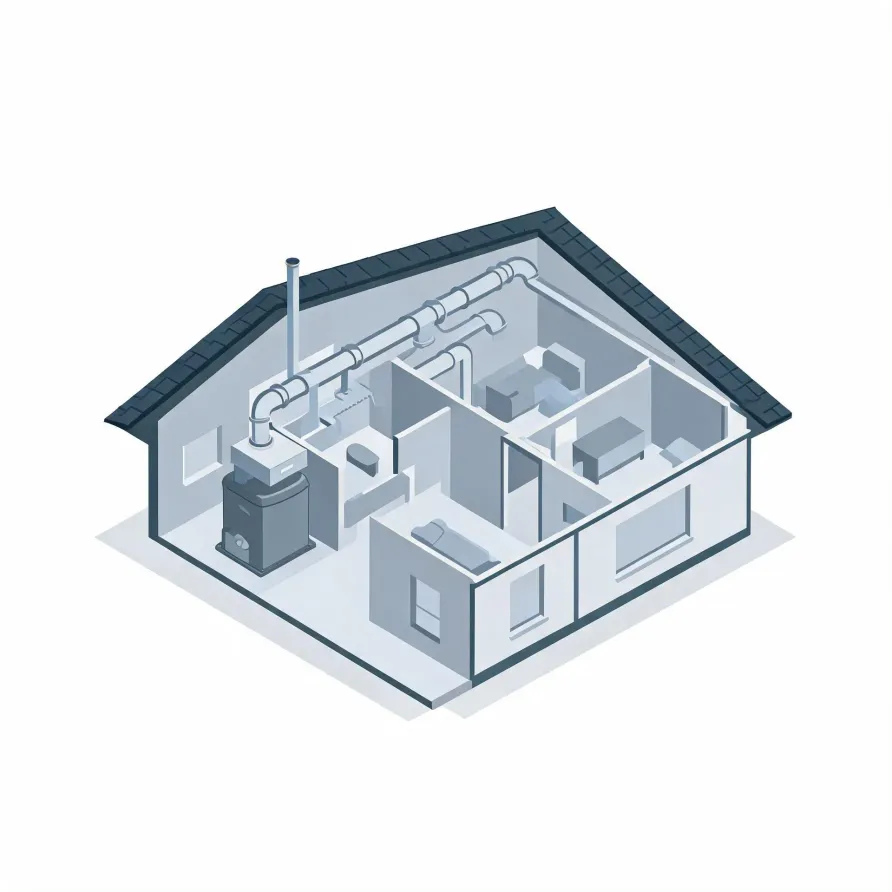
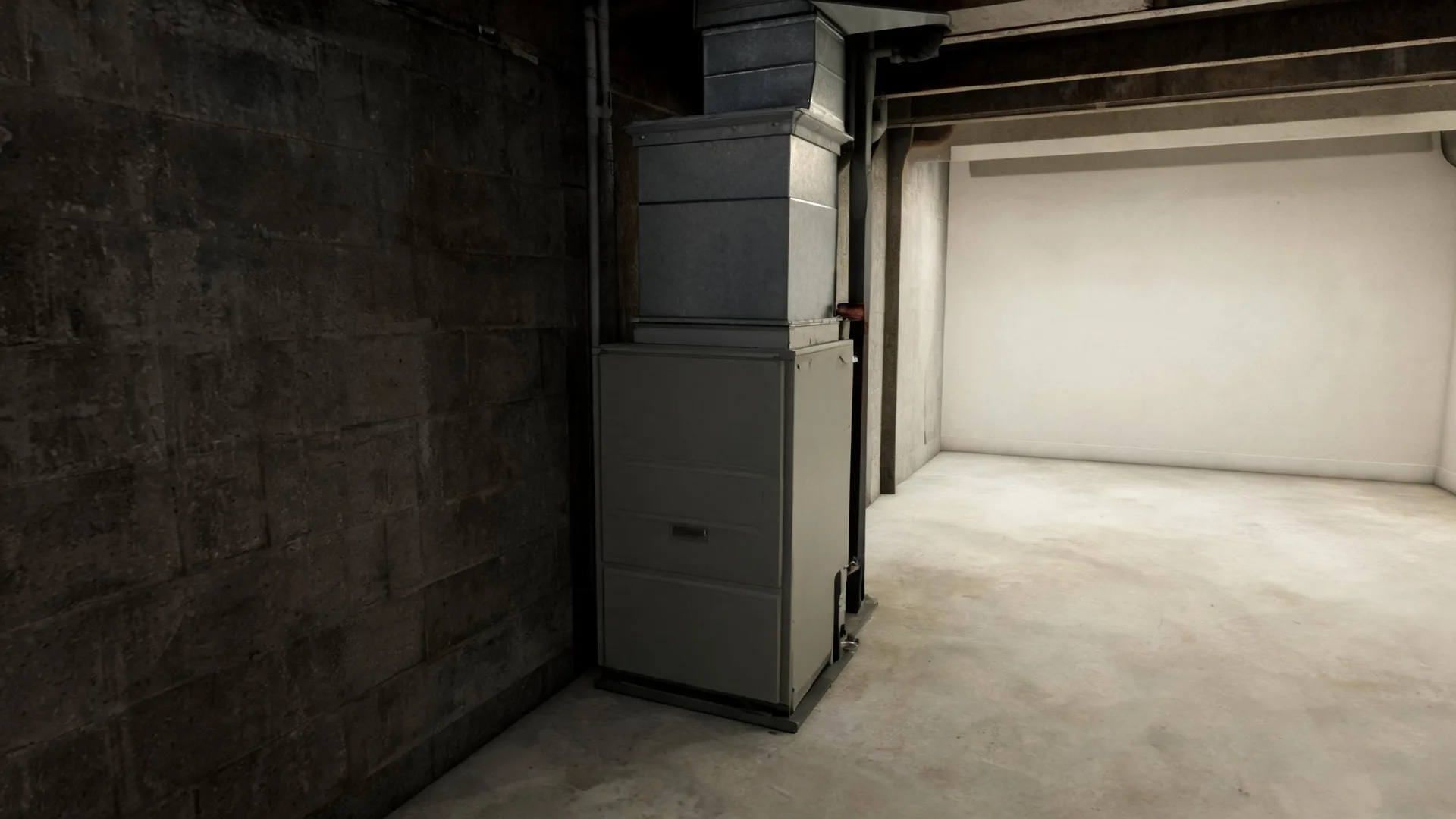
The furnace itself sits in a utility space, basement, or closet and is the heart of the system. Inside it, the heat exchanger is the piece a contractor looks at early: cracks or corrosion there let combustion gases into the living space. The burners, igniter, and flame sensor sit in that same cabinet and are frequent sources of a furnace that won't start or won't stay running.
The blower motor and its wheel move conditioned air out of the cabinet and into the supply side of the house. On gas units, the draft inducer pulls combustion gases out through the flue. The control board ties all of it together, and when a symptom is hard to pin down, that board is often where a contractor looks last.
The drawing beside this text shows a typical furnace layout, and a licensed contractor determines which parts apply to the specific equipment and installation in your home.
Find a contractor in Adams CountyAdams County, by the numbers
150 severe weather events were recorded in Adams County, North Dakota between 2015 and 2024.
NOAA National Centers for Environmental Information, Storm Events Database, bulk CSV export, events 2015-01-01 through 2024-12-31.Half the homes in Adams County, North Dakota were built in 1964 or earlier (2020-2024 ACS 5-year).
U.S. Census Bureau, 2020-2024 American Community Survey 5-Year EstimatesAdams County, North Dakota holds 1,326 housing units (2020-2024 ACS 5-year).
U.S. Census Bureau, 2020-2024 American Community Survey 5-Year EstimatesOwners occupy 71.8% of the occupied homes in Adams County, North Dakota (2020-2024 ACS 5-year).
U.S. Census Bureau, 2020-2024 American Community Survey 5-Year EstimatesCodes & Standards Governing Furnace Repair in Adams County, North Dakota5 sourced rules and standards
What HVAC Repair Looks Like in Adams County
Non-weatherized gas furnaces manufactured on or after November 19, 2015 must reach 80.0 percent AFUE.
Non-weatherized oil-fired furnaces manufactured on or after November 19, 2015 must reach 83.0 percent AFUE.
Mobile home gas furnaces manufactured on or after November 19, 2015 must reach 80.0 percent AFUE.
Non-weatherized gas furnaces manufactured on or after December 18, 2028 must reach 95.0 percent AFUE, up from the 80.0 percent minimum that applies to units manufactured before that date.
Licensing and Legal Requirements in Adams County, North Dakota
North Dakota requires a contractor licence once the cost, value or price of a job exceeds four thousand dollars, and an unlicensed contractor may not bring a claim or a lawsuit in a North Dakota court over the work.
Severe Weather Events in Adams County
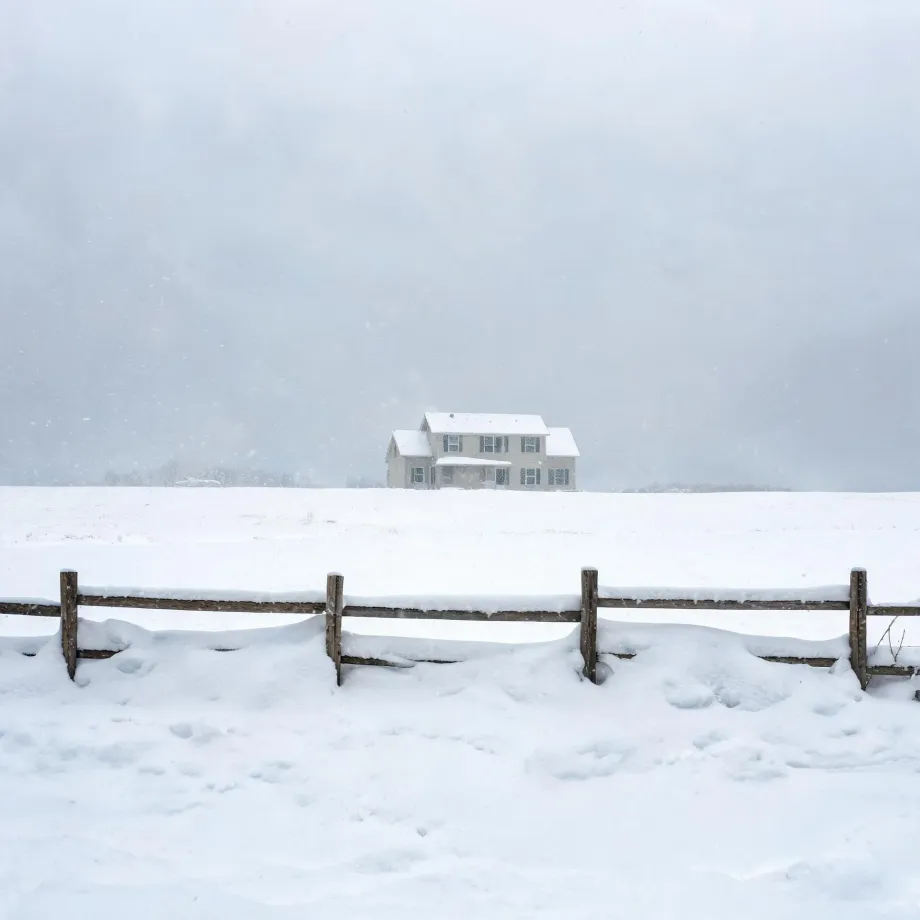
Extreme weather puts real hours on a furnace. A heating system that carries a home through hard North Dakota winters works harder than one that rarely faces a test, and that workload shows up sooner or later as wear that needs attention.
150 severe weather events, 2015–2024. Source: NOAA National Centers for Environmental Information, Storm Events Database.