Tell us about the job
Takes about a minute. No obligation.
Sizing a furnace for Foster County starts with accepting what the burner and heat exchanger are actually asked to carry. Homes in Foster County, ND run heat about nine months a year, from September through May. A unit that is undersized cycles harder and more often to keep up, and the ignition system pays for that in wear. A contractor doing the load calculation here has to get the numbers right the first time, because a mismatch does not hide in a short off-season.
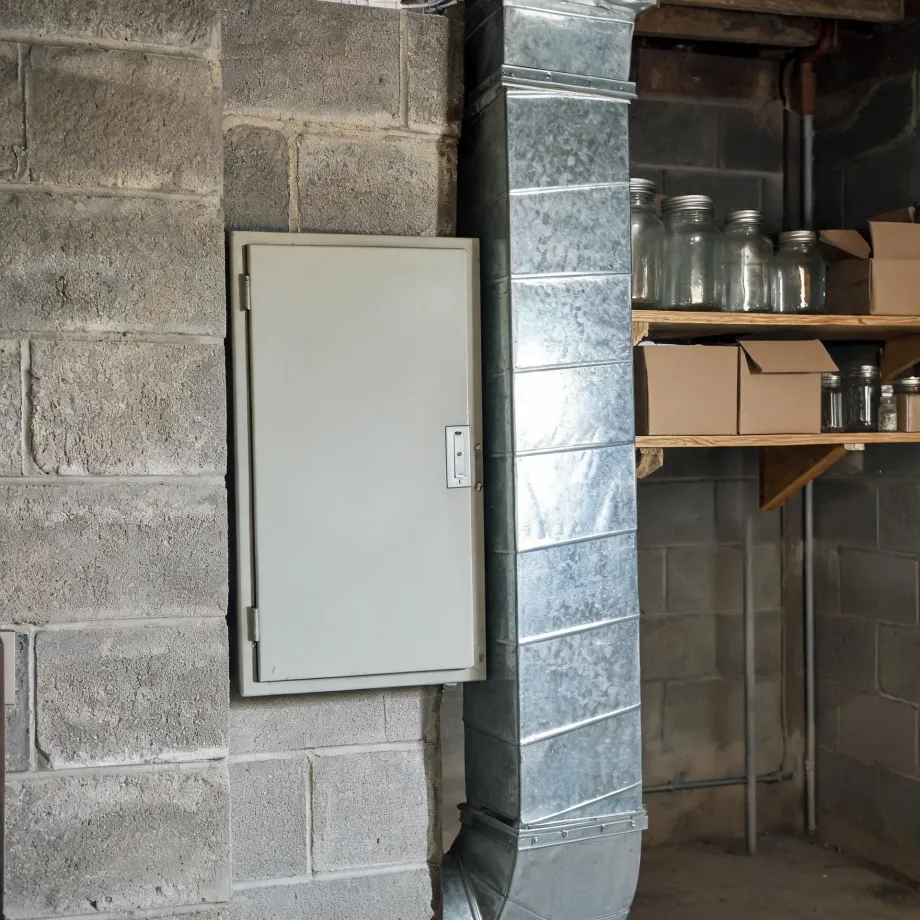
Ductwork laid into a house tells a contractor more about a furnace installation job than the furnace itself does. Half the homes in Foster County, North Dakota were built in 1973 or earlier (2020-2024 ACS 5-year). Equipment has been swapped out over the decades, but the ducts behind the walls are often original, sized for whatever system the builder specified. A new furnace pushing more air through passages that were never meant to carry it creates pressure and distribution problems that show up after the install, not before. The contractor has to assess whether the existing duct runs can handle what the new unit will deliver, and that assessment shapes the quote before any equipment gets priced.
What Goes Into a Furnace Installation
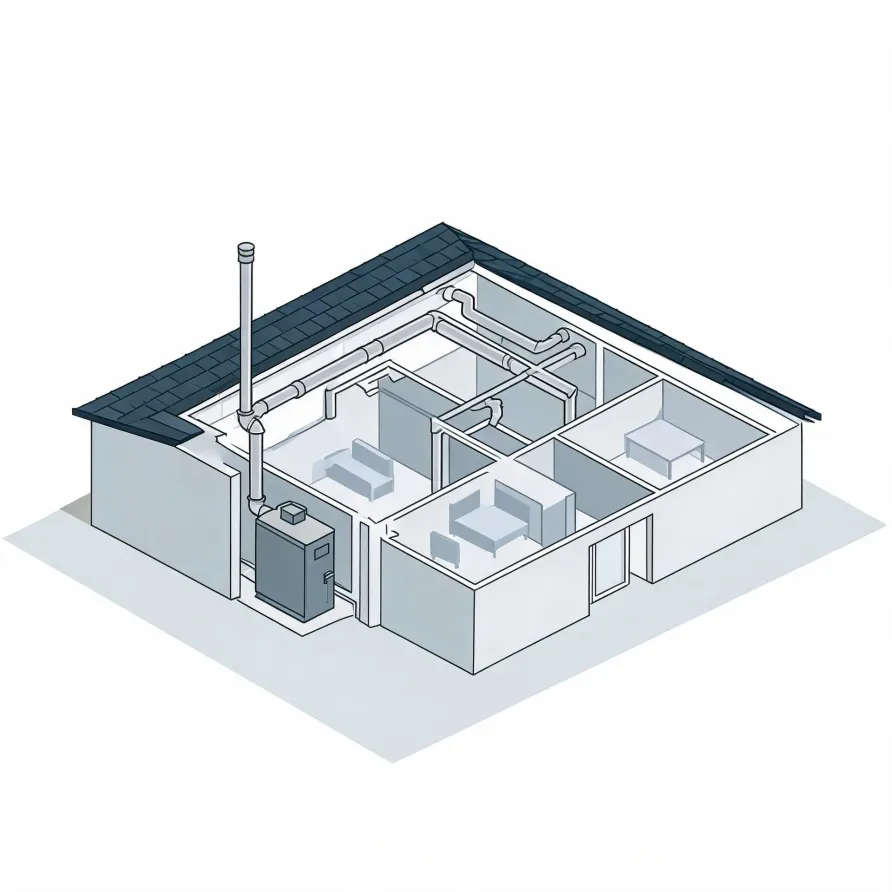
The furnace itself sits in a utility space, basement, or closet and is the unit a homeowner would recognize on sight. Inside it, a burner assembly fires the heat, and a heat exchanger transfers that heat to the air moving through the system. A blower motor then pushes the conditioned air out into the house.
A flue pipe runs from the furnace to an exterior wall or roof, carrying combustion gases out of the home. Alongside the furnace, a thermostat mounts on an interior wall and serves as the control point, telling the system when to fire and when to stop.
The drawing here shows a typical layout, and a licensed contractor determines exactly what applies to your house.
Find a contractor in Foster CountyFoster County, by the numbers
101 severe weather events were recorded in Foster County, North Dakota between 2015 and 2024.
NOAA National Centers for Environmental Information, Storm Events Database, bulk CSV export, events 2015-01-01 through 2024-12-31.Half the homes in Foster County, North Dakota were built in 1973 or earlier (2020-2024 ACS 5-year).
U.S. Census Bureau, 2020-2024 American Community Survey 5-Year EstimatesFoster County, North Dakota holds 1,775 housing units (2020-2024 ACS 5-year).
U.S. Census Bureau, 2020-2024 American Community Survey 5-Year EstimatesOwners occupy 79.7% of the occupied homes in Foster County, North Dakota (2020-2024 ACS 5-year).
U.S. Census Bureau, 2020-2024 American Community Survey 5-Year EstimatesFurnace & HVAC Installation Rules for Foster County, North Dakota5 sourced standards & codes
What happens when the contractor comes out
Non-weatherized gas furnaces manufactured on or after November 19, 2015 must reach 80.0 percent AFUE.
Non-weatherized oil-fired furnaces manufactured on or after November 19, 2015 must reach 83.0 percent AFUE.
Mobile home gas furnaces manufactured on or after November 19, 2015 must reach 80.0 percent AFUE.
Non-weatherized gas furnaces manufactured on or after December 18, 2028 must reach 95.0 percent AFUE, up from the 80.0 percent minimum that applies to units manufactured before that date.
Licensing Rules for HVAC Work in Foster County, North Dakota
North Dakota requires a contractor licence once the cost, value or price of a job exceeds four thousand dollars, and an unlicensed contractor may not bring a claim or a lawsuit in a North Dakota court over the work.
Severe Weather Events in Foster County
Foster County's climate puts real demand on furnace equipment, and that demand compounds over years of hard winters. A furnace sized and installed for local conditions handles that load differently than one spec'd for somewhere milder.
101 severe weather events, 2015–2024. Source: NOAA National Centers for Environmental Information, Storm Events Database.