Tell us about the job
Takes about a minute. No obligation.
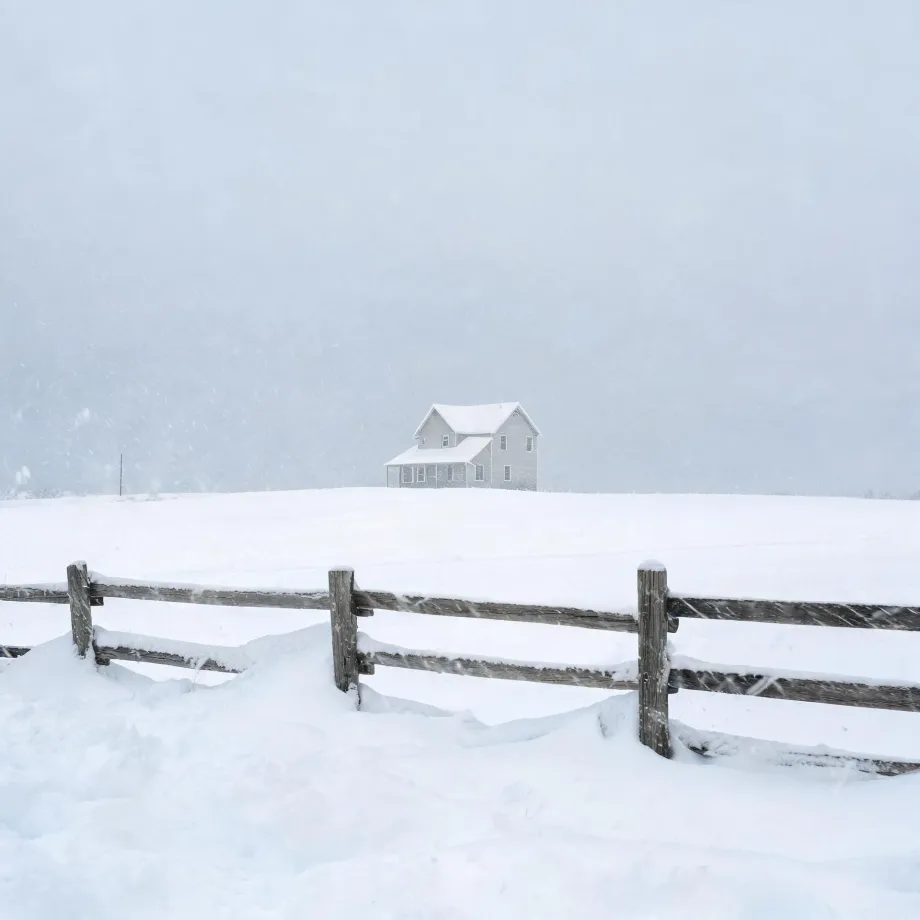
A contractor quoting a furnace installation in Wells County has to get the load calculation right the first time. Homes in Wells County, ND run heat about nine months a year, from September through May. The burner, the heat exchanger, and the ignition system carry the weight of that load, cycling through the cold months and sitting idle only in summer. An undersized unit runs longer to close the gap between what it can deliver and what the house needs, and that extra cycling concentrates wear on exactly the parts that are hardest to replace. Proper sizing at install is where that problem is solved.
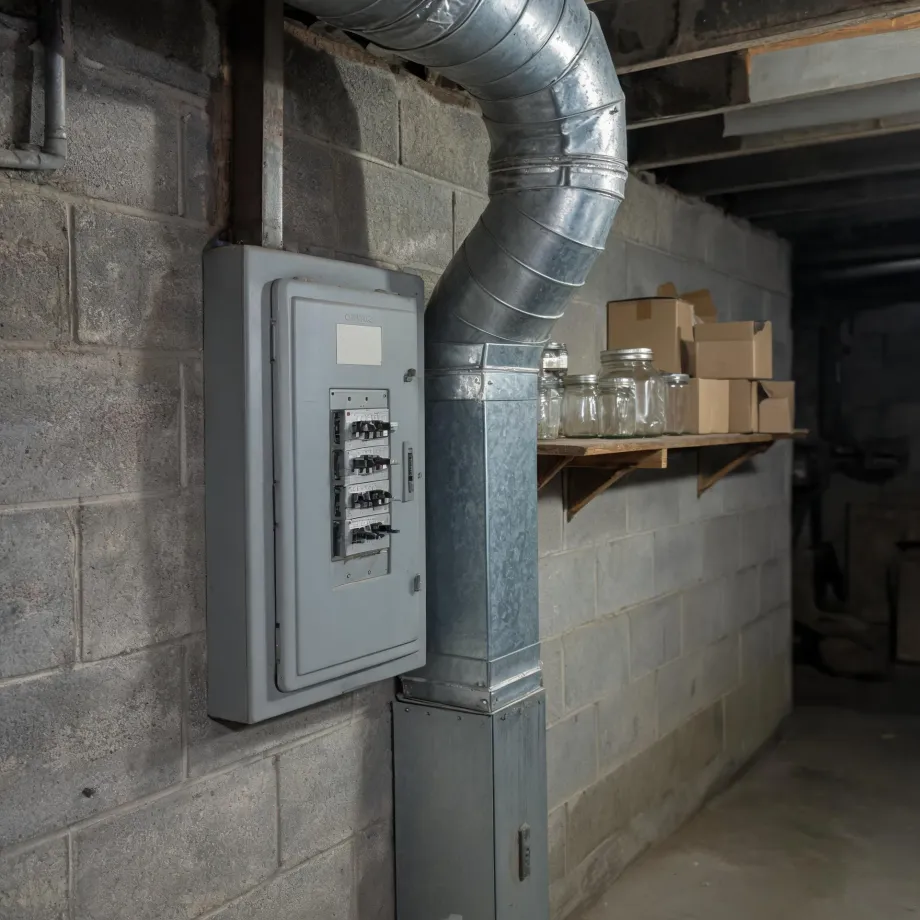
Ductwork in Wells County homes tends to tell the real story of a furnace installation before the new unit is ever chosen. Half the homes in Wells County, North Dakota were built in 1964 or earlier (2020-2024 ACS 5-year). Ducting laid out for the equipment of that era was sized around different static pressures and airflow rates than a modern furnace produces, and a contractor who skips a duct assessment is quoting the box, not the job. Electrical service follows the same logic. What a new furnace actually draws may exceed what the existing panel was wired to deliver, and that gap shows up on the bill if nobody checks first.
What Gets Installed With a New Furnace
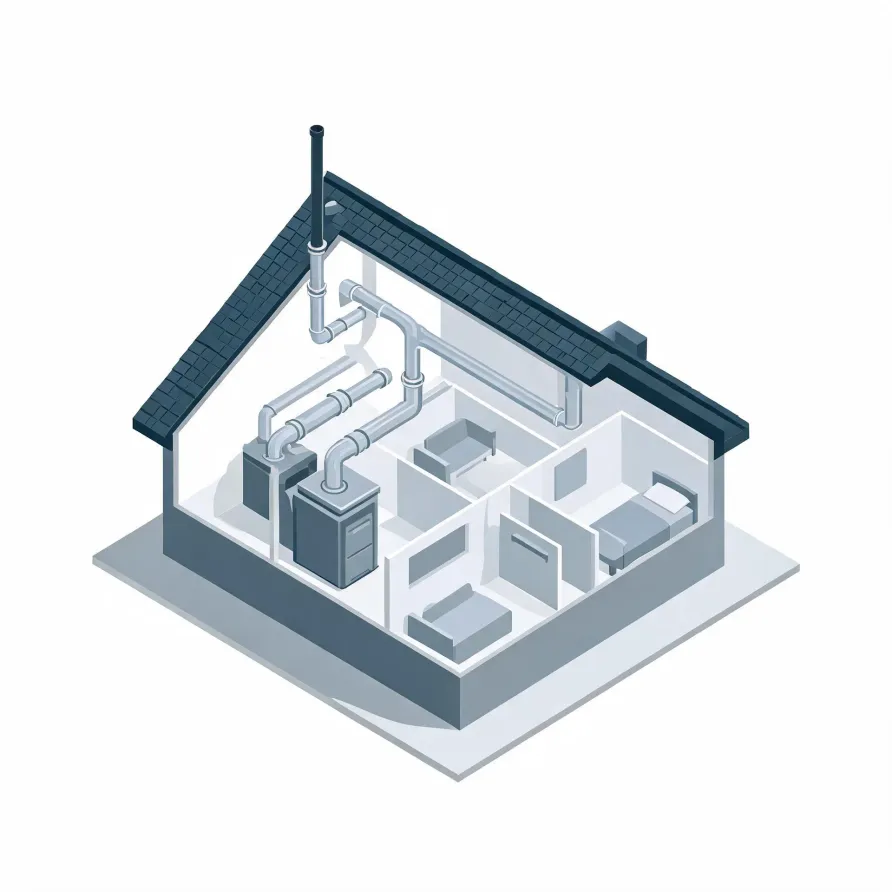
The furnace itself sits in a utility space, basement, or closet near the center of the house. It is the cabinet a homeowner would recognize on sight: the unit that draws in air, heats it, and pushes it out. A contractor sets it on a level surface with clearance on all sides for access and airflow.
The flue pipe runs from the furnace up and out through a wall or roof, carrying combustion gases outside. Alongside it, the contractor installs the air handler components built into or paired with the furnace cabinet, including the blower and the filter housing that sits at the return-air opening.
The drawing shows a general layout of these components, and a licensed contractor determines exactly how each one is positioned and connected in your home.
Find a contractor in Wells CountyWells County, North Dakota, by the numbers
115 severe weather events were recorded in Wells County, North Dakota between 2015 and 2024.
NOAA National Centers for Environmental Information, Storm Events Database, bulk CSV export, events 2015-01-01 through 2024-12-31.Half the homes in Wells County, North Dakota were built in 1964 or earlier (2020-2024 ACS 5-year).
U.S. Census Bureau, 2020-2024 American Community Survey 5-Year EstimatesWells County, North Dakota holds 2,209 housing units (2020-2024 ACS 5-year).
U.S. Census Bureau, 2020-2024 American Community Survey 5-Year EstimatesOwners occupy 77.1% of the occupied homes in Wells County, North Dakota (2020-2024 ACS 5-year).
U.S. Census Bureau, 2020-2024 American Community Survey 5-Year EstimatesFurnace & HVAC Installation Rules for Wells County, North Dakota5 codes, standards & laws
What Happens During a Furnace Installation in Wells County
Non-weatherized gas furnaces manufactured on or after November 19, 2015 must reach 80.0 percent AFUE.
Non-weatherized oil-fired furnaces manufactured on or after November 19, 2015 must reach 83.0 percent AFUE.
Mobile home gas furnaces manufactured on or after November 19, 2015 must reach 80.0 percent AFUE.
Non-weatherized gas furnaces manufactured on or after December 18, 2028 must reach 95.0 percent AFUE, up from the 80.0 percent minimum that applies to units manufactured before that date.
Licensing Rules for Wells County, North Dakota
North Dakota requires a contractor licence once the cost, value or price of a job exceeds four thousand dollars, and an unlicensed contractor may not bring a claim or a lawsuit in a North Dakota court over the work.
Severe Weather Events in Wells County
North Dakota weather puts real demands on heating equipment, and those demands vary by location. What happens in Wells County over the years shapes how hard a furnace has to work and how well it needs to be sized and installed.
115 severe weather events, 2015–2024. Source: NOAA National Centers for Environmental Information, Storm Events Database.