Tell us about the job
Takes about a minute. No obligation.
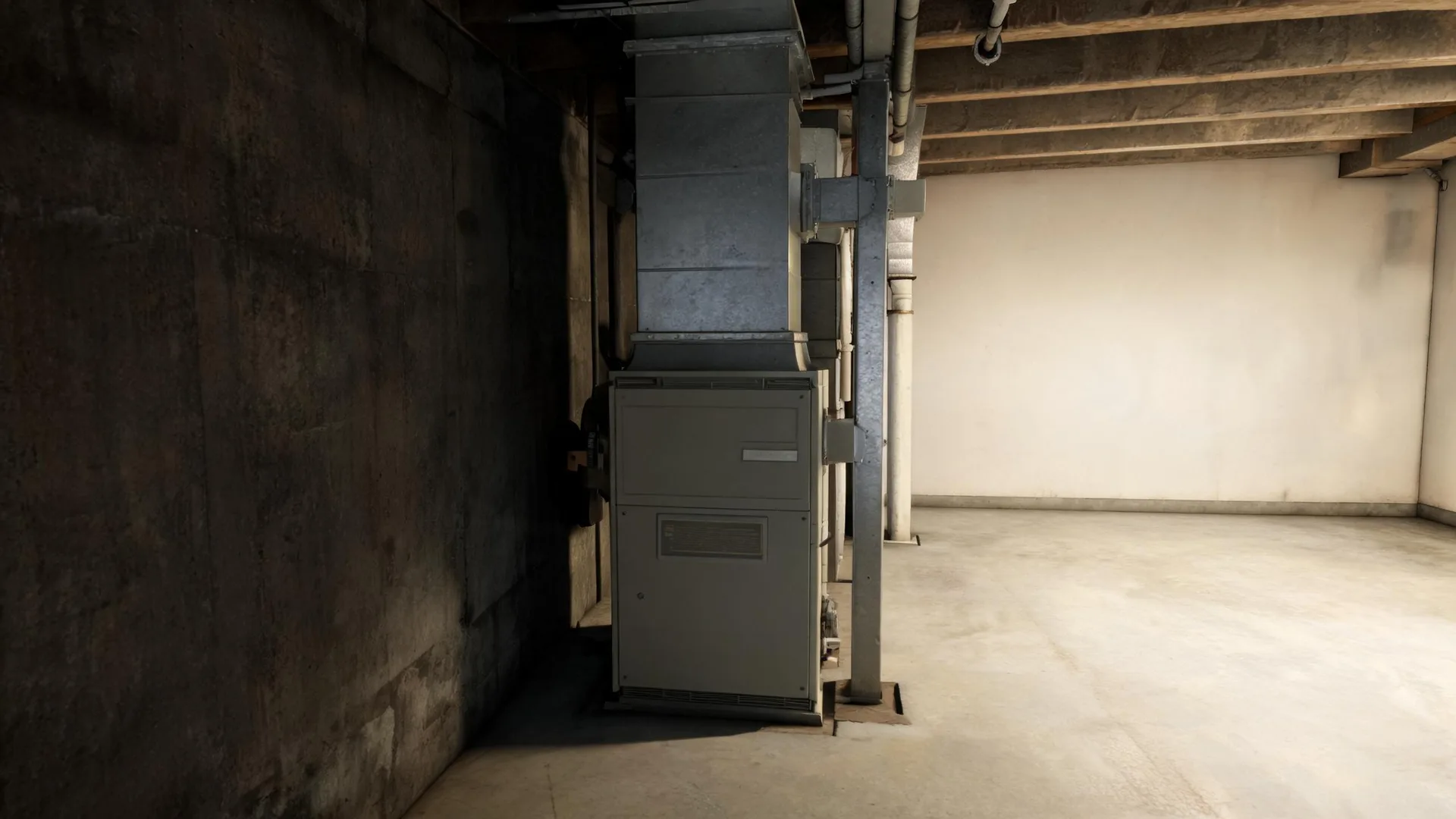
A furnace repair quote in Kidder County starts with the parts that actually do the work: the burner, the igniter, and the heat exchanger. Homes in Kidder County, ND run heat about nine months a year, from September through May. Each of those cycling months loads the ignition system and stresses the heat exchanger through expansion and contraction. A contractor who skips a close look at the heat exchanger and igniter before pricing a repair is missing where the wear lands on equipment that has been running this hard, this long.
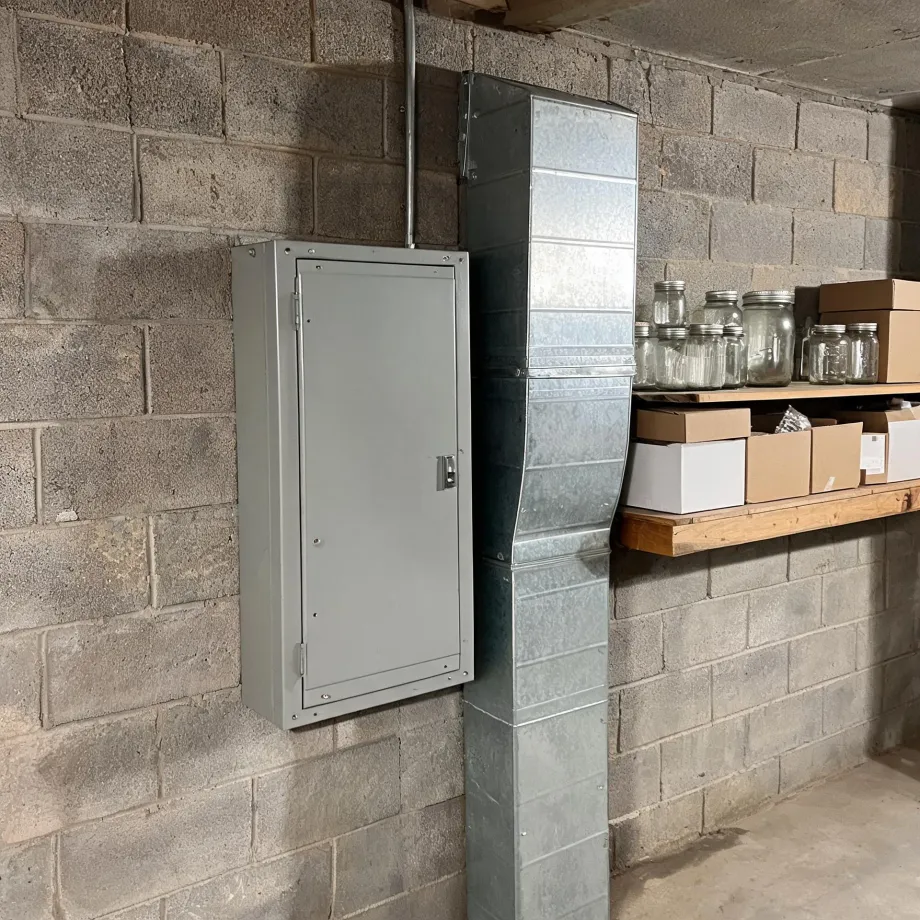
Ductwork in a house this old carries the record of everything that has run through it. Sediment, gaps at joints, and degraded lining are not visible from the furnace cabinet, so what a contractor finds once the unit is open frequently depends on where the inspection goes next. Half the homes in Kidder County, North Dakota were built in 1970 or earlier (2020-2024 ACS 5-year). That history means a repair call here can move from the furnace itself into the duct runs behind the walls before the scope is set. Parts for the furnace are one question; what the ductwork is doing to the system's draw and heat delivery is another the contractor has to answer separately.
The Parts of a Furnace a Contractor Checks First
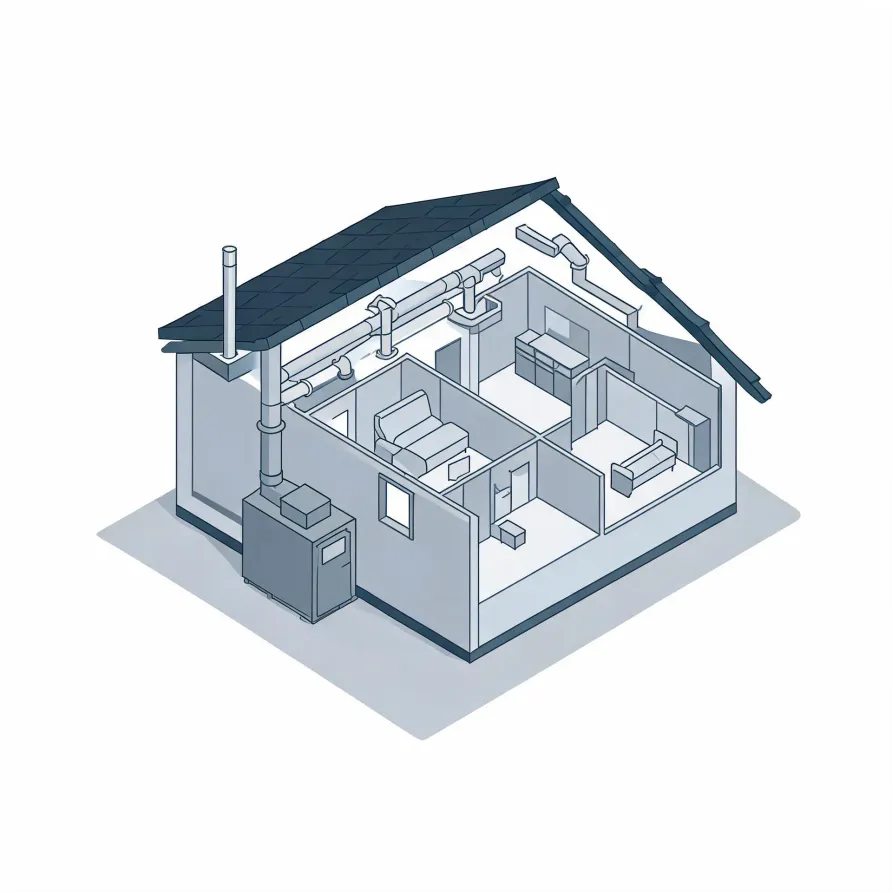
The heat exchanger sits at the core of the furnace cabinet and is where combustion heat passes into the air supply. Cracks or failures there are serious. The burner assembly feeds into it, and when a furnace runs poorly or not at all, a contractor looks at both of these pieces first.
The blower motor and its fan wheel sit in the lower section of the cabinet and push conditioned air out through the supply side of the system. The inducer motor pulls combustion gases toward the flue. The control board ties the sequence together, and a fault anywhere in that chain shows up as a symptom the contractor traces back to its source.
The drawing shows the general layout of a furnace system, and a licensed contractor determines which parts apply and what condition they are in for your specific home.
Find a contractor in Kidder CountyKidder County by the numbers
117 severe weather events were recorded in Kidder County, North Dakota between 2015 and 2024.
NOAA National Centers for Environmental Information, Storm Events Database, bulk CSV export, events 2015-01-01 through 2024-12-31.Half the homes in Kidder County, North Dakota were built in 1970 or earlier (2020-2024 ACS 5-year).
U.S. Census Bureau, 2020-2024 American Community Survey 5-Year EstimatesKidder County, North Dakota holds 1,660 housing units (2020-2024 ACS 5-year).
U.S. Census Bureau, 2020-2024 American Community Survey 5-Year EstimatesOwners occupy 76.1% of the occupied homes in Kidder County, North Dakota (2020-2024 ACS 5-year).
U.S. Census Bureau, 2020-2024 American Community Survey 5-Year EstimatesCodes & Standards Covering Furnace Repair in Kidder County, North Dakota5 sourced rules and standards
What HVAC Repair Looks Like in Kidder County
Non-weatherized gas furnaces manufactured on or after November 19, 2015 must reach 80.0 percent AFUE.
Non-weatherized oil-fired furnaces manufactured on or after November 19, 2015 must reach 83.0 percent AFUE.
Mobile home gas furnaces manufactured on or after November 19, 2015 must reach 80.0 percent AFUE.
Non-weatherized gas furnaces manufactured on or after December 18, 2028 must reach 95.0 percent AFUE, up from the 80.0 percent minimum that applies to units manufactured before that date.
Licensing and Legal Requirements in Kidder County, North Dakota
North Dakota requires a contractor licence once the cost, value or price of a job exceeds four thousand dollars, and an unlicensed contractor may not bring a claim or a lawsuit in a North Dakota court over the work.
Severe Weather Events in Kidder County
Extreme weather puts real stress on furnace systems, and the pattern of storms in a county shapes how hard local equipment works and how often it fails. Repair needs here are tied to local conditions, which is why the weather record for Kidder County belongs on this page.
117 severe weather events, 2015–2024. Source: NOAA National Centers for Environmental Information, Storm Events Database.