Tell us about the job
Takes about a minute. No obligation.
The burner, heat exchanger, and ignition system in a Logan County furnace do not get much rest. Homes in Logan County, ND run heat about nine months a year, from September through May. Cycling on and off through that stretch, the ignition components and heat exchanger accumulate wear that shows up as cracked cells, fouled igniters, and pressure switch drift by the time winter peaks. A contractor diagnosing a mid-season breakdown looks past the single component that failed and checks what the sustained load has done to the parts around it, because the repair that fixes only the presenting fault often brings the homeowner back before spring.
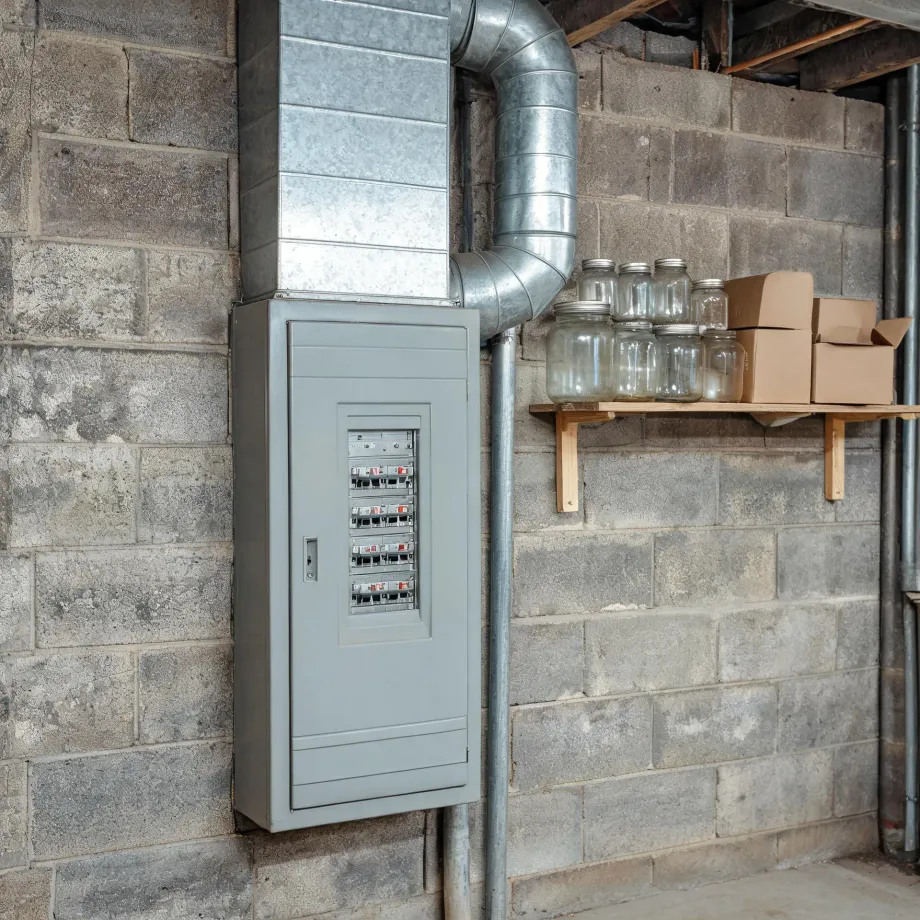
Half the homes in Logan County, North Dakota were built in 1967 or earlier (2020-2024 ACS 5-year). Furnaces installed in houses that old were built to a different parts landscape, and what a contractor pulls out of a failed heat exchanger or a cracked burner assembly may not have a current equivalent on the shelf. That gap between what the system needs and what distributors stock is what sets the scope and the cost of the repair. A contractor working on a furnace here opens the unit first, identifies the part, and then finds out whether it can be sourced before any quote holds.
The Parts of a Furnace a Contractor Checks First
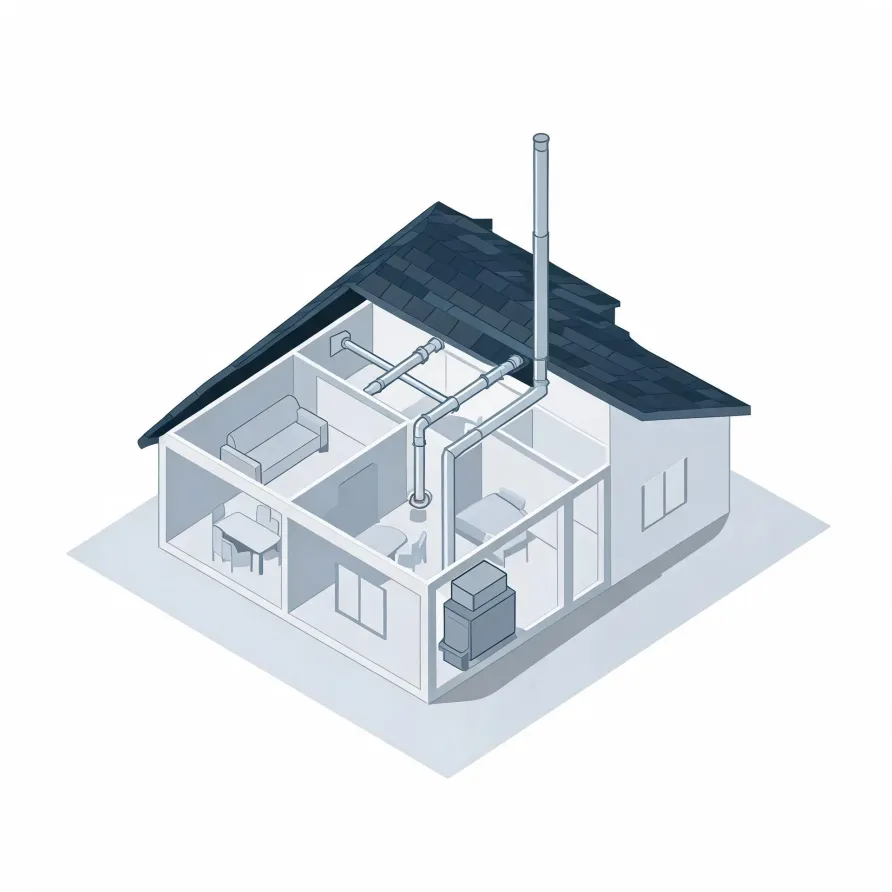
The heat exchanger sits at the core of the furnace cabinet, inside the main unit in the basement or utility room. It is where combustion gases and household air are kept separate, and a crack or buildup there explains symptoms like uneven heat or odd odors. The burner assembly, just below it, is where the fuel ignites, and a dirty or failing burner shows up as weak heat or a furnace that short-cycles.
The blower motor sits at the base of the cabinet and pushes conditioned air out through the supply side of the system. The flue and draft inducer, which vent combustion gases out of the house, are among the first things a contractor checks when a furnace shuts down on a safety lockout. The control board ties all of it together and is often what a contractor traces when the failure does not point clearly to a single mechanical part.
The drawing shows the general layout of a furnace system, and a licensed contractor determines which parts apply and what attention each one needs in your specific home.
Find a contractor in Logan CountyLogan County, North Dakota, by the numbers
99 severe weather events were recorded in Logan County, North Dakota between 2015 and 2024.
NOAA National Centers for Environmental Information, Storm Events Database, bulk CSV export, events 2015-01-01 through 2024-12-31.Half the homes in Logan County, North Dakota were built in 1967 or earlier (2020-2024 ACS 5-year).
U.S. Census Bureau, 2020-2024 American Community Survey 5-Year EstimatesLogan County, North Dakota holds 1,070 housing units (2020-2024 ACS 5-year).
U.S. Census Bureau, 2020-2024 American Community Survey 5-Year EstimatesOwners occupy 83.0% of the occupied homes in Logan County, North Dakota (2020-2024 ACS 5-year).
U.S. Census Bureau, 2020-2024 American Community Survey 5-Year EstimatesFurnace & HVAC Repair Rules on the Books for Logan County, North Dakota5 sourced rules & standards
What HVAC Repair Looks Like in Logan County
Non-weatherized gas furnaces manufactured on or after November 19, 2015 must reach 80.0 percent AFUE.
Non-weatherized oil-fired furnaces manufactured on or after November 19, 2015 must reach 83.0 percent AFUE.
Mobile home gas furnaces manufactured on or after November 19, 2015 must reach 80.0 percent AFUE.
Non-weatherized gas furnaces manufactured on or after December 18, 2028 must reach 95.0 percent AFUE, up from the 80.0 percent minimum that applies to units manufactured before that date.
Licensing and Legal Requirements in Logan County, North Dakota
North Dakota requires a contractor licence once the cost, value or price of a job exceeds four thousand dollars, and an unlicensed contractor may not bring a claim or a lawsuit in a North Dakota court over the work.
Severe Weather Events in Logan County
Extreme weather puts real strain on furnace equipment, and Logan County's climate is the starting point for understanding why repair needs look the way they do here. What happens outside drives what wears out inside, and that makes local weather history a direct part of the picture for any homeowner weighing furnace repair.
99 severe weather events, 2015–2024. Source: NOAA National Centers for Environmental Information, Storm Events Database.