Tell us about the job
Takes about a minute. No obligation.
Homes in McIntosh County, ND run heat about nine months a year, from September through May. The heat exchanger, burner, and ignition system cycle through that entire stretch, and the wear shows in them before it shows anywhere else. A contractor diagnosing a repair here checks ignition components and the heat exchanger for fatigue cracks before moving to anything else, because that is where the load lands. Ductwork and the blower motor carry it too. A short idle period in summer leaves little time for a slow failure to surface on its own.
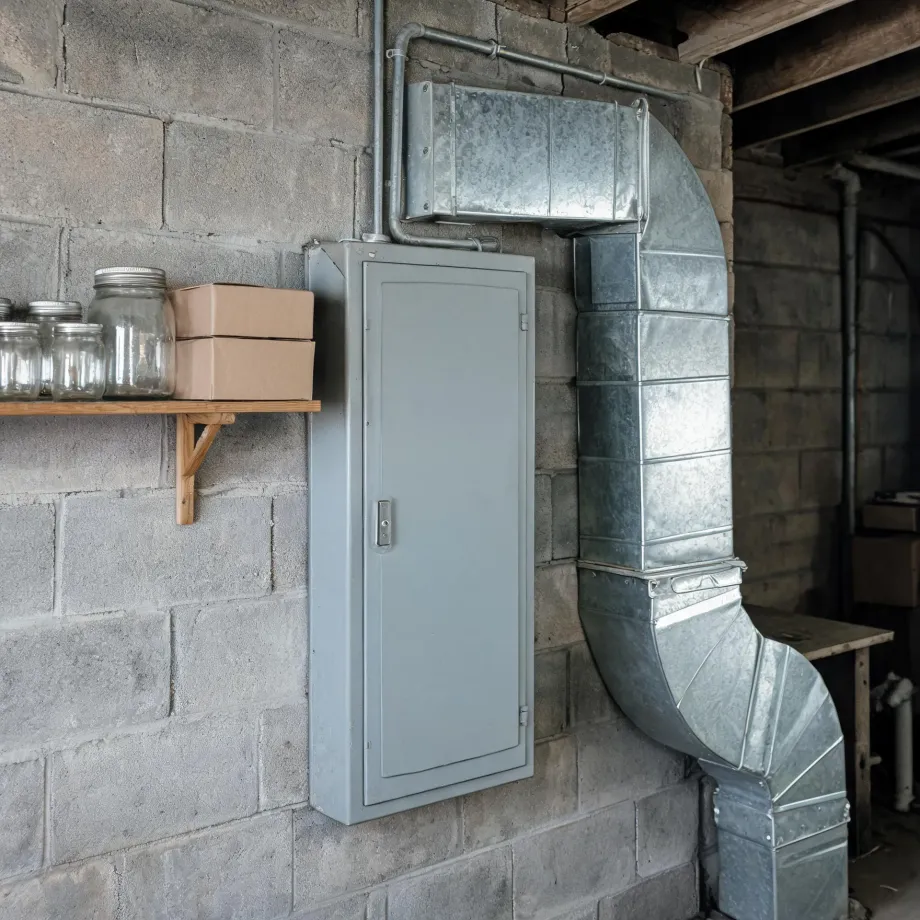
Furnaces running in prewar housing stock carry components that manufacturers stopped producing years before the current replacement market organized around them. Half the homes in McIntosh County, North Dakota were built in 1955 or earlier (2020-2024 ACS 5-year). A contractor who opens a furnace in a house like that has to work out whether the part it needs is still in production, whether a substitute fits the existing heat exchanger, and whether the answer changes the scope of the repair before a quote can mean anything.
The Parts of a Furnace a Contractor Checks First
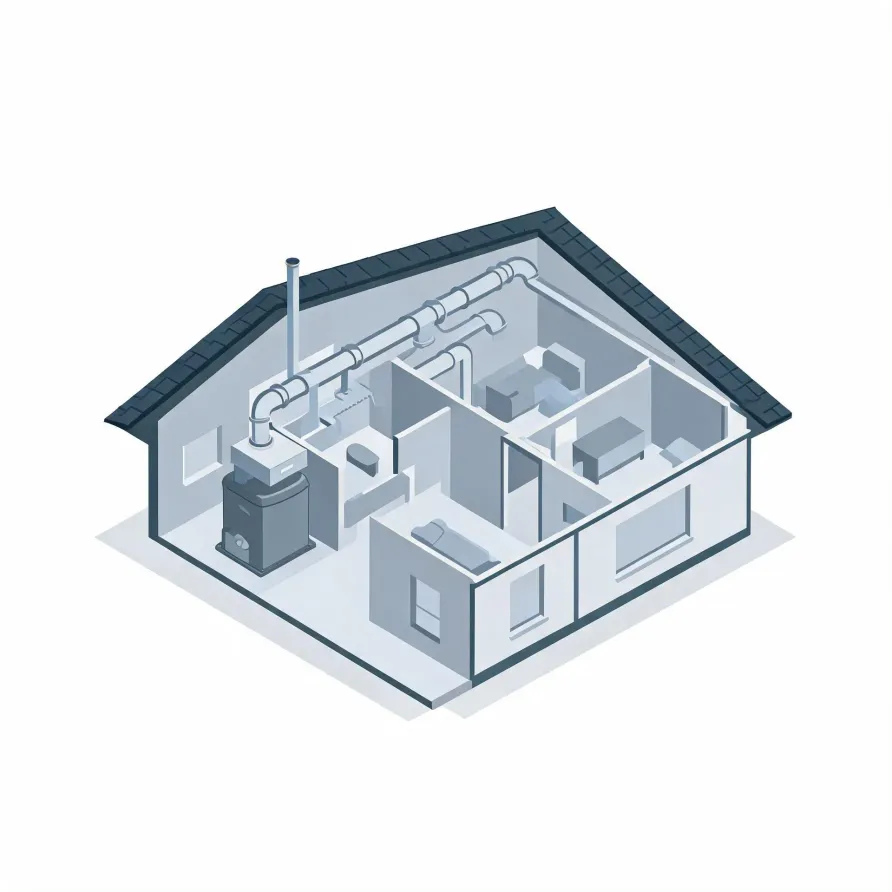
The furnace itself sits in a mechanical room, basement, or utility closet and is the piece a contractor goes to first. Inside it, the heat exchanger is the part most worth understanding: when it cracks or corrodes, combustion gases can move into the air supply, and a contractor will inspect it closely before anything else. The burners, which sit just below it, are checked for uneven flame, buildup, or signs they are not lighting cleanly.
The blower motor sits at the base of the furnace cabinet and pushes conditioned air out through the supply side of the system. The flue or vent pipe runs from the furnace up and out of the house, and a contractor checks it for blockage, separation, or corrosion. The filter housing, which sits at the return air intake, is another point of failure when airflow is restricted.
The drawing shows a typical furnace layout, and a licensed contractor determines which parts apply to the specific system and installation in your home.
Find a contractor in McIntosh CountyMcIntosh County, by the numbers
113 severe weather events were recorded in McIntosh County, North Dakota between 2015 and 2024.
NOAA National Centers for Environmental Information, Storm Events Database, bulk CSV export, events 2015-01-01 through 2024-12-31.Half the homes in McIntosh County, North Dakota were built in 1955 or earlier (2020-2024 ACS 5-year).
U.S. Census Bureau, 2020-2024 American Community Survey 5-Year EstimatesMcIntosh County, North Dakota holds 1,677 housing units (2020-2024 ACS 5-year).
U.S. Census Bureau, 2020-2024 American Community Survey 5-Year EstimatesOwners occupy 79.2% of the occupied homes in McIntosh County, North Dakota (2020-2024 ACS 5-year).
U.S. Census Bureau, 2020-2024 American Community Survey 5-Year EstimatesCodes & Standards Governing Furnace Repair in McIntosh County, North Dakota5 sourced rules and standards
What happens when a contractor comes out to repair your furnace
Non-weatherized gas furnaces manufactured on or after November 19, 2015 must reach 80.0 percent AFUE.
Non-weatherized oil-fired furnaces manufactured on or after November 19, 2015 must reach 83.0 percent AFUE.
Mobile home gas furnaces manufactured on or after November 19, 2015 must reach 80.0 percent AFUE.
Non-weatherized gas furnaces manufactured on or after December 18, 2028 must reach 95.0 percent AFUE, up from the 80.0 percent minimum that applies to units manufactured before that date.
Licensing Rules for HVAC Repair in McIntosh County, North Dakota
North Dakota requires a contractor licence once the cost, value or price of a job exceeds four thousand dollars, and an unlicensed contractor may not bring a claim or a lawsuit in a North Dakota court over the work.
Severe Weather Events in McIntosh County
North Dakota weather puts real stress on heating equipment, and McIntosh County gets its share of conditions that push furnaces hard. How often that happens here shapes how much wear local systems carry and what repair work looks like over time.
113 severe weather events, 2015–2024. Source: NOAA National Centers for Environmental Information, Storm Events Database.