Tell us about the job
Takes about a minute. No obligation.
The burner, heat exchanger, and ignition system on a Morton County furnace do not get much rest. Homes in Morton County, ND run heat about nine months a year, from September through May. A contractor diagnosing a repair here looks at those cycling components first, because they have absorbed the load of nearly every cold month on the calendar. Cracks in the heat exchanger, a worn igniter, or a burner that lights unevenly all trace back to sustained runtime rather than a single event. The idle months are short, and a system that has been running slightly off does not get long to hide it.
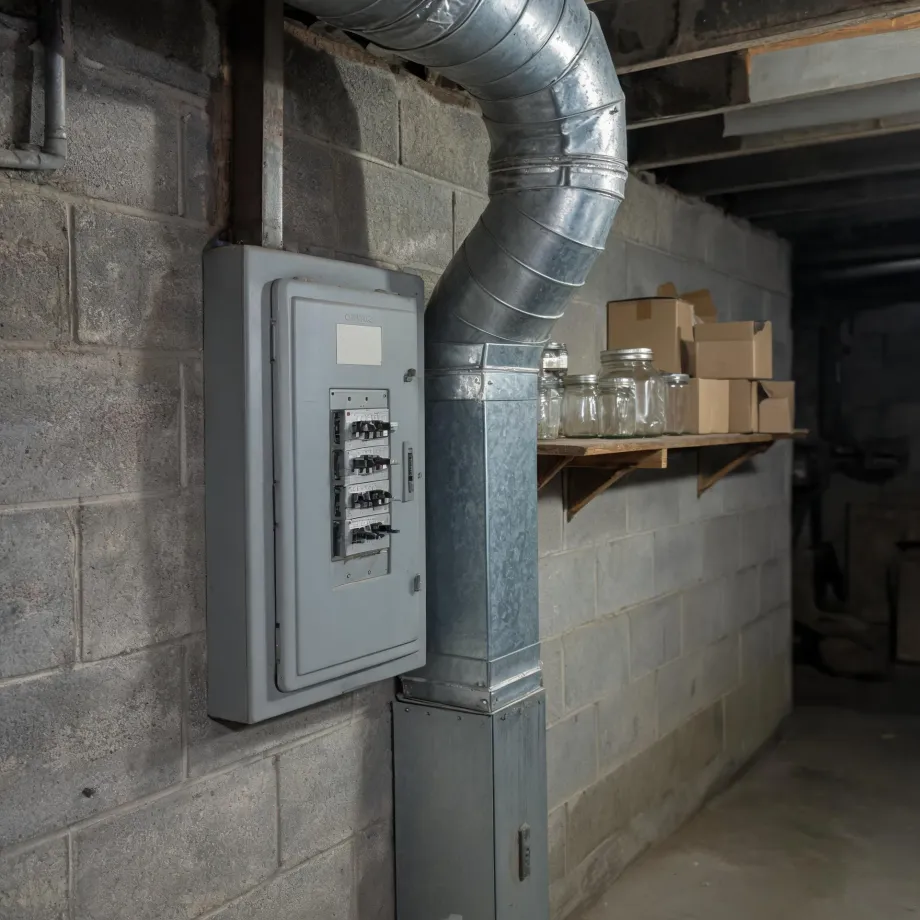
Furnace parts availability is the variable that shapes a repair job here more than the fault itself. Half the homes in Morton County, North Dakota were built in 1980 or earlier (2020-2024 ACS 5-year). A system installed to serve a house of that vintage may have run through one or more replacement units since, but the furnace a contractor opens today was still chosen to fit what the house already had, and manufacturers stop making components for older equipment. What the opened unit turns out to need, and whether a supplier still stocks it, is what determines whether a repair is a same-week fix or a longer conversation about what comes next.
The Parts of a Furnace a Contractor Checks First
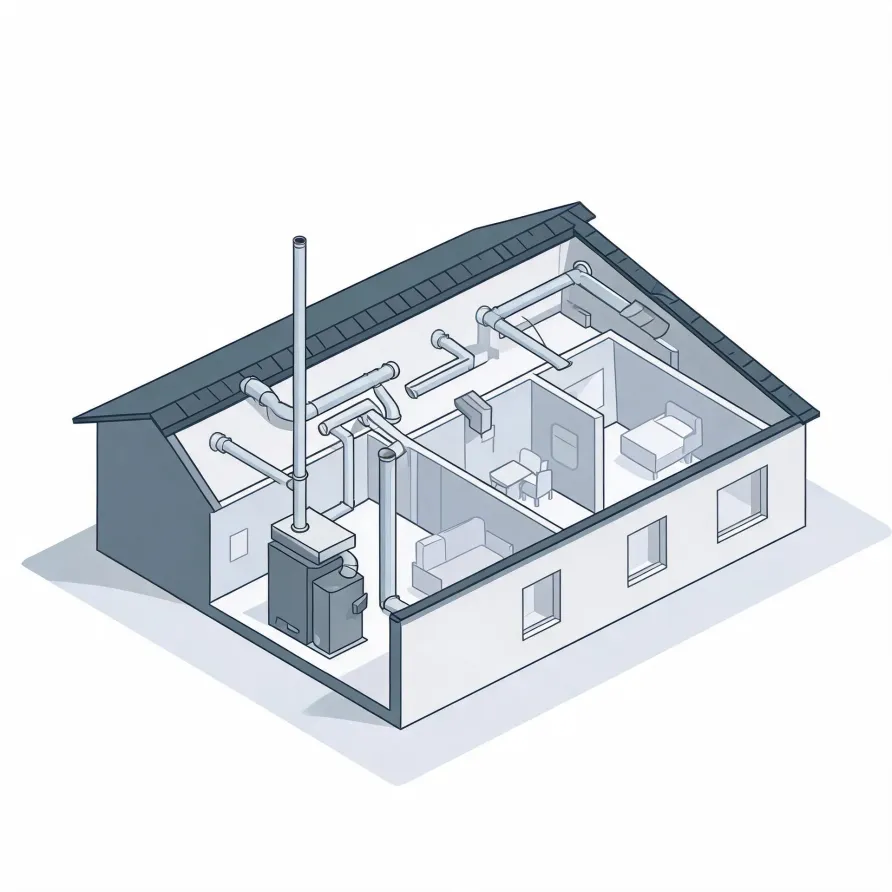
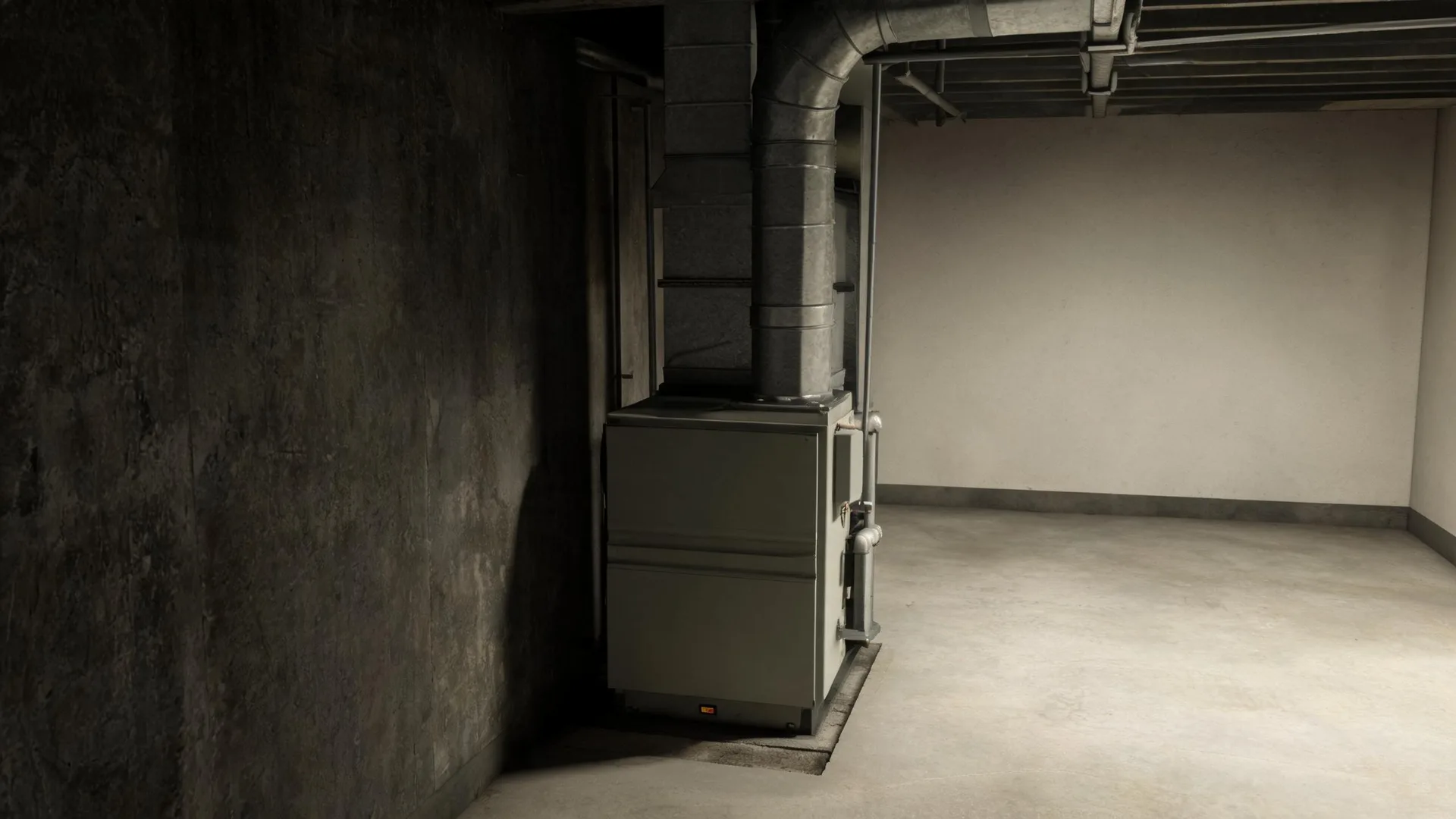
The furnace itself sits in a utility room, basement, or closet and is the piece a contractor goes to first. Inside it, the heat exchanger is the part most worth understanding: it is a metal chamber where combustion heat transfers to your air, and a crack or failure there is what stops the system from working safely. The burners, which fire inside that exchanger, are another early stop.
The blower motor sits at the base of the furnace and pushes conditioned air out through the supply side of your home. Alongside it, the control board reads signals from the thermostat and tells each component when to run. The flue pipe runs from the furnace to an exterior wall or roof, carrying combustion gases out, and a contractor checks it for blockage or separation.
The drawing shows a typical furnace layout, and a licensed contractor determines which parts apply to your specific system and what each one needs.
Find a contractor in Morton CountyMorton County, by the numbers
260 severe weather events were recorded in Morton County, North Dakota between 2015 and 2024.
NOAA National Centers for Environmental Information, Storm Events Database, bulk CSV export, events 2015-01-01 through 2024-12-31.Half the homes in Morton County, North Dakota were built in 1980 or earlier (2020-2024 ACS 5-year).
U.S. Census Bureau, 2020-2024 American Community Survey 5-Year EstimatesMorton County, North Dakota holds 15,465 housing units (2020-2024 ACS 5-year).
U.S. Census Bureau, 2020-2024 American Community Survey 5-Year EstimatesOwners occupy 74.2% of the occupied homes in Morton County, North Dakota (2020-2024 ACS 5-year).
U.S. Census Bureau, 2020-2024 American Community Survey 5-Year EstimatesCodes & Standards Governing Furnace Repair in Morton County, North Dakota5 sourced rules and standards
What HVAC Repair Looks Like in Morton County
Non-weatherized gas furnaces manufactured on or after November 19, 2015 must reach 80.0 percent AFUE.
Non-weatherized oil-fired furnaces manufactured on or after November 19, 2015 must reach 83.0 percent AFUE.
Mobile home gas furnaces manufactured on or after November 19, 2015 must reach 80.0 percent AFUE.
Non-weatherized gas furnaces manufactured on or after December 18, 2028 must reach 95.0 percent AFUE, up from the 80.0 percent minimum that applies to units manufactured before that date.
Licensing Rules That Apply in Morton County, North Dakota
North Dakota requires a contractor licence once the cost, value or price of a job exceeds four thousand dollars, and an unlicensed contractor may not bring a claim or a lawsuit in a North Dakota court over the work.
Severe Weather Events in Morton County
North Dakota weather puts real strain on furnaces, and Morton County is no exception to that pressure. How hard a furnace has worked, and how close it is to failure, is shaped by what the local climate has demanded of it.
260 severe weather events, 2015–2024. Source: NOAA National Centers for Environmental Information, Storm Events Database.