Tell us about the job
Takes about a minute. No obligation.
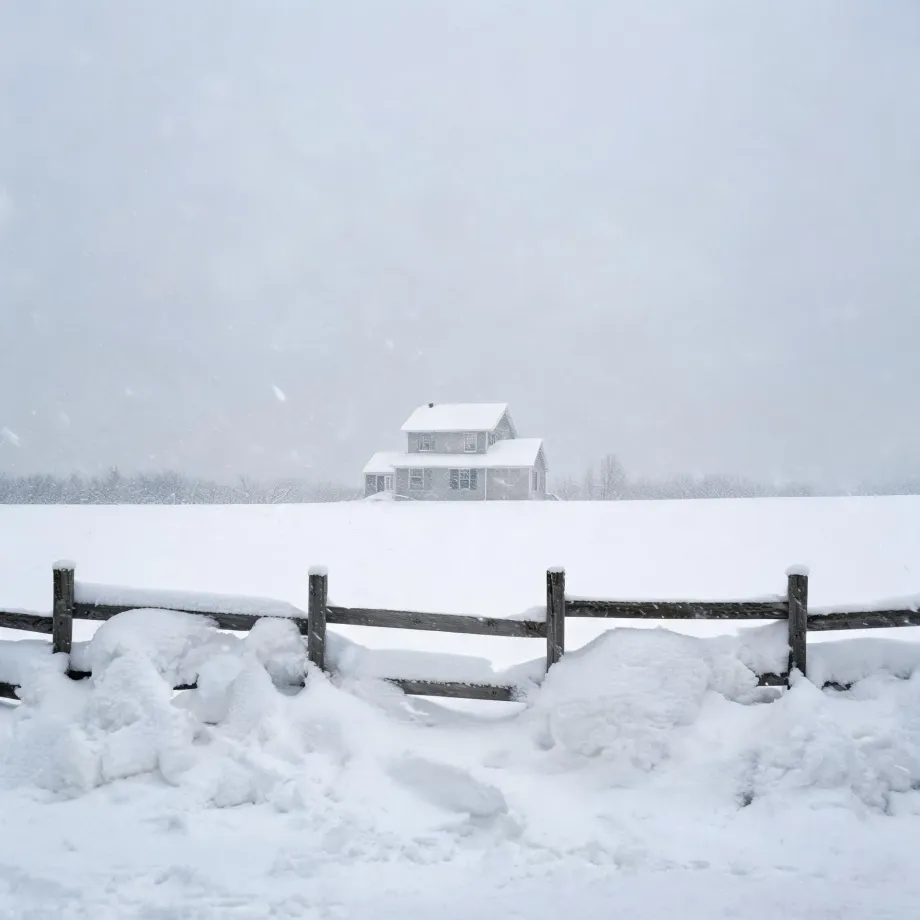
A furnace repair in Oliver County starts with the parts that have done the most work. Homes in Oliver County, ND run heat about nine months a year, from September through May. The burner cycles through that stretch, and so does the ignition system, and so does the heat exchanger. A contractor will check those components first because wear follows runtime, and in this county the runtime is long. Cracked heat exchangers and failing igniters are not random failures here; they are the expected outcome of a system that has been running hard for a long time.
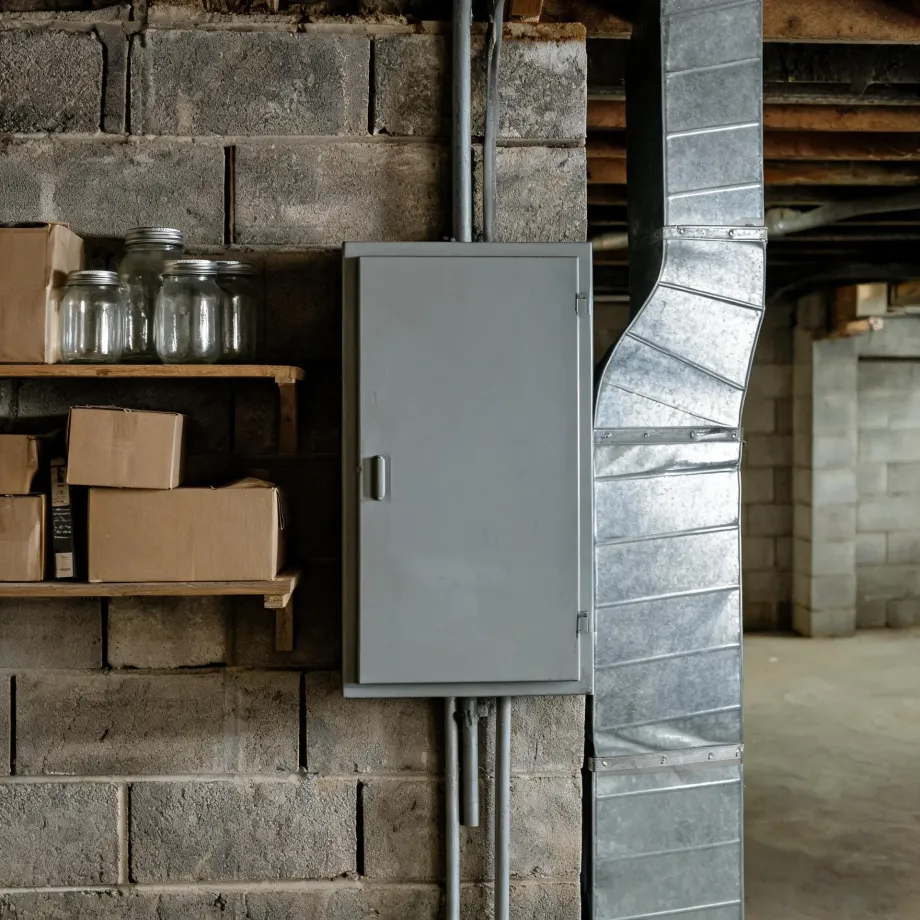
Furnace parts availability is the variable that decides how a repair job goes here. Half the homes in Oliver County, North Dakota were built in 1976 or earlier (2020-2024 ACS 5-year). A system installed or upgraded in a house that old may run on a heat exchanger model, a control board revision, or a burner assembly that manufacturers no longer stock as a standard line item. When a contractor opens the unit and identifies what it takes, the next call is to a parts supplier, and the answer to that call shapes the repair more than the labor does.
The Parts of a Furnace a Contractor Checks First
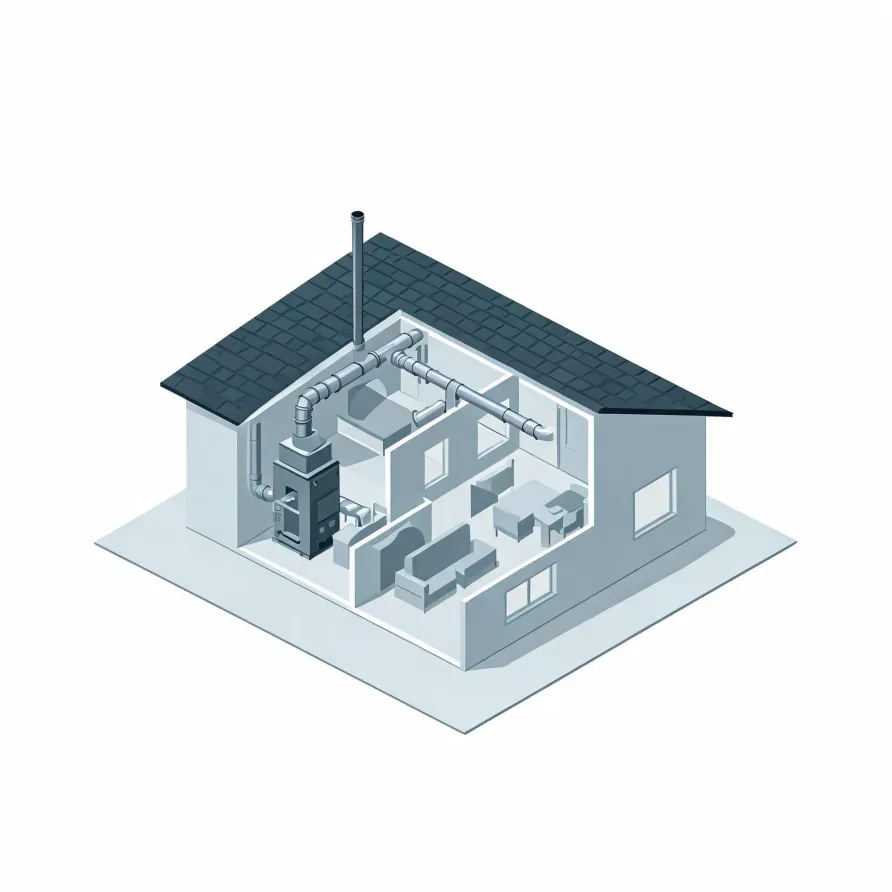
The heat exchanger sits at the core of the furnace cabinet and is where combustion gases warm the air that moves through your home. When it cracks or corrodes, the furnace may run but deliver little usable heat, or trip a safety shutoff. The burner assembly, just below it, is where the fuel actually ignites, and a dirty or failing burner shows up as uneven flames, delayed ignition, or a unit that short-cycles.
The blower motor sits at the base of the cabinet and pushes conditioned air out into the supply side of the system. The inducer motor and the flue assembly handle combustion exhaust and are the first things a contractor checks when the furnace locks out on a pressure or venting fault. The control board ties all of it together, and a failed board can mimic symptoms that actually belong elsewhere.
The drawing shows the general layout of a furnace system, and a licensed contractor determines what applies to your particular installation.
Find a contractor in Oliver CountyOliver County, in its own numbers
99 severe weather events were recorded in Oliver County, North Dakota between 2015 and 2024.
NOAA National Centers for Environmental Information, Storm Events Database, bulk CSV export, events 2015-01-01 through 2024-12-31.Half the homes in Oliver County, North Dakota were built in 1976 or earlier (2020-2024 ACS 5-year).
U.S. Census Bureau, 2020-2024 American Community Survey 5-Year EstimatesOliver County, North Dakota holds 893 housing units (2020-2024 ACS 5-year).
U.S. Census Bureau, 2020-2024 American Community Survey 5-Year EstimatesOwners occupy 95.2% of the occupied homes in Oliver County, North Dakota (2020-2024 ACS 5-year).
U.S. Census Bureau, 2020-2024 American Community Survey 5-Year EstimatesCodes & Standards Governing Furnace Repair in Oliver County, North Dakota5 sourced rules and standards
What HVAC Repair Looks Like in Oliver County
Non-weatherized gas furnaces manufactured on or after November 19, 2015 must reach 80.0 percent AFUE.
Non-weatherized oil-fired furnaces manufactured on or after November 19, 2015 must reach 83.0 percent AFUE.
Mobile home gas furnaces manufactured on or after November 19, 2015 must reach 80.0 percent AFUE.
Non-weatherized gas furnaces manufactured on or after December 18, 2028 must reach 95.0 percent AFUE, up from the 80.0 percent minimum that applies to units manufactured before that date.
Licensing Rules for HVAC Repair in Oliver County, North Dakota
North Dakota requires a contractor licence once the cost, value or price of a job exceeds four thousand dollars, and an unlicensed contractor may not bring a claim or a lawsuit in a North Dakota court over the work.
Severe Weather Events in Oliver County
North Dakota winters put real strain on furnace components, and the weather Oliver County records over time tells you something about what local equipment is asked to endure. That workload shapes how often repairs come up and what a contractor finds when they open a unit.
99 severe weather events, 2015–2024. Source: NOAA National Centers for Environmental Information, Storm Events Database.