Tell us about the job
Takes about a minute. No obligation.
Sizing a furnace for a Burke County home is not a task a contractor can approximate and revisit later. Homes in Burke County, ND run heat about ten months a year, from September through June. The burner, heat exchanger, and ignition system cycle through nearly the entire calendar, and a unit that is undersized or improperly commissioned accumulates wear on those components faster than the same mistake would in a shorter season. A contractor quoting a replacement has to run a full load calculation before picking equipment, because the install quality shows up in the parts that cycle hardest.
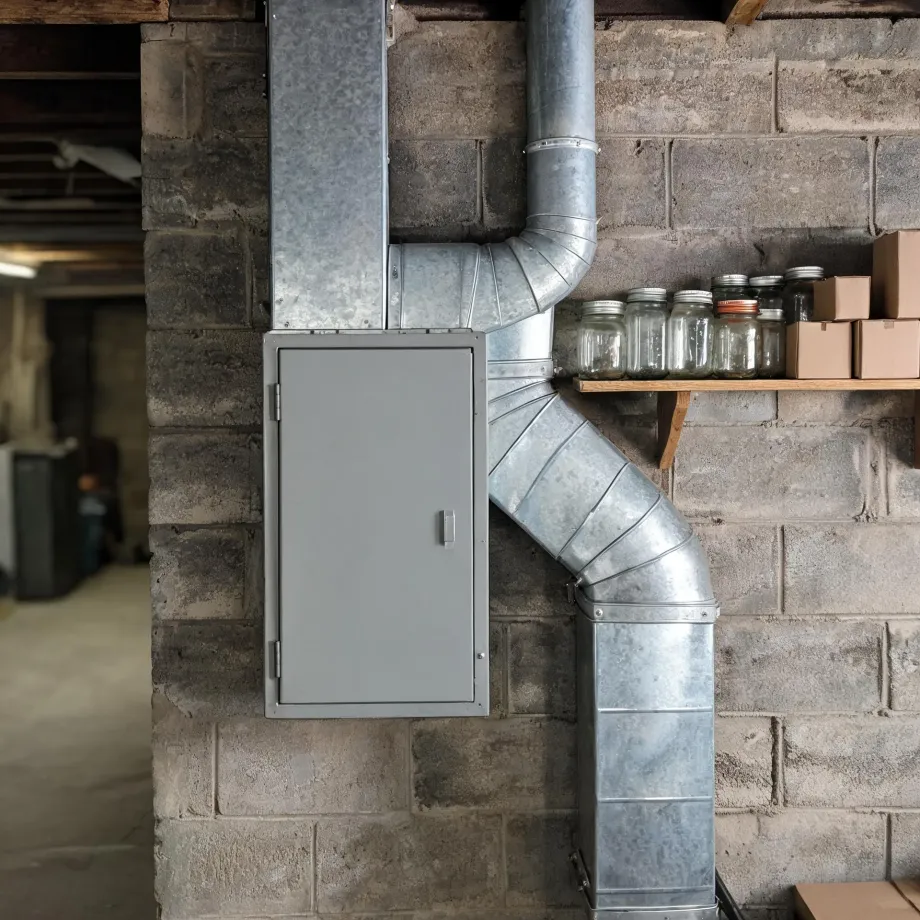
Ductwork laid down for a furnace that no longer exists is what a contractor has to evaluate before a new unit can be sized or quoted. Half the homes in Burke County, North Dakota were built in 1969 or earlier (2020-2024 ACS 5-year). That history means the ducts in a large share of Burke County homes were designed around equipment with different output characteristics than what gets installed now, and whether those passages carry the new system adequately is not something a contractor can answer from the street. The electrical service in houses of that vintage carries the same question. Both have to be opened and measured before the furnace itself becomes the focus.
What Gets Installed With a New Furnace
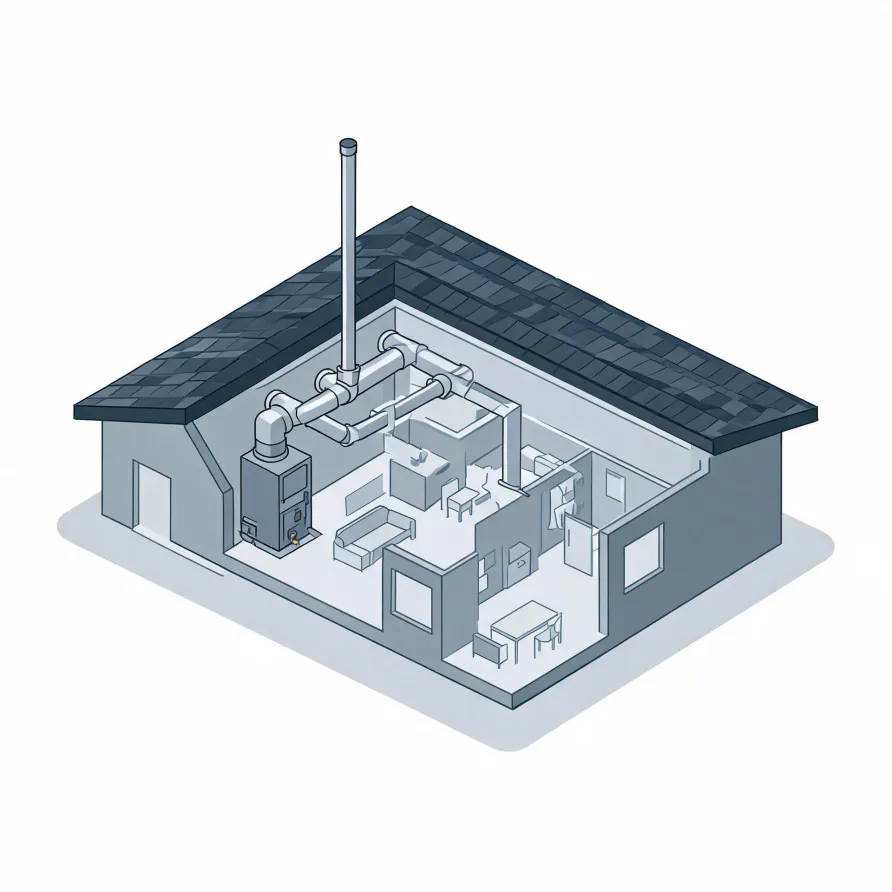
The furnace itself sits in a utility room, basement, or closet and is the unit that generates heat for the house. A burner assembly inside it ignites the fuel, and a heat exchanger transfers that heat to the air moving through the system. The blower motor, housed inside the same cabinet, pushes conditioned air out into the supply side of the home.
The flue pipe runs from the furnace to an exterior wall or through the roof, carrying combustion gases out of the house. A new furnace also comes with a gas valve and a control board, both mounted inside the cabinet, that regulate fuel flow and coordinate every part of the system's operation.
The drawing shows a general layout of these components, and a licensed contractor determines what applies to your specific home and setup.
Find a contractor in Burke CountyBurke County by the Numbers
76 severe weather events were recorded in Burke County, North Dakota between 2015 and 2024.
NOAA National Centers for Environmental Information, Storm Events Database, bulk CSV export, events 2015-01-01 through 2024-12-31.Half the homes in Burke County, North Dakota were built in 1969 or earlier (2020-2024 ACS 5-year).
U.S. Census Bureau, 2020-2024 American Community Survey 5-Year EstimatesBurke County, North Dakota holds 1,362 housing units (2020-2024 ACS 5-year).
U.S. Census Bureau, 2020-2024 American Community Survey 5-Year EstimatesOwners occupy 75.1% of the occupied homes in Burke County, North Dakota (2020-2024 ACS 5-year).
U.S. Census Bureau, 2020-2024 American Community Survey 5-Year EstimatesFurnace Installation Rules for Burke County, North Dakota5 codes & standards
What HVAC Installation Looks Like in Burke County
Non-weatherized gas furnaces manufactured on or after November 19, 2015 must reach 80.0 percent AFUE.
Non-weatherized oil-fired furnaces manufactured on or after November 19, 2015 must reach 83.0 percent AFUE.
Mobile home gas furnaces manufactured on or after November 19, 2015 must reach 80.0 percent AFUE.
Non-weatherized gas furnaces manufactured on or after December 18, 2028 must reach 95.0 percent AFUE, up from the 80.0 percent minimum that applies to units manufactured before that date.
Licensing Rules for HVAC Work in Burke County, North Dakota
North Dakota requires a contractor licence once the cost, value or price of a job exceeds four thousand dollars, and an unlicensed contractor may not bring a claim or a lawsuit in a North Dakota court over the work.
Severe Weather History in Burke County
Burke County winters put real load on heating equipment, and the conditions that drive that load are trackable. A furnace sized and installed for local weather will hold up where a generic one may not.
76 severe weather events, 2015–2024. Source: NOAA National Centers for Environmental Information, Storm Events Database.