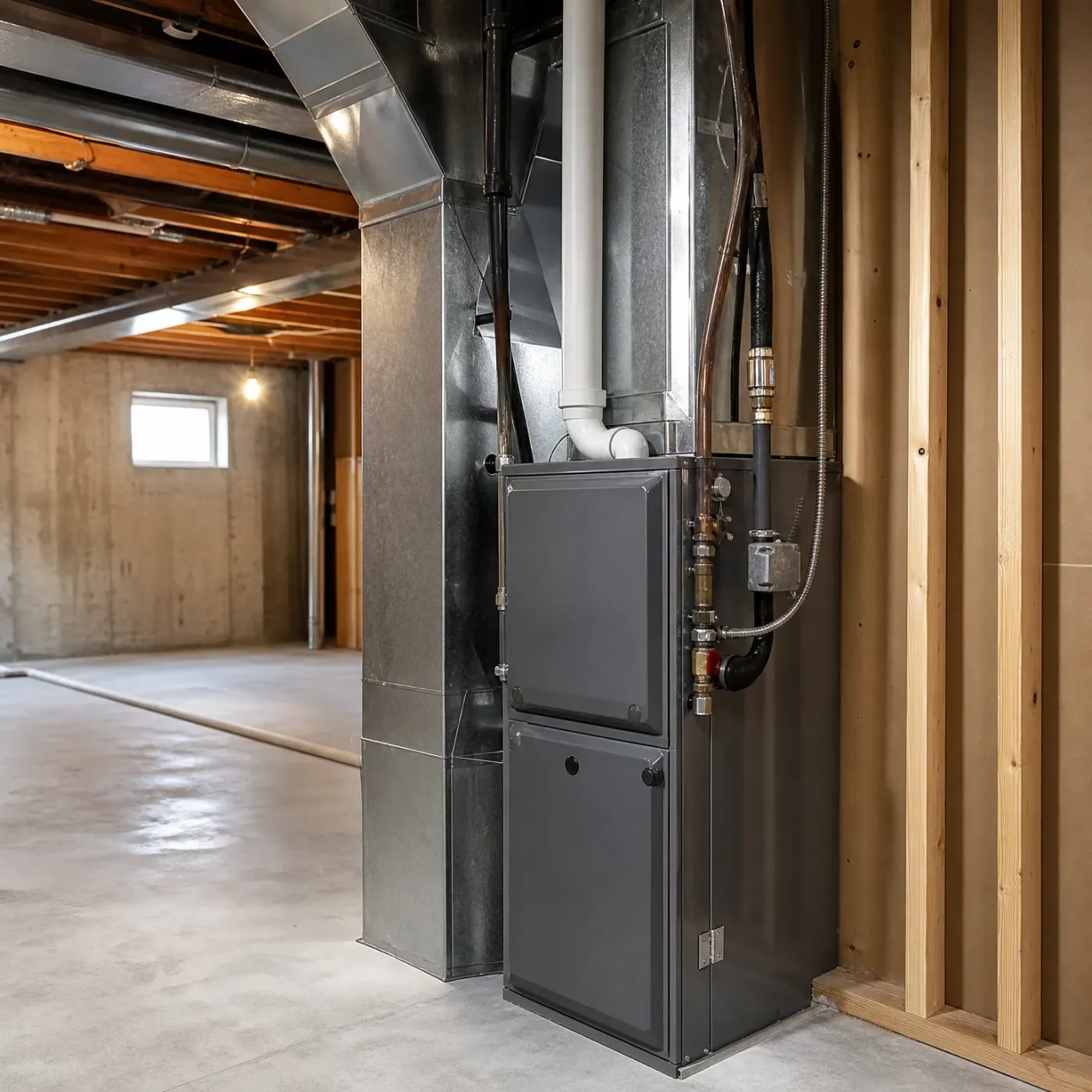
A gray high-efficiency furnace with two white PVC vent pipes stands beside galvanized sheet-metal ductwork in a dim basement with exposed joists and a concrete floor.

A pro who works on furnaces

Why your furnace won't turn on in a North Dakota winter

A furnace that won't fire up in the middle of a North Dakota cold snap usually comes down to a short list of parts: the igniter, the flame sensor, a pressure switch, or the thermostat itself. This page walks through what each failure looks like and what a licensed local contractor would check first when they get to your house.

Get matched

A furnace that won't start in a North Dakota cold snap usually fails at one of a few points. A dirty flame sensor shuts the gas off after a few seconds because the furnace can't confirm it's actually burning. A cracked or dirty igniter won't glow hot enough to light the burners at all. A pressure switch can read a blockage in the vent pipe and refuse to let the cycle start, and vent pipes here are more likely to get blocked when the wind packs snow against the outside wall cap. A thermostat with a dead battery or a wiring fault never calls for heat in the first place. Each of these stops the furnace the same way, by keeping it from reaching the next step in its startup sequence, but the fix is different for each one. At 20 below, a furnace that won't run isn't a wait and see problem. It needs a licensed contractor to find which of these it is before the house loses too much heat.

A gray high-efficiency furnace with two access panels stands in a bare basement corner, connected to sheet-metal ductwork, white PVC vent pipes, and flexible gas and electrical lines.

Why cold makes ignition harder

A furnace fires by sending a signal down a few inches of wire to the igniter or sparking electrode, then checking for a flame within seconds. At 20 below, the metal cabinet and vent pipe pull heat out of that chamber fast. A pressure switch that's borderline on a mild day can read wrong once the flue gases cool quicker outside. The colder it gets outside, the less room there is for a weak part to still get by.

A gas furnace with metal ductwork, copper and yellow gas piping stands against a wall in an empty room with a bare concrete floor.

What the pressure switch is checking

The inducer motor pulls exhaust out through the vent pipe before the burners are allowed to light, and a pressure switch confirms that draft is actually happening. If the vent pipe has ice or snow blocking the outside end, which happens in North Dakota winters, the switch won't close and the furnace locks out before gas ever reaches the burners. A licensed contractor checks that vent termination first because it's often the fastest thing to rule out.

Why does my furnace keep shutting off and relighting instead of staying on?

You've reset the furnace or just watched it run, and it keeps doing the same thing: it fires, runs for a short while, then shuts off and tries again a few minutes later. In a North Dakota cold snap that's unsettling, because you want heat running steady through the night, not cycling on and off while it's 20 below outside.

A dirty flame sensor is the most common cause of short cycling

The flame sensor is a thin metal rod sitting in the burner flame. It has one job: confirm to the control board that gas is actually burning. Soot builds up on that rod over time and it stops reading the flame correctly, even though the flame is there. The board waits a few seconds, doesn't get a clean signal, and shuts the gas valve as a safety measure. A few minutes later it tries again, same result. A cracked heat exchanger or a weak draft from the inducer motor can cause the same pattern, but those show up less often than a sensor that just needs cleaning. A licensed tech can tell which one it is in a few minutes.

A gray high-efficiency furnace stands on a concrete basement floor beside sheet-metal ductwork, with white PVC vent pipes and a black flexible line running up to exposed wood floor joists, next to a wood-framed post against a concrete wall.

Running the way it should

A furnace like this fires on the first call, the burners hold a steady blue flame, and the flue and condensate lines stay clear. Air moves through the ductwork without strain, and the gas fittings at the side stay tight and free of soot.

A beige metal furnace with a louvered front panel stands on a concrete floor against a concrete wall, connected to galvanized sheet-metal ductwork and a metal pipe.

Running into trouble

An older furnace like this can struggle to light or hold flame once the temperature drops hard. Worn iron gas lines, a weak igniter, or a flue pipe that's partly blocked by ice all show up the same way: the burners won't stay lit through a North Dakota cold snap.

Fix It Yourself or Call a Pro

Call it in yourself

  • You can hold the reset button, clean the flame sensor with steel wool, or tap the inducer motor to see if it frees up.
  • A stuck pressure switch sometimes clears if you check the vent pipe outside for a blockage of snow or ice.
  • Working on the furnace yourself means opening the cabinet and handling gas and electrical connections without training on that specific unit.
  • If the fix doesn't hold, the furnace will shut down again on the next cold night, and you're back where you started.
  • A wrong guess can mean replacing a part that wasn't actually bad, or missing the one that was.

Have it looked at

  • A furnace tech checks the igniter, flame sensor, and pressure switch readings against what the control board is actually seeing.
  • Someone who works on furnaces all winter in North Dakota has likely seen the same failure on a dozen other calls that week.
  • A licensed contractor carries the gas and electrical certification the repair requires under state code.
  • You're matched with one contractor local to you, not a list of companies calling you back at once.
  • Getting it diagnosed correctly the first time means the furnace is less likely to quit again on the next cold snap.
A gray high-efficiency furnace in a basement with PVC vent pipes, sheet-metal ductwork, copper and insulated pipes, a water heater at left, and an unfinished wood-stud wall at right.

Newer high-efficiency furnace

This furnace vents through PVC pipe instead of a metal flue, and the sheet-metal ductwork runs tight to the cabinet. Furnaces built this way pull combustion air through a sealed intake, so a blocked pressure switch or a clogged condensate line is a common reason one won't fire in a cold snap.

An older beige furnace with louvered front panels stands on a concrete basement floor beside galvanized ductwork, metal and plastic pipes, exposed wood framing, and a cylindrical water heater at right.

Older furnace, galvanized ductwork

This one vents through galvanized flue pipe and draws combustion air from the room around it. On a furnace this age, a cracked igniter or a pilot that won't hold is more often the reason it won't start, and the wiring and gas fittings are worth a look too.

A gray-haired man in a dark sweater sits on a light gray sofa in a living room, looking toward a sunlit window with trees outside.
A gray-haired man in a dark blue sweater sits on a light gray sofa in a sunlit living room, looking off to the side, with a potted plant, shelving unit, and large glass doors behind him.
A bearded man with graying hair in a dark green sweater sits on a sofa in a living room, looking off to the side, with a sliding glass door and a dim kitchen doorway behind him.
A gray-haired man in a dark knit sweater sits on a light gray sofa in a living room, looking toward a sunlit window, with houseplants, a lamp, and framed art in the background.

No heat below zero

A furnace that won't fire during a North Dakota cold snap can let a house drop fast. Pipes along outside walls are the first things at risk.

Reach a local pro

A furnace that keeps cycling

Short-cycling burns more gas for less heat and puts more wear on the igniter and flame sensor each time it restarts.

Reach a local pro
A middle-aged woman with shoulder-length dark hair, wearing a gray cardigan over a cream top, sits in an upholstered armchair and looks toward a sunlit window, with a shelf holding framed pictures and a plant behind her.
A woman and a child wrapped together in a knitted gray blanket on a couch, with the child's head resting on her shoulder and a lit table lamp and houseplant in the background.
A gray furnace with copper and flexible piping stands against a wood-framed wall in an unfinished basement, connected to galvanized sheet-metal ductwork and PVC venting, with a concrete floor and exposed joists.

The right pro for this job

Your request stays with one local pro.

Describe your furnace job, and a local pro who handles it gets in touch.

Find a licensed furnace pro

There's no charge for the request.

An older gas furnace with two white PVC vent pipes stands on a concrete basement floor beside galvanized sheet-metal ductwork, flexible conduit, and piping along a wall.
Before you get your furnace repair
A gray high-efficiency furnace with white PVC venting pipes stands on blocks in a basement next to sheet-metal ductwork, with exposed wood framing on the left and a concrete wall and floor.
After you get your furnace repair

Winter nights average 4°F statewide

Four degrees is the average overnight low here in December, January and February. At that temperature your furnace isn't cycling on and off a few times a night, it's running for long stretches just to hold the house steady, which is exactly when a weak igniter or a dirty flame sensor tends to show itself.

NOAA nClimDiv 1991-2020 county normals weighted by homes

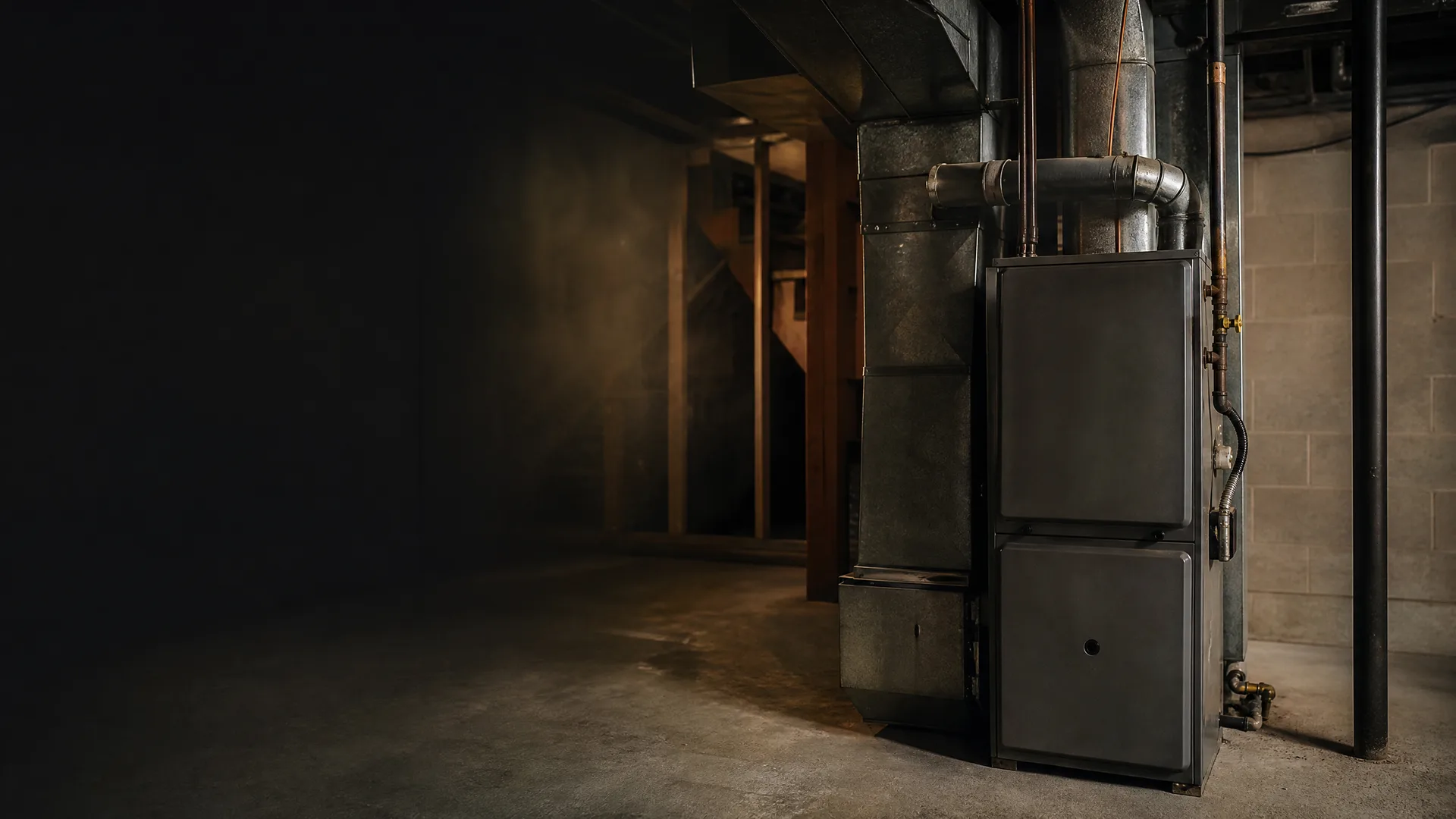
A furnace with sheet-metal ductwork and copper piping stands against a concrete block wall in a dim basement with a bare concrete floor.

It's just past six, full dark already, and you're down in the basement because the air coming out of the vents upstairs went cold an hour ago. The furnace sits against the block wall, quiet. No hum from the inducer, no blue light through the sight glass. You crack the door on the burner compartment and a thin haze of dust drifts up into the flashlight beam, stirred loose when you bumped the cabinet. Upstairs the thermostat reads a few degrees lower than it did at dinner. Outside the ground is already hard and the wind's picking up against the window well. You crouch there a minute, waiting for it to kick on by itself. It doesn't.


A beige high-efficiency furnace stands on a concrete basement floor beside sheet-metal ductwork, with white PVC vent pipes, flexible conduit and copper and steel piping running up a concrete wall to an electrical box.
A furnace venting through PVC pipe with the burners holding steady draws in combustion air through a sealed intake and sends exhaust straight out, with nothing in that path for a tech to guess at.
An older gas furnace with a louvered front panel stands on a concrete basement floor beside large sheet-metal ductwork, a metal flue pipe, copper piping and wood framing.
An older furnace with a round metal flue and dust built up around the base has had more winters to wear down an igniter or foul a flame sensor, and it shows.
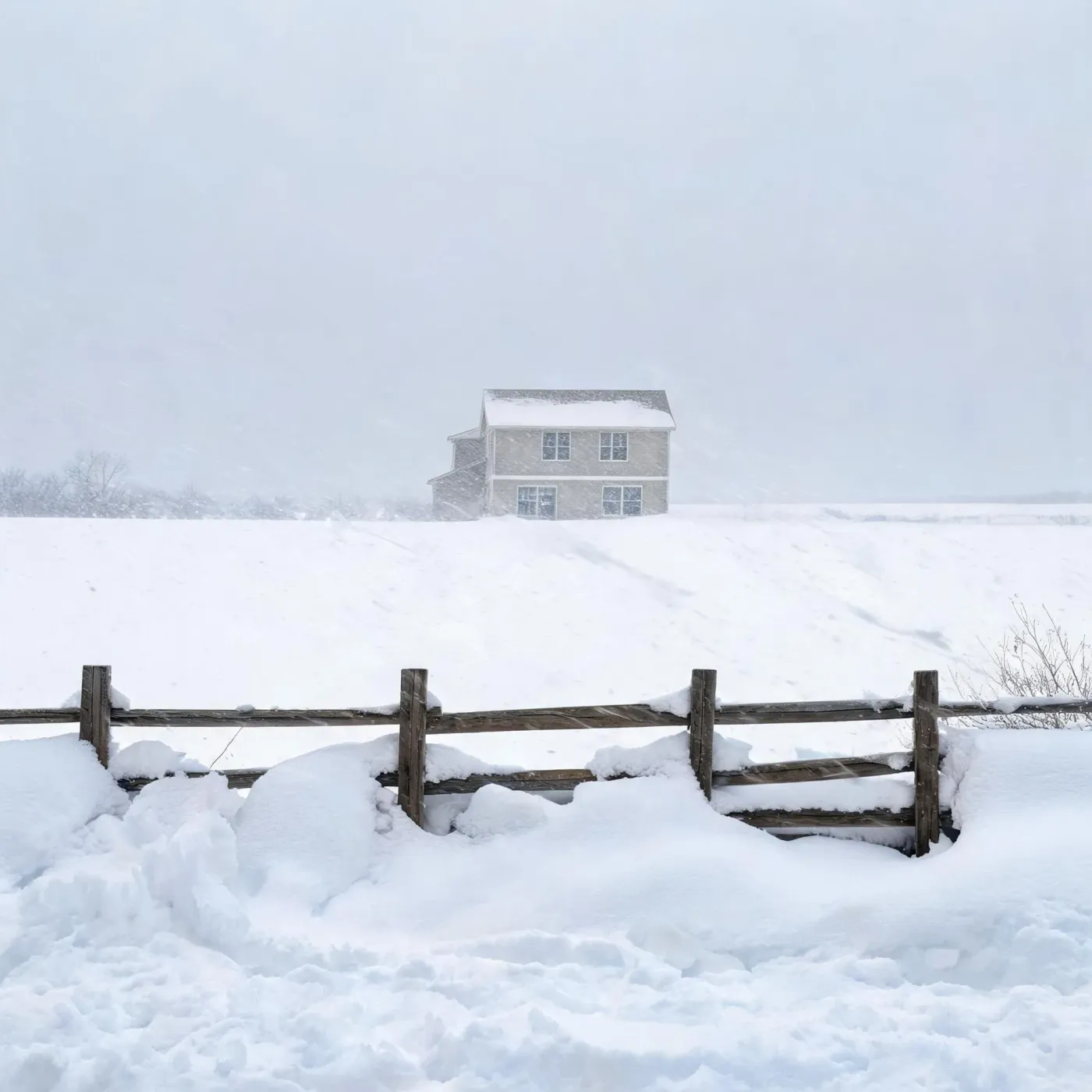
A two-story house with a snow-covered roof stands on a snow-covered field in falling snow, with a partly buried wooden rail fence in the foreground and a pale hazy sky behind.

Winter nights average 4°F across North Dakota, according to NOAA climate data. At that temperature your furnace doesn't just click on for a few minutes and shut off. It runs long stretches back to back, trying to hold the house steady while the cold keeps pulling heat out through the walls and the flue. That kind of steady demand is hard on a furnace that's already borderline. An igniter that glows a little weak, or a flame sensor with a thin layer of soot on it, can get through a mild night without trouble. On a night that sits at 4 degrees for hours, the same part gives out, and you notice because the air from the vents goes cold and stays that way.

NOAA nClimDiv 1991-2020 county normals weighted by homes

What are you noticing right now in your own house

You've probably bumped the thermostat up five degrees and nothing changed. Maybe the furnace clicks, hums for a second, and goes quiet instead of lighting. Maybe it lit and ran fine an hour ago and now won't start at all. Upstairs the air coming out of the vents is room temperature or cold. The house is losing ground room by room, starting with whichever bedroom is farthest from the furnace. If this goes on through the night, the rooms along outside walls will feel it first, and any pipe running along an outside wall is at some risk the longer the house sits cold. None of that means the furnace is done. It means something specific failed, and a tech who works on these every winter can usually name it fast.

  1. Thermostat calls for heat and signals the control board

  2. Inducer motor starts and purges the heat exchanger

  3. Pressure switch confirms draft before gas is allowed to flow

  4. Igniter heats up or sparks to light the burners

A smiling man in a denim shirt and white t-shirt stands in an open dark doorway of a stucco house, facing a woman with long brown hair and a green jacket seen from behind in the foreground.

A furnace that won't fire has a reason, and it's fixable

A dirty flame sensor, a cracked igniter, a stuck pressure switch, a bad thermostat signal. Whatever stopped your furnace, it's one of a short list of parts, and none of them need guesswork from someone who sees this equipment all winter. At four degrees outside, the furnace runs long enough and hard enough that whatever's marginal in it shows itself.

Getting matched means a licensed contractor local to North Dakota looks at your specific furnace, not a call center reading from a script and not three companies competing for your callback. One contractor who works on this equipment in this cold every season reaches out to you directly. You tell them what you're seeing, they bring the right parts the first time, and your house gets its heat back without you having to vet a stranger off a list.

Interior corner with a beige sofa holding a dark green and a light cushion and a textured throw, a potted small-leaved tree beside a white-framed window, and a dark shallow bowl on a wooden coffee table in the foreground.
A dimly lit unfinished basement with concrete walls and floor, exposed floor joists, a small window at left, and a dark furnace with PVC venting and sheet metal ductwork at right.

Matched to your furnace job

Your request goes to one pro, not a list of companies.

Step 1 of 3: Equipment