Running right
Air moves through the ducts, the flue pipes vent flue gas outside, and the gas line feeds the burners steady. The furnace fires, runs its cycle, and shuts off on its own schedule, not because something tripped it early.
A furnace that keeps cycling on and off, running a few minutes and shutting down, usually comes down to one thing: it's overheating and shutting itself off to protect the heat exchanger, or it's not sensing the flame right. A dirty filter is a common cause, since it chokes off airflow and makes the furnace run hotter than it should. A cracked or dirty flame sensor can do the same thing, telling the control board the flame went out when it didn't. With North Dakota winters running long and cold, a furnace that short cycles all day isn't keeping up, and the parts inside are working harder each time they fire up and shut down. Left alone, that repeated stress wears on the igniter, the blower motor, and the heat exchanger itself. It's worth having someone look at it before a cold snap turns a short cycling furnace into one that won't run at all.
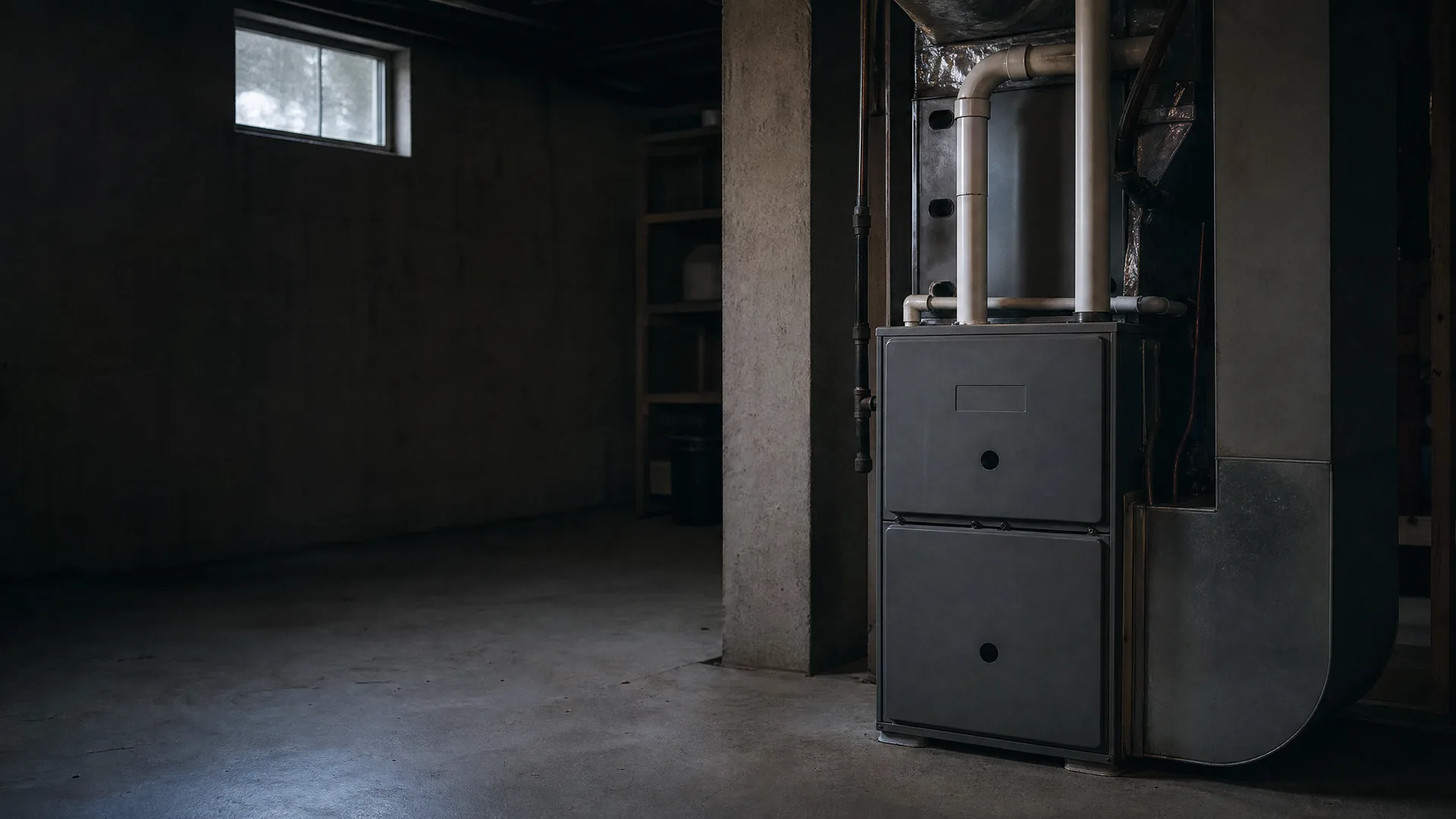
It's past six and already dark outside. You're down in the basement because the house felt cold ten minutes ago, then felt fine, and now it's cold again. The furnace sits there dead quiet. No blower, no flame, nothing. A thin layer of dust hangs in the air near the cabinet where it kicked on and shut off one more time. Outside it's November in North Dakota, cold enough that the furnace should be running most of the evening, not stopping every few minutes. You crouch down and touch the vent. Barely warm. Upstairs the thermostat still reads two degrees under what you set it to.

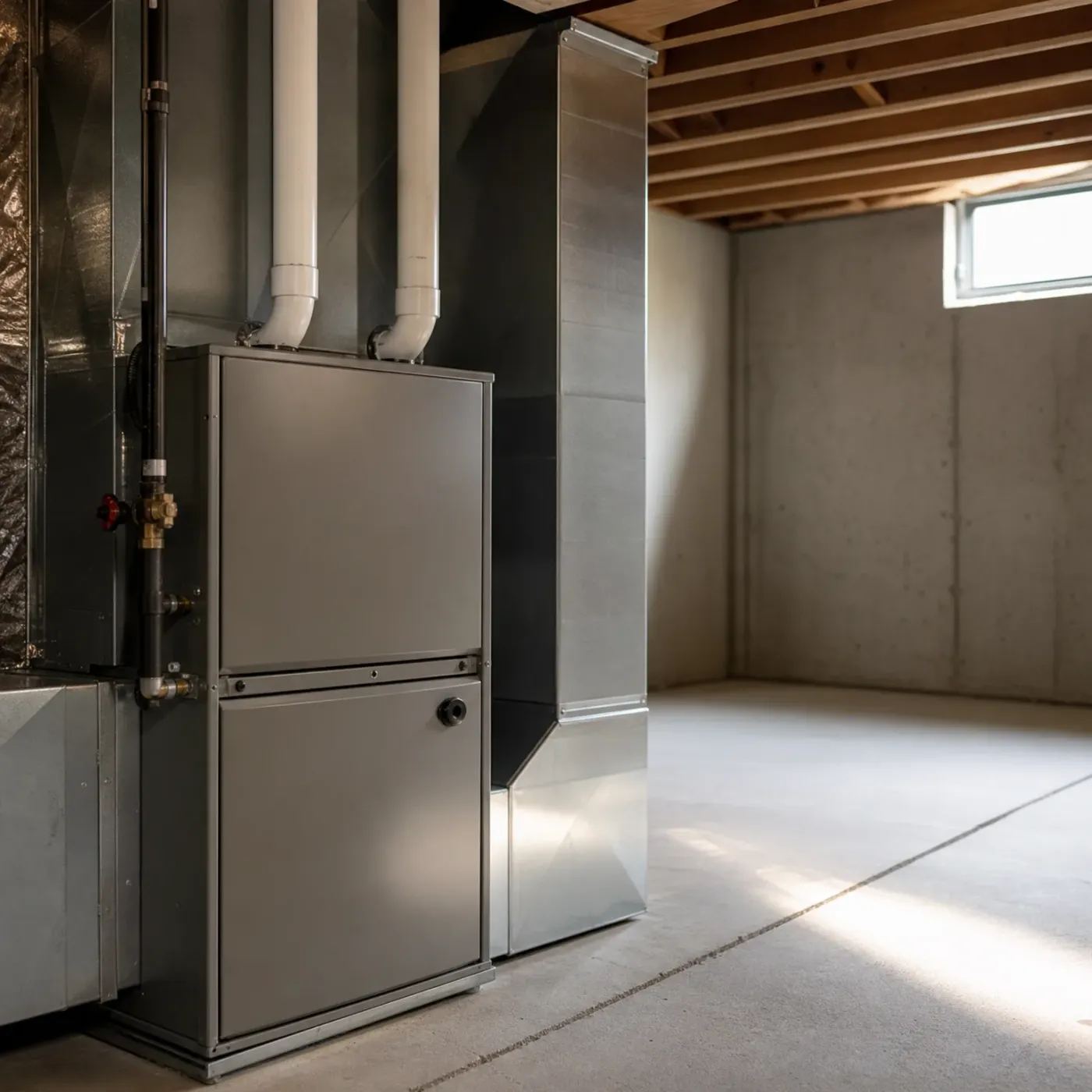
Air moves through the ducts, the flue pipes vent flue gas outside, and the gas line feeds the burners steady. The furnace fires, runs its cycle, and shuts off on its own schedule, not because something tripped it early.

Set on a pallet with the same ductwork and drain lines overhead, this furnace is stopping short. Something in the airflow, the flame sensing, or the gas supply is telling it to quit before the cycle finishes, and it will keep doing that until a contractor finds which one.
You notice it in the pattern. The furnace kicks on, you hear the blower, and a few minutes later it quits, long before a room should feel warm. Then it starts again. Some houses get three or four minutes of run time before the shutdown, others get less. You might hear the burner click on and off faster than it should, or notice the air coming from the vents feels lukewarm instead of hot. Check the filter first, since a dirty one is the most common reason a furnace overheats and trips its safety switch. Left alone through a North Dakota winter, a furnace that won't complete a cycle is a furnace that may not keep up when it's well below zero outside.




A furnace that won't hold a cycle doesn't fix itself by waiting it out, and a North Dakota night isn't the time to find out how far it can slip. Gas heat is what most houses here run on, and short cycling wastes it, firing the burners over and over without ever getting the place warm. Tracking down why means checking the flame sensor, the limit switch, the filter, maybe the ductwork, and that's a job for someone who can see the furnace in person, not guess from a description over the phone. Instead of calling around to find a furnace contractor who's free this week, explaining the same on and off pattern to each one, then weighing quotes against each other, you can hand that off. Submit what's happening and a contractor who works on furnaces in your area will follow up directly, so the next call you make about this is the last one.
The limit switch reads the air temperature inside the furnace cabinet. If it climbs past what the switch is set for, the switch cuts power to the burners so the heat exchanger doesn't crack from the heat. The blower often keeps running after, pulling that heat out before the switch allows another cycle. A furnace that short cycles because of this is doing exactly what it's built to do. The problem is whatever is making the cabinet run hot in the first place, not the switch itself.
The flame sensor sits in the burner flame and confirms it's actually burning before letting gas keep flowing. A coated or worn sensor can't read the flame right, even when the burner lit fine. The control board treats that as no flame, shuts the gas valve, and tries again a few seconds later. That's a full stop and restart, not a pause. A sensor acting up tends to get worse a little at a time, so the cycling often shows up before anything else does.


Thermostat calls for heat and the inducer motor starts first.
Igniter heats up or sparks to light the burners.
Flame sensor confirms a flame and keeps the gas valve open.
Blower starts once the heat exchanger reaches temperature.
At 4 below zero on a typical winter night, your furnace isn't cycling a few times an hour to coast. It's working to hold the house against real cold, so a unit that short cycles has less room to catch up before the chill sets back in.
NOAA nClimDiv 1991-2020 county normals weighted by homes
The pattern has a cause, and it's one of a small number of things. Heat builds up where it shouldn't, or the flame sensor stops telling the gas valve what it needs to hear. A dirty filter, a worn limit switch, a flame sensor coated with residue. None of that means the furnace is done. It means something specific inside it needs attention, and once that part is found, the fix is usually quick work for whoever's doing it.
What matters now is not letting it ride. A furnace that short cycles in October is a furnace that's going to short cycle harder in January, when the burners are working against real cold instead of a mild afternoon. The part that's struggling now has even less room to keep up once the temperature drops and stays down. Waiting doesn't give it a chance to settle on its own. It gives the problem more nights to get worse in.
The other piece is what you don't have to do. You don't have to call three contractors, describe the on-and-off pattern to each one, and then sit with three quotes trying to figure out who actually knows what they're looking at. One call, matched to someone who handles this specific problem, and you explain it once. The furnace still needs the visit. But the work of finding who does that visit is the part that goes away.
Explain the job once and skip repeating it on every call.
You only hire the pro if you want to.