 Start one form
Why your furnace is leaking water in North Dakota
Skip searching for a furnace pro and answer a few questions instead.
A furnace that's leaking water gets your attention fast, especially with a North Dakota winter outside. Most gas furnaces here are high-efficiency models, and those produce condensation as part of how they work. A little water draining out through a hose is normal. Water pooling under the unit or dripping from the cabinet is not.
The usual causes are a clogged condensate line, a cracked drain trap, a dirty filter restricting airflow and causing the coil to freeze and then thaw, or a flue pipe that isn't sloped right. Some of these are a few minutes of work. Others mean a part needs to come out and get replaced. You can't tell which from looking at a puddle.
Finding out means getting someone out to look at it, and that's usually where the trouble starts. You start searching for furnace repair companies, call a few, explain the same problem to each one, and then wait to see who calls back and when. Some don't. The ones that do often want to schedule a diagnostic visit before they'll even guess at a price, and you're left comparing quotes from people you've never worked with, hoping you picked right.
This page skips that part. Instead of you tracking down contractors, one request goes to a licensed contractor near you in North Dakota who works on furnaces all winter and has seen what usually causes a leak like this in homes around here. You explain it once. No stack of calls to return, no quotes to sort through from companies competing for the job.
Below, you'll find what to check before anyone comes out, what the leak is likely telling you depending on where it's coming from, and when it's safe to wait versus when to shut the furnace off now. The buttons on this page connect you with that contractor when you're ready.
A furnace leaking water is almost always a high-efficiency furnace doing what it does, up to a point. These furnaces pull extra heat out of the exhaust, and that process turns part of the exhaust into water. A condensate line and a small pump are supposed to carry that water out to a drain. When you see water pooling around the unit instead, something in that path has failed. The condensate line can clog with the same residue it's carrying, the pump can quit, or a crack in the line sends water where it shouldn't go. In a North Dakota winter you can't afford to shut the furnace off and wait. Left alone, the leak can trip a safety switch that shuts the furnace down on its own, or the water can reach wiring and the circuit board underneath. Either way, the furnace needs a contractor to find where the water is actually coming from before it causes more damage than a wet floor.


Water traces back to one path. The furnace pulls heat out of the exhaust, turns part of it to water, and sends that water down a condensate line to a drain or a pump. Anywhere along that path, something can go wrong. The line itself can clog with algae and sediment, slow at first, then dripping, then worse. A fitting can crack and let water out before it reaches the drain at all, often right over the blower. The pump that's supposed to move the water out has a float switch meant to shut the furnace down if the pump quits, but a stuck float won't catch it, and the furnace keeps running while water collects. Sometimes the problem isn't a clog or a part at all. The line was never sloped right when the furnace went in, so it drains slow no matter what you do. And sometimes the leak isn't from the drain line at all. The secondary heat exchanger corrodes and opens a pinhole, and the water shows up inside the cabinet instead.
Where the water actually comes from
- The condensate line carries water from the heat exchanger down to a floor drain or a condensate pump, and any blockage backs the water up into the furnace cabinet.
- Algae and sediment build up inside that line over months and narrow it gradually, so the leak often starts as a drip and gets worse over a few weeks.
- The condensate pump has a float switch that should shut the furnace down if the pump fails, but a stuck float lets the furnace keep running while water overflows.
- A cracked or disconnected PVC fitting on the drain line lets water escape before it ever reaches the drain, often right above the blower compartment.
- The secondary heat exchanger itself can corrode and develop a pinhole leak, which shows up as water inside the cabinet rather than along the drain line.
- A furnace installed without the correct slope on the condensate line will drain slowly no matter what, leaving standing water that eventually finds a way out.




One form, no calling around

Your request goes to one pro, not a list of companies.
Asking costs nothing, and the choice to hire stays yours.
What That Leak Costs You
- A furnace running a cracked heat exchanger can push water out through seams never meant to drain.
- Water pooling near the furnace in January can freeze on a cold basement floor before you notice it.
- A clogged condensate line backs up fast enough to shut the furnace down on its own safety switch.
- Standing water near the blower or control board risks a repair that costs more than the drain line itself.
- A furnace that keeps shutting off on cold nights in North Dakota leaves a house losing heat fast.
- Water reaching the circuit board turns a cheap fix into a part that has to be replaced outright.
What a furnace leak turns into depends on where the water goes and how long it sits there. A condensate line that backs up usually trips the furnace's safety switch before anything else happens, so you lose heat on a night when North Dakota is not forgiving about it. That part is almost the easy case. Water pooling on a basement floor in January doesn't stay water for long. It finds the coldest surface it can and freezes there, and a thin sheet of ice near the furnace is easy to miss until someone steps on it. The furnace itself is the bigger worry. A blower compartment or control board that gets wet isn't a part you dry out and reuse. Boards corrode, connections fail later even when they look fine right after, and what would have been a clear line or a new condensate pump turns into a board replacement instead. A cracked heat exchanger is the one cause that doesn't follow the usual pattern, since the water can come out through gaps in the metal itself rather than the drain line, and no amount of clearing the line fixes that. However it starts, the longer the furnace runs while it's happening, the more of it reaches parts that were never built to handle being wet.


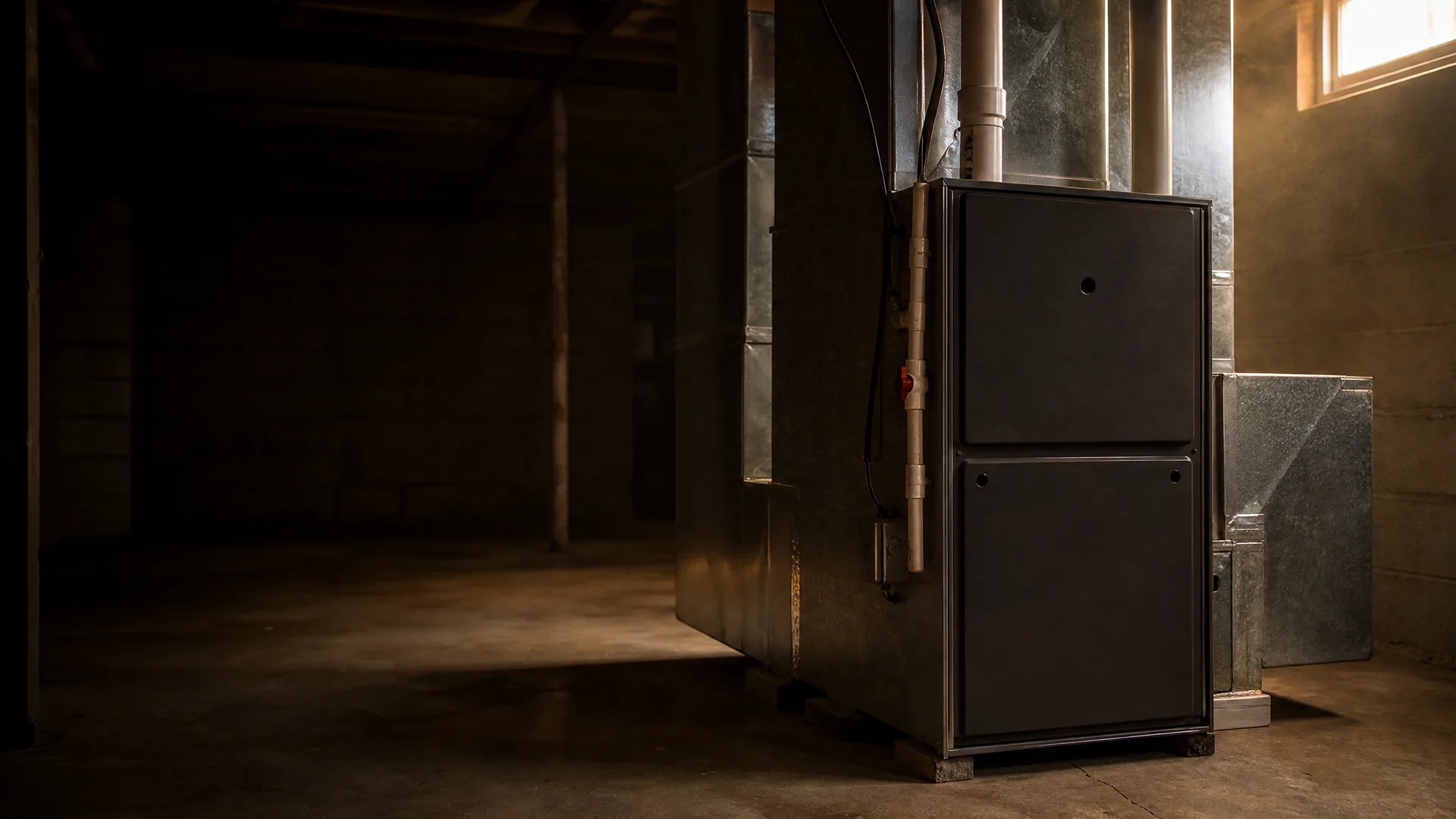
It's past seven and the basement window has gone black. You come down to check the laundry and the furnace sits quiet, no hum from the blower, no warm air moving. Outside the ground has started to freeze for the season. You crouch by the cabinet and see it, a dark puddle spreading toward the floor drain, a few inches short of reaching it. The air near the unit smells faintly of dust warming and cooling. You touch the metal and it's cold. The house is starting to feel it too, a small chill creeping into the room, and you stand there a second before you go find a flashlight.
Winter nights average 4°F statewide
At 4°F, a typical overnight low here, your furnace is running almost nonstop to keep up. That means more exhaust condensing into water, more water moving through that line, and less time between cycles for a clog to show itself.
NOAA nClimDiv 1991-2020 county normals weighted by homes

Burners fire and heat the exchanger
Exhaust gases cool and release water vapor
Vapor condenses into water inside the exchanger
Condensate drains down to the trap


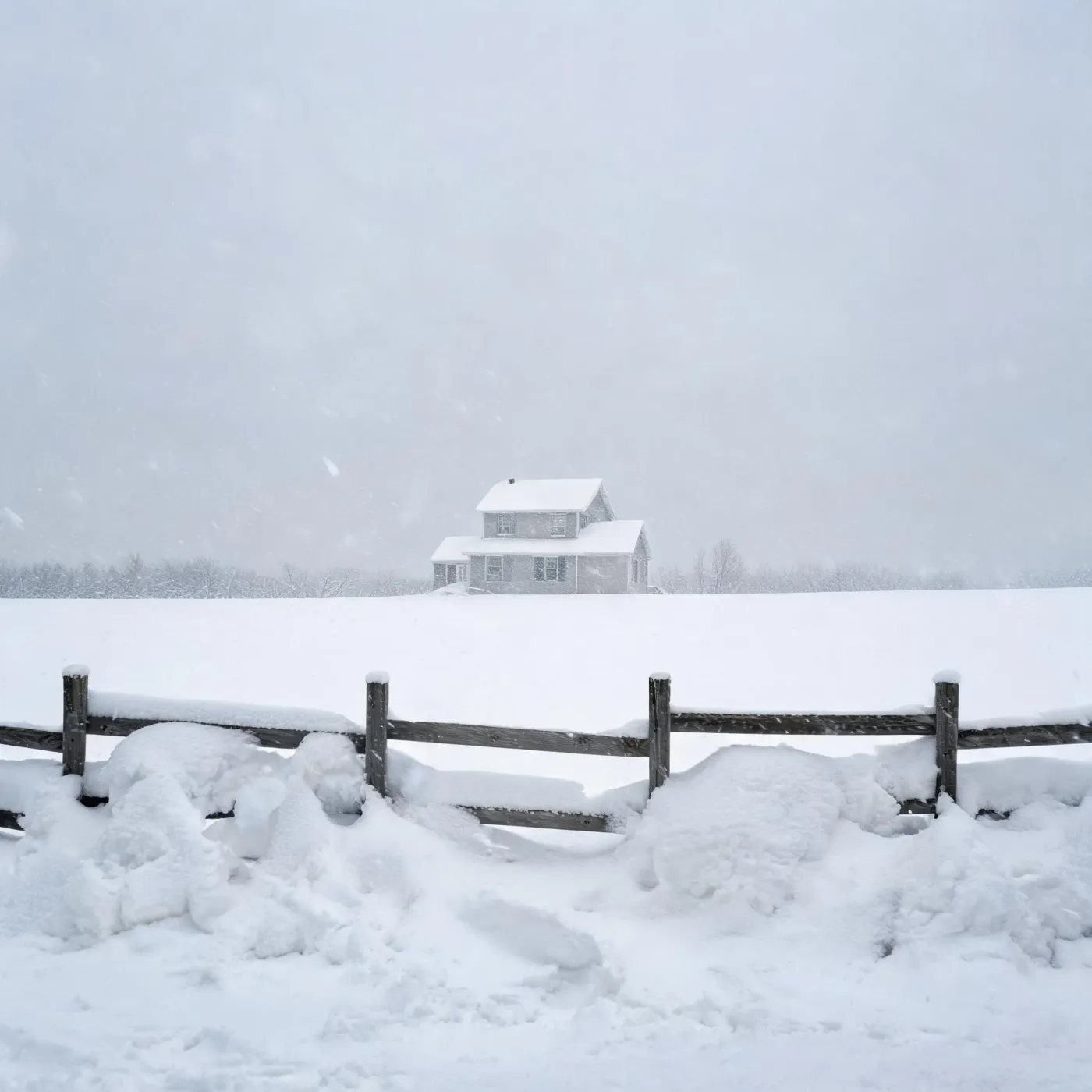
Winter nights average 4°F statewide, and at that temperature your furnace barely shuts off. More run time means more exhaust cooling into water, hour after hour, all night long. If the condensate line has even a partial clog, that steady flow is what pushes it past its limit and sends water into the cabinet instead of down the drain. You'd notice it first as a puddle that shows up again within a day of you wiping it dry, because the furnace never really stops running long enough to let the line clear itself. Source: NOAA.
NOAA nClimDiv 1991-2020 county normals weighted by homes

A leaking furnace is telling you something specific
Water under the cabinet almost always traces back to the condensate line or the pump that empties it. That's the piece worth having looked at before the furnace shuts itself down on a night when you need it most. Once that line is clear and draining the way it should, the water stops and the furnace goes back to running the way it was built to.
Finding someone to look at it is its own chore, the kind you'd rather not take on after you've already spent the evening mopping up around the cabinet. Instead of calling around to a handful of companies, describing the leak over and over, then sitting with a stack of quotes to sort through, this connects you with one licensed contractor local to North Dakota, someone who deals with this exact failure every winter and knows what a clogged line looks like before they've even opened the cabinet.


Skip the search