What size furnace do I need for my house in North Dakota?
North Dakota winters put a real demand on a furnace, and getting the size wrong either way costs you. Too small and it runs nonstop without catching up on the coldest days. Too big and it short cycles, wearing out parts faster and leaving rooms uneven. You want a number that matches your house, not a guess off a chart at the store.
It depends on your house, not a flat number
There's no single furnace size that fits every North Dakota home. The right size comes from a load calculation that weighs your square footage, how well the house is insulated, your window count and type, and your local winter design temperature, which runs well below zero across most of the state. A home with tight insulation and newer windows needs less furnace than an older home the same size with neither. Since most homes here heat with gas, a contractor doing the load calculation will also size the furnace to your actual gas furnace needs rather than a rule of thumb. Getting this number right before installation is what keeps the house warm through January without wasting fuel.
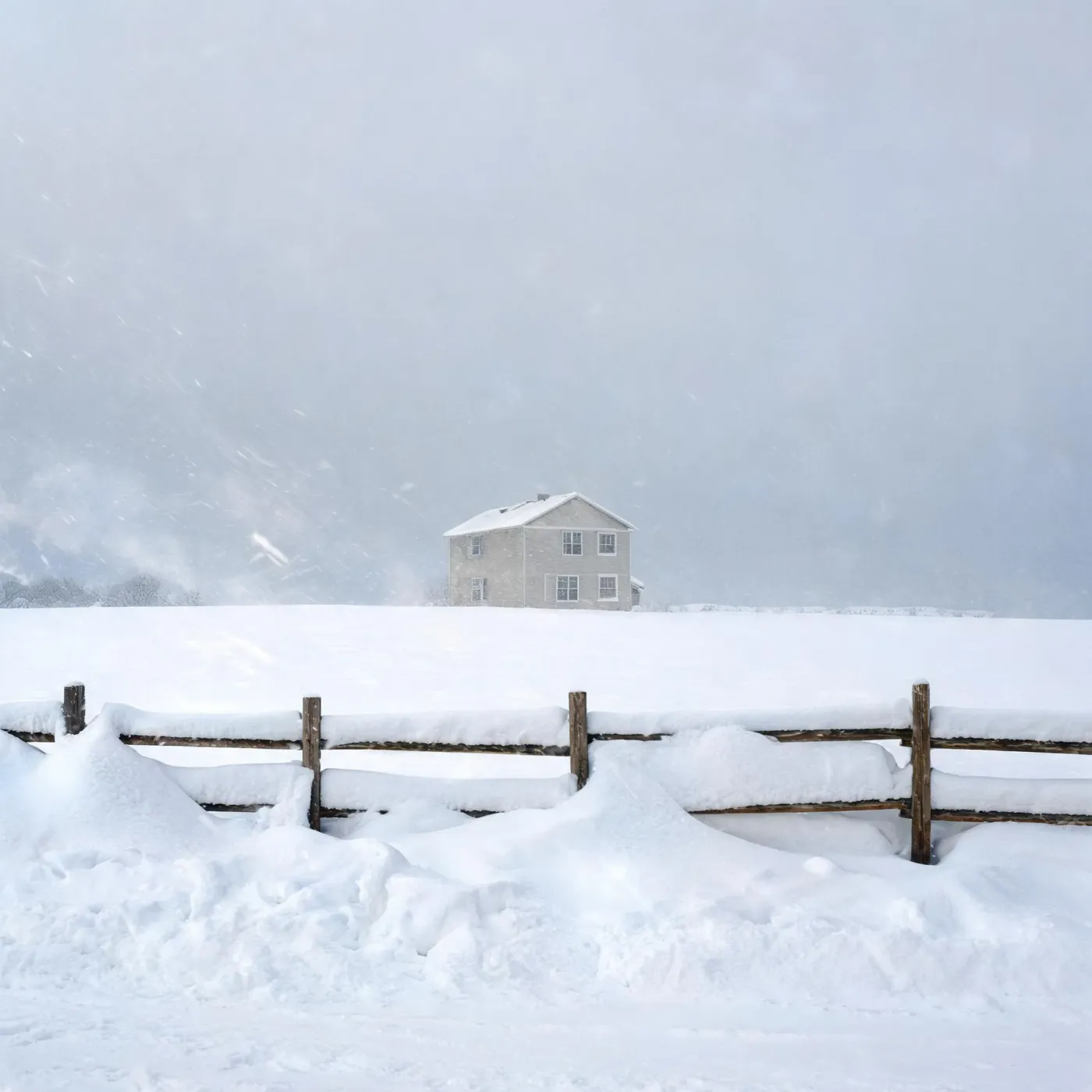
A furnace that's too small shows itself fast here. On a night that drops to ten below, you'll feel it in the back bedrooms first, the ones farthest from the furnace, while the thermostat still claims the house is at 68. It runs the whole night and never quite catches up. A furnace that's too big shows itself differently. It blasts the house warm in a few minutes, shuts off, and kicks back on again not long after, over and over through the day. That cycling wears on the ignition system and the blower motor faster than steady running would, and it leaves cold spots anyway because the air never moves long enough to even out room to room. Either mistake shows up on the gas bill too, since a furnace running flat out all night or firing on and off all day is burning more gas to do it. Getting the size right the first time, matched to your house and not just the one that was there before, is what keeps you from living with either problem for the next twenty winters.
Sized right for the load
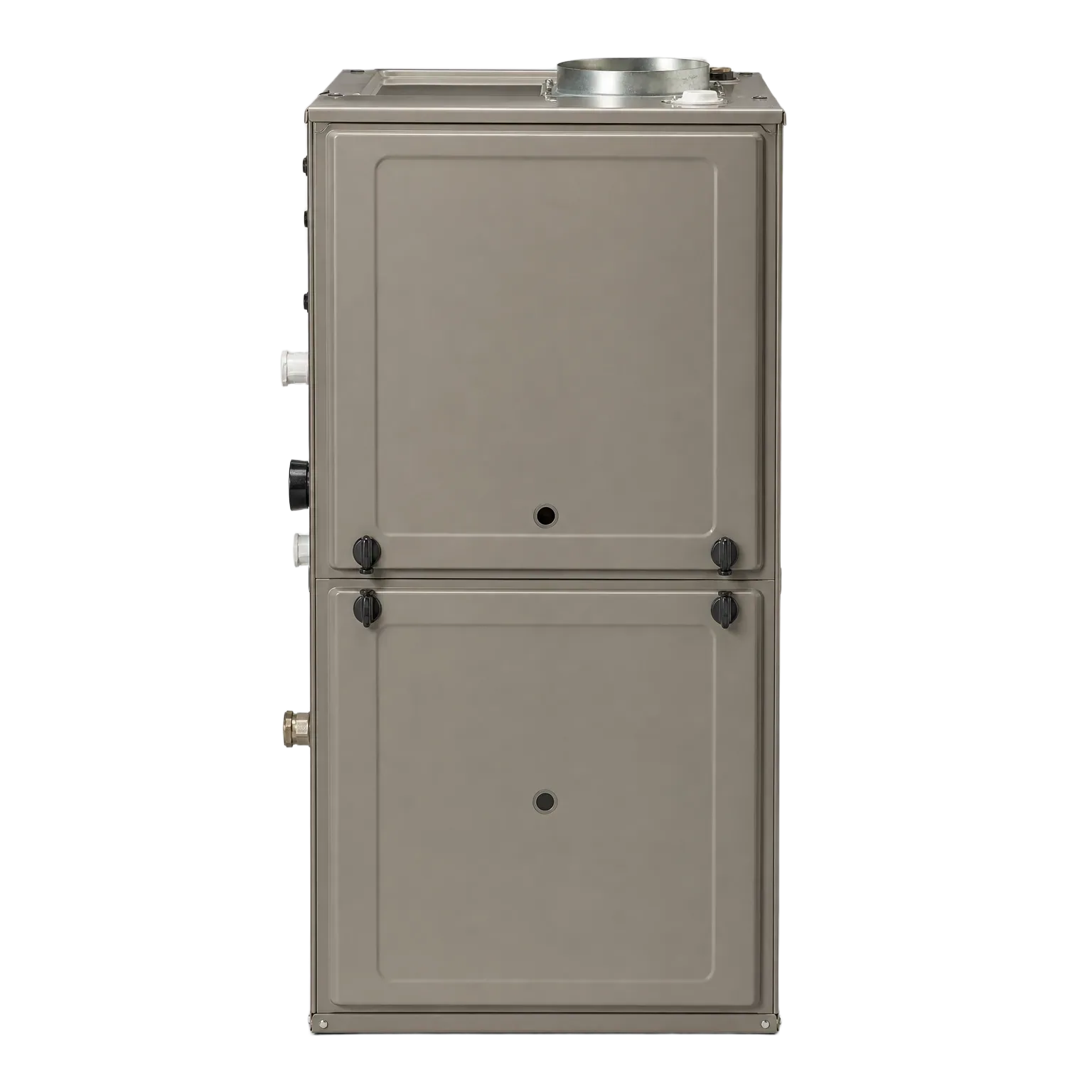
This is what a correctly sized furnace looks like at work. It runs long, steady cycles even at thirty below, and the flue pipes and air handler show a system built to carry the whole house through a North Dakota winter without strain.
Sized wrong, and aging
This furnace is older and undersized for what the house asks of it. The dust on the cabinet and the wear on the vents are what years of running harder than it should leaves behind. A unit pushed past its load wears out faster than one matched to the house.
How a contractor actually figures the number
A contractor doesn't size your furnace off square footage alone. The real method is called a Manual J load calculation. It accounts for your square footage, your ceiling height, how many exterior walls each room has, your window count and type, and your insulation. Two houses the same size a mile apart can need different size furnaces if one has more west-facing glass or a colder exposure to the wind.
The output is a number in BTUs, and that number has to match what the furnace is rated to put out, not just what fits the furnace closet. A contractor who does this right will walk your house, room by room, before quoting anything. If you're not sure what your current furnace is rated for or whether it was ever sized properly for your house, that's worth having someone check. Getting matched with a contractor who'll actually run the numbers for your place, instead of guessing from a chart, is the difference between a furnace that keeps up in January and one that doesn't.
Winter nights average 4°F statewide, and that's the number a furnace has to be sized against, not the mild stretches in October. At that temperature, a correctly sized furnace runs in long, steady cycles that keep the house even. An undersized one won't recover between cycles, so you'll see the thermostat drift a degree or two below the setting and stay there until morning. Source: National Weather Service. Getting the size right the first time means your home holds steady through those cold nights instead of fighting to catch up. If you're ready to have the sizing done properly, sending in your information lets a contractor take it from there, and you're done thinking about it.
NOAA nClimDiv 1991-2020 county normals weighted by homes
Send the form and the search for an installer is over.
Sending the form costs nothing.
Why oversizing costs you too
A furnace that's too big for the house heats the air fast and shuts off before it pulls the chill out of the walls and furniture. The room feels warm at the thermostat and cold everywhere else. It also cycles on and off more often, and every start draws power and wears the igniter and blower motor a little more. Gas is cheap here, so the extra fuel from short cycling isn't what hurts. The wear on the equipment from starting and stopping all day is.
The BTU number explained
A furnace's size is measured in BTUs per hour, the heat it can put out. A bigger number isn't automatically better. The right BTU output matches how much heat your house loses on a cold night, no more and no less. Two houses the same square footage can need different sized furnaces if one has more windows or higher ceilings. That's why the number on the furnace matters more than the number on the floor plan, and why a contractor calculates it instead of guessing from size alone.
Winter nights average 4°F statewide
That average includes the milder nights. On the coldest ones your furnace is working well past that number, which is exactly why sizing it to the occasional mild night leaves it short when you need it most.
NOAA nClimDiv 1991-2020 county normals weighted by homes
The Right Size, Settled
A Manual J calculation, not a square footage chart, is what tells you the right size for your house.
Right-sized furnaces run long, steady cycles through a North Dakota winter instead of short bursts or nonstop struggle.
Undersized and oversized furnaces both fail the same rooms, just in different ways, leaving parts of the house uneven.
Four degrees is the statewide winter night average, and sizing has to hold up on nights far colder than that.
A furnace sized for your actual house, not an average house, is what keeps the coldest nights from being a problem.
Once you send the form, finding the right contractor for the job isn't something you have to chase down yourself.
The number comes from a Manual J calculation, run on your house, not a chart based on square footage. That's the only way to know whether the furnace in your mechanical room matches the house it has to heat. Get it right and the furnace runs long, even cycles on the coldest nights, the kind well below that statewide average of four degrees, and every room ends up close to the same temperature. Get it wrong in either direction and the house tells you. Too small, and the far rooms never catch up no matter how long it runs. Too big, and the thermostat says 68 while the room still feels cold, because the air heated fast but the walls and furniture didn't. Both versions leave parts of your house uneven, just for different reasons. None of this is something you can eyeball from the size of the house or guess from what the last owner had installed. It takes someone measuring your walls, your windows, your layout, against what a North Dakota winter actually asks of a furnace. Once you've sent the form, that part isn't on you anymore. A contractor who does this sizing work will take it from there, and you can stop running the numbers yourself. The house still has to get through January either way. Sizing the furnace right is what makes that unremarkable instead of a nightly question.
Get the right pro for your furnace
Send the form and stop researching installers for the new furnace.