



What a furnace tune-up covers before a North Dakota winter

A local pro who services furnaces gets in touch about the tune-up.

Step 1 of 3: Equipment

What does a furnace tune-up cover before winter in North Dakota?

North Dakota winters put a gas furnace through months of nonstop running, and most homeowners want to know it'll hold up before that starts. A tune-up before the cold hits is the usual way to check that, but it helps to know what a technician actually looks at and why it matters once temperatures drop well below freezing.

A tune-up checks the parts that fail once the furnace runs for months straight

A technician cleans and inspects the burners, checks the igniter, tests the flame sensor, and looks at the heat exchanger for cracks. They'll check the blower motor, test the thermostat response, and confirm the system is venting exhaust the way it should. Gas pressure gets checked too, since a furnace running on the wrong pressure burns fuel without heating the house well. None of this matters much in October. It matters in January, when the furnace is running most hours of the day and a small problem, a dirty flame sensor or a failing igniter, turns into no heat at the coldest point of the year. A tune-up catches that failure before the cold does.

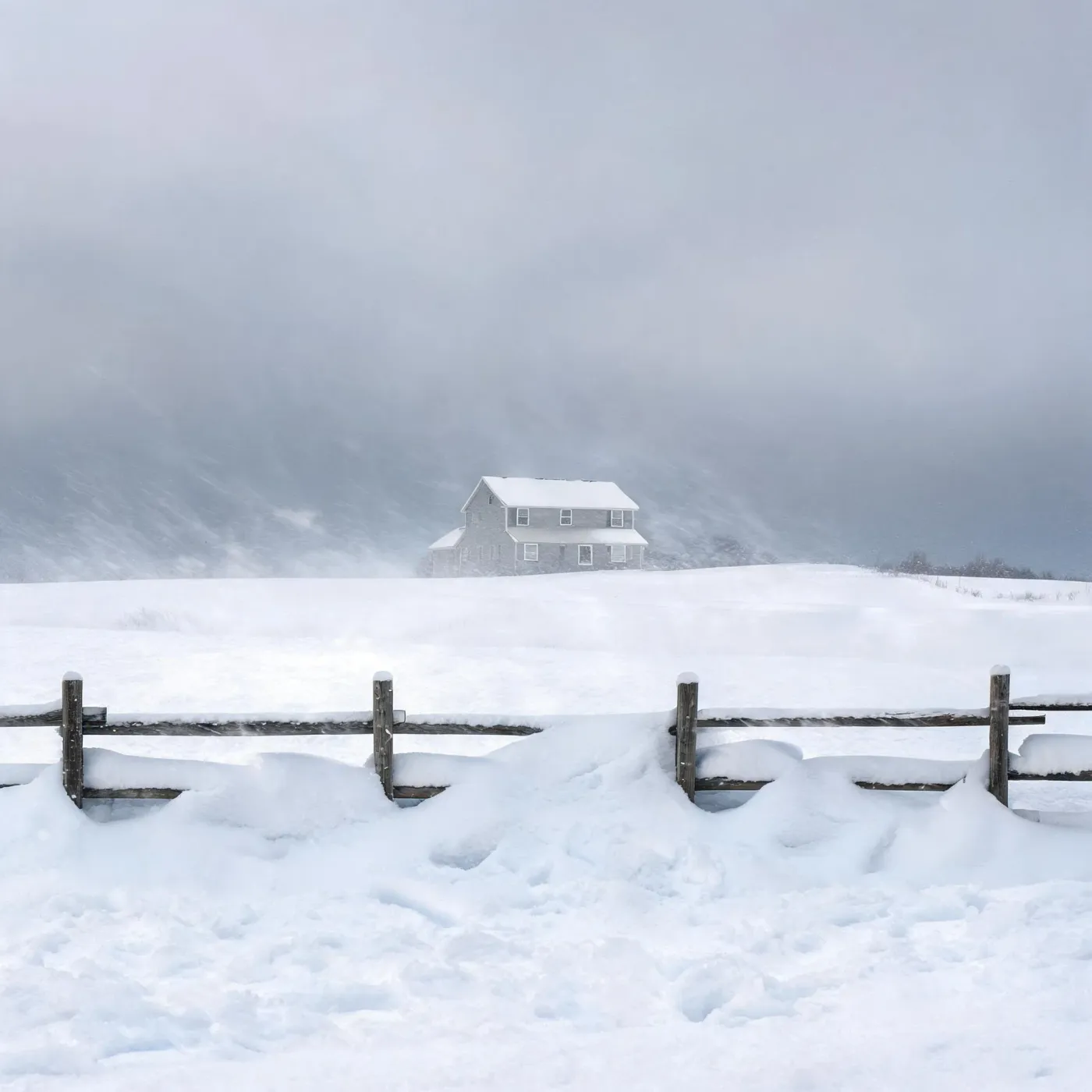
A two-story light-colored house stands on a snow-covered rise under a gray sky during blowing snow, with a partially buried wooden post-and-rail fence in the foreground.

Winter nights average 4°F statewide, according to NOAA climate data, and that number is what decides how hard your furnace works from November on. At 4 degrees outside, a furnace doesn't cycle on and off anymore. It runs long stretches just to hold the house at 68, and it keeps that up for weeks at a time. A furnace that starts the season with a weak igniter or a dirty flame sensor doesn't get a break to cover for it, since the system rarely shuts off long enough to reset or recover on its own. That's the stretch where a furnace that was limping along in October either keeps up or starts short cycling, and you notice it as rooms that won't hold heat or a furnace that runs most of the night.

NOAA nClimDiv 1991-2020 county normals weighted by homes

A gray-haired bearded man in a dark coat and scarf dusted with snow stands smiling in a dimly lit entryway with a white front door, a side table with a lit lamp, an oval mirror, and a patterned rug.
An older bearded man in a dark snow-dusted coat and gray scarf stands just inside a dimly lit home entry, with a framed picture, lit table lamp, and an adjoining room with a fireplace behind him, and snow visible through the open door.
A gray-haired, bearded man in a dark snow-dusted coat stands smiling in a dimly lit entry hall with a staircase, a lit table lamp, a framed picture, and a living room visible through a doorway.
An older man with gray hair and a beard, wearing a dark jacket dusted with snow, stands smiling in a dimly lit hallway with lamps and a living room visible behind him.

Booking it yourself before the cold

You can call around now, before the first hard freeze hits. That means finding contractors who still have openings before November, calling each one, explaining the same thing about your furnace every time, and lining up quotes to compare. Some won't call back. Some are booked into December. If you've got the time this week to do that work, you'll get there, but it takes more than one phone call, and the closer winter gets, the fewer open slots there are to choose from.


Getting matched instead

You answer a few questions about your furnace and your house once, and that's the last time you explain it. A contractor who serves your area gets in touch with you directly, instead of you working down a list and hoping someone picks up. No calling around, no repeating yourself, no sorting through quotes on your own. You still decide who does the work and when, but the searching and the back and forth are handled before you ever pick up the phone.

A beige furnace with a louvered front panel and metal ductwork stands on a concrete basement floor beside pipes and a white cylindrical water heater.
Before you get your furnace maintenance
A gray high-efficiency furnace in a basement with PVC venting pipes, a yellow gas line, metal ductwork, concrete walls and floor, and a wood-framed stairway at left.
After you get your furnace maintenance

Is your furnace ready to run nonstop?

You might notice the furnace taking longer to warm the house than it did last January, or the burner flame looking more orange than blue. Maybe there's a burnt smell the first time it kicks on for the season, or the blower rattles before it settles into a steady hum. A thin layer of dust on the vents might mean the filter's overdue. None of that stops the furnace from running once the cold sets in and it has to work for months straight, but a furnace already struggling in October has nothing left to give at 4 below. Skip the signs and you're looking at higher gas bills, uneven heat room to room, or a breakdown on the night you need it most.

A gray high-efficiency furnace stands on a concrete basement floor beside galvanized sheet-metal ductwork, with white PVC vent pipes, gas and water lines, and unfinished wood framing behind it.

Running the way it should

A furnace that's been serviced fires up clean, with a steady blue flame and no hesitation at the igniter. Air moves through the ductwork at full strength, and the flue pipe carries exhaust out without any smell reaching the basement.

A beige furnace with two louvered front panels stands on a concrete basement floor beside galvanized ductwork, metal pipes, and a wooden post.

Running into trouble

A furnace overdue for a look often struggles quietly first. The blower cycles longer than it should, the burner flame leans yellow or orange, and dust sits heavier around the vents. Left alone, a furnace in this shape is more likely to quit on the coldest night of the year.

A woman wrapped in a thick beige fleece blanket sits on a sofa with an open book on her lap, beside a lit table lamp, with a frost-covered window behind her.
An older woman with gray hair in a bun and glasses, wearing a beige knit sweater, smiles while looking to the side in a warmly lit kitchen, with a loaf of bread on the counter in the foreground and a snowy scene outside the window.

A furnace pro near you

A furnace that runs long stretches at 4 below zero doesn't give much warning before it quits. By the time you smell gas or hear the burner struggling, you're already into the stretch of winter where going without heat for a few days isn't an option. Getting a tune-up booked now means you skip the part where you're calling five companies, telling each one the same story about the orange flame or the long warm-up time, and waiting to see who calls back first. Instead, one contractor who covers your area gets your request and reaches out to you directly, already knowing what you're dealing with. That matters more in North Dakota than most places, because once the cold settles in for good, a contractor's schedule fills fast and a furnace that's already struggling doesn't get more patient while you wait for an opening. Handling it before the hard freeze means one less thing to track down once your furnace is the only thing standing between your house and a Dakota winter.

What actually gets checked

  • A tech checks flame sensor and burner condition first, since a dirty sensor is the top reason furnaces shut off mid-cycle.
  • The heat exchanger gets inspected for cracks, because a cracked one can leak carbon monoxide into the house.
  • Amp draw on the blower motor gets tested against the nameplate rating to catch a motor that's starting to fail.
  • The igniter gets checked for a steady glow, since a weak one causes delayed ignition or no ignition at all.
  • Gas pressure at the manifold gets measured and adjusted, because pressure that drifts low or high changes how the burner fires.
  • The flue and venting get checked for a clear path out, since a blocked vent backs up exhaust instead of pushing it outside.

A tune-up follows a set order, and each step catches a different way a furnace fails partway through a North Dakota winter. It starts at the burner, where a tech looks at the flame sensor first. That part tells the control board the burner lit, and when it's coated with residue, the board shuts the gas off even though everything else is fine. From there the heat exchanger gets a close look, since a crack in it lets combustion gases mix into the air your blower pushes through the house. The blower motor gets tested under load, with the amp draw measured against what the nameplate says it should pull. A motor pulling too many amps is wearing out, even if it still runs today. The igniter gets watched through a cycle to see if it glows steady or struggles, because a weak igniter means slow starts now and a no-start later, usually on the coldest morning of the year. Gas pressure gets checked at the manifold with a manometer, since pressure that's drifted changes the flame itself, how hot it burns and how clean. Last comes the venting, checked for a clear path from the furnace to outside air. At 4 below zero, a furnace that hesitates on ignition or runs a cracked exchanger isn't a small problem waiting for spring. It's one that shows up as no heat or a gas smell on a night you can't afford either.

Winter nights average 4°F statewide

At 4 below zero, a furnace that's slow to light or short on airflow has no slack left to work with. It's running most of the night to hold the house at temperature, so a dirty sensor or a weak blower motor shows up fast instead of staying hidden.

NOAA nClimDiv 1991-2020 county normals weighted by homes

A tune-up before winter checks the flame sensor, the heat exchanger, the blower motor and the flue, because at 4 below zero none of them get a break. That's the whole answer. What's left is finding someone to do it before the cold sets in, and that part usually means calling a handful of contractors, telling each one the same thing about your furnace, waiting to hear back, and comparing quotes that don't line up with each other. You don't have to run that down yourself. Answer a few questions about your furnace and your situation, and a contractor who serves your area gets in touch with you directly. No more calls to make, no more voicemails left, no more explaining the burner flame or the burnt smell from scratch to the next person on the list. Your furnace will run through whatever November brings either way. The only question is whether you spend the next few weeks chasing contractors or let one reach out to you.

A wooden front door with six small glass panes and a narrow sidelight, set in a shingled house entry with white trim, reached by stone steps flanked by a planted urn with purple flowers and leafy branches in the foreground.
Exterior corner of a house with beige horizontal lap siding and a black-framed window, with white hydrangeas, ornamental grasses and low plantings along a flagstone patio.
Corner of a house with tan lap siding and a window, a brick step edge, flowering white hydrangeas and green shrubs beside a flagstone walkway leading to a white picket fence and a tree in backlit sunlight.
House exterior with cream horizontal lap siding, a dark-framed window, a black wall lantern beside a wood door, potted shrubs on stone steps, and white and pink hydrangeas in the foreground garden.
Corner of a cream lap-sided house with a white-framed window and dark shingled roof, beside a white-flowering hydrangea shrub, a clipped hedge, mulched bed and lawn.

A local pro for your furnace maintenance

Fill out one form instead of calling around for a furnace tune-up.

Match me with a pro

You're not committing to anything by asking.








