












Signs of a cracked heat exchanger in North Dakota

One request and the search for a pro is handled.

Let a pro reach out

What are the signs of a cracked heat exchanger?

A furnace runs for months straight through a North Dakota winter, and that kind of use wears on the metal inside it. You've noticed something off, maybe a smell, maybe the pilot light acting strange, and before calling anyone you want to know what you're actually looking at. A cracked heat exchanger is serious, but it helps to know what points to one before you treat it as an emergency.

A sharp or chemical smell, soot, or a flame that flickers yellow instead of steady blue

The heat exchanger is the metal chamber that separates the burning gas from the air your furnace pushes into your house. When it cracks, exhaust can mix into that airflow instead of going out the flue. The signs worth watching for are a flame that wavers or turns yellow at the burner, soot building up around the furnace, a smell like formaldehyde when the furnace kicks on, and headaches or nausea that ease up once you leave the house. With gas heat running for most of the winter here, the exchanger gets a long stretch of heating and cooling cycles every season, and that's what eventually works a crack into the metal. Any one of these signs on its own is worth a look. More than one together means the furnace shouldn't keep running until someone checks it.

A beige residential gas furnace with white PVC vent pipes, copper and yellow gas lines, and adjacent sheet-metal ductwork stands on a concrete floor beside a plain white wall.

Why the metal cracks

The heat exchanger heats and cools every time the furnace cycles on and off. Through a North Dakota winter that can mean dozens of cycles a day. Each one makes the metal expand and then contract. Over years that constant movement stresses the seams and joints until a crack opens up. It's a slow process, which is why the signs show up gradually instead of all at once, and why they're easy to write off as something else.

A gray high-efficiency furnace with white PVC vent pipes and metal ductwork stands on a concrete floor beside a plain off-white wall in a basement.

Why carbon monoxide is the danger

A furnace burns gas to make heat, and that burning gives off carbon monoxide as a byproduct. In a working furnace, the heat exchanger keeps that gas separated from the air moving through your ducts and into your rooms. A crack breaks that seal. Carbon monoxide has no smell and no color, so you won't notice it directly. A carbon monoxide detector will, which is why one installed near the furnace and in bedrooms matters as much as catching the other signs.

Keep running it or get it checked

Keep running it

  • A cracked heat exchanger can let carbon monoxide into the air your furnace pushes through the house.
  • The crack usually gets worse with each heating cycle, since the metal keeps flexing at the same weak spot.
  • A carbon monoxide detector near the furnace is the only reliable way to catch a leak before you smell or feel anything.
  • Shutting the furnace off and having it inspected is the safer move once you suspect a crack, even in the middle of a cold snap.
  • Waiting on a suspected crack risks a furnace that has to be condemned rather than repaired.

Get it checked now

  • A technician can inspect the heat exchanger with a camera or combustion analyzer to confirm a crack before anything else is touched.
  • Finding someone who does this kind of inspection, calling around, and explaining the symptoms more than once takes time you may not have in a North Dakota winter.
  • Once the form here is sent, that search is off your plate and someone qualified gets in touch.
  • A confirmed crack means the heat exchanger or the furnace gets replaced, since this part isn't patched or welded.
  • Catching it early, before the furnace has to shut down on its own, keeps you from losing heat on the coldest days.
  1. Flame inside the heat exchanger burns and heats the metal walls

  2. Metal develops a hairline crack after repeated heating and cooling cycles

  3. Blower pulls air across the cracked exchanger and into the ducts

  4. Crack lets exhaust gas mix into the air moving through your ducts

Why does my furnace smell strange when it kicks on

You might catch a formaldehyde-like smell right when the burners fire, or notice soot collecting around the furnace cabinet. Some people hear a faint ticking or popping from inside the unit after it shuts off. Flames that look like they're flickering or leaning instead of standing steady are worth a second look. Houseplants near the furnace dying off for no reason, or condensation showing up on windows near the unit, can point the same direction. None of these by themselves prove a crack, but together they're the kind of thing worth checking before you run the furnace through another North Dakota winter. If the crack is letting exhaust mix into the air moving through your ducts, everyone in the house is breathing that air, not just the room with the furnace in it.

A smiling man in a gray long-sleeved shirt stands in a kitchen looking to the side, with open shelves of dishes, a white mug on the counter, a potted plant, and a view through a doorway into a living room.
A smiling bearded man in a green sweater sits at a white marble kitchen island with a mug, potted plant and bowl of fruit, in a bright white interior with open shelving and an arched doorway.
A smiling man with dark curly hair and a beard, wearing a dark green knit sweater, stands at a white marble kitchen counter with a dark blue mug, with open shelving, pendant lights and a houseplant behind him.
A smiling man in a green ribbed sweater stands behind a wooden table holding a ceramic mug of coffee in a kitchen with white subway tile, shelves of potted plants, and a bowl of fruit.
A gray high-efficiency furnace with two white PVC vent pipes stands against sheet-metal ductwork in an unfinished basement with concrete floor and walls and exposed wood joists.

Let someone else find the pro

Describe what your furnace is doing once, in one form.

Send it once and finding someone is no longer on you.

I'm done searching

You're not committing to anything by asking.

A gray furnace with white PVC vent pipes stands beside sheet-metal ductwork in a basement with a smooth concrete floor, exposed wood framing, and plastic sheeting on the walls.
A furnace like this is doing its job. No rust streaking down the cabinet, no soot stains, ductwork and piping all sitting clean against the wall.
A beige furnace with two access panels stands against a concrete basement wall, with galvanized sheet-metal ductwork, a white PVC pipe, flexible conduit and insulated ducting around it.
Rust on the cabinet and a flue pipe working harder than it should are signs the metal inside has been through a lot of winters.

You can't see most of this from across the room. Finding a crack means getting inside the burner compartment without tearing the furnace apart, and that takes equipment built for it. A borescope lets a technician look directly at the metal. A combustion analyzer tells a different story, reading how much carbon monoxide shows up in the flue gas once the blower kicks on. Watching the burner flames themselves is part of it too. Shut the blower off, and flames that lift or waver when air starts moving again can mean air is getting in where it shouldn't. Smoke from a pencil or incense stick held near a seam will drift if there's a gap pulling it in. Soapy water or dye under pressure can expose a leak path none of the rest would catch. None of these checks alone tells the whole story. A technician who knows what a crack looks like, sounds like and does to a flame can find what a quick glance at the cabinet never would.

How a technician finds the crack

  • A technician checks for a cracked heat exchanger with a borescope, a thin camera that slides into the burner compartment without taking the furnace apart.
  • A combustion analyzer reads the carbon monoxide level in the flue gas, and a reading that climbs while the blower runs points to a crack.
  • Some technicians shut off the blower motor and watch the burner flames, since flames that waver or lift off the burner when air moves across them can mean a breach in the metal.
  • A smoke pencil or incense stick held near the exchanger seams shows if air is being pulled through a gap it shouldn't be.
  • Pressure testing the exchanger with soapy water or a dye can reveal a leak path that a visual check alone would miss.
  • Technicians also look at the burner flame color and shape on their own, since a crack can change how much air reaches the flame and shift its color from blue to yellow.
A smiling man with dark curly hair in a navy t-shirt sits on a gray couch indoors, with a large-leafed plant and a window in the background.
A bearded man in a plaid flannel shirt stands in a kitchen looking out a window toward snow-covered shrubs, with a steaming mug on the windowsill and potted plants on a shelf behind him.

Wait and watch it yourself. Keep an eye on the smell, check the detector, listen for the ticking, and call if something changes.

Have someone check it now. A technician can confirm a crack with a borescope and a combustion analyzer in one visit, instead of you guessing from a smell and a hunch all winter.

Winter nights average 4°F statewide

Winter nights here average 4°F, so your furnace is firing most of the night just to hold the house steady. That much run time adds a lot of cycles to the heat exchanger over a season. The more it cycles, the sooner a hairline crack can turn into a real problem.

NOAA nClimDiv 1991-2020 county normals weighted by homes

A dark high-efficiency furnace on a concrete pad in a basement, connected to galvanized ductwork, white PVC vent pipes, and copper and black gas piping, with concrete walls and wood framing nearby.

Running clean

This is what a furnace looks like when the exchanger is sound. The cabinet is clean, the ductwork and PVC venting sit square against the wall, and the gas lines show no wear. It fires, heats the air, and shuts off without a mark left behind.


A gas furnace with a louvered upper panel stands on a concrete pad in a basement, flanked by sheet-metal ductwork, white PVC and metal pipes, and insulated columns.

Showing wear

This unit is older and the drain pipe and flex conduit look like they've been worked on more than once. A furnace like this has had thousands of heating cycles behind it, and that's exactly the kind of history that lets a hairline crack start in the metal.

A closed silver laptop and a ceramic mug of dark coffee sit on a wooden table in front of two chair backs, with a kitchen counter, tiled backsplash, wooden cutting boards, a vase of greenery and a potted plant by a window behind.

What a cracked exchanger means for your house

If the crack is real, the risk is carbon monoxide moving into the air your furnace pushes through every room. You might not smell it at the level a small crack lets through. That's what the detector is for, not your nose. A furnace running most of a North Dakota night is pushing air through that ductwork for hours at a time, which is more time for a problem to reach you if one exists.

You're not the type to wait on something like this, which is why you're already checking. The part you shouldn't have to do yourself is finding someone qualified to look. Instead of searching around, calling a few places, and explaining the smell and the noise over again to each one, send the details once. A licensed contractor gets them instead, and the house stops being your problem to solve alone.

Interior corner of a room with a window and sheer curtain at left, a gray upholstered sofa with a cushion at right, and a round wooden table holding stacked books and a round vase with an olive branch.
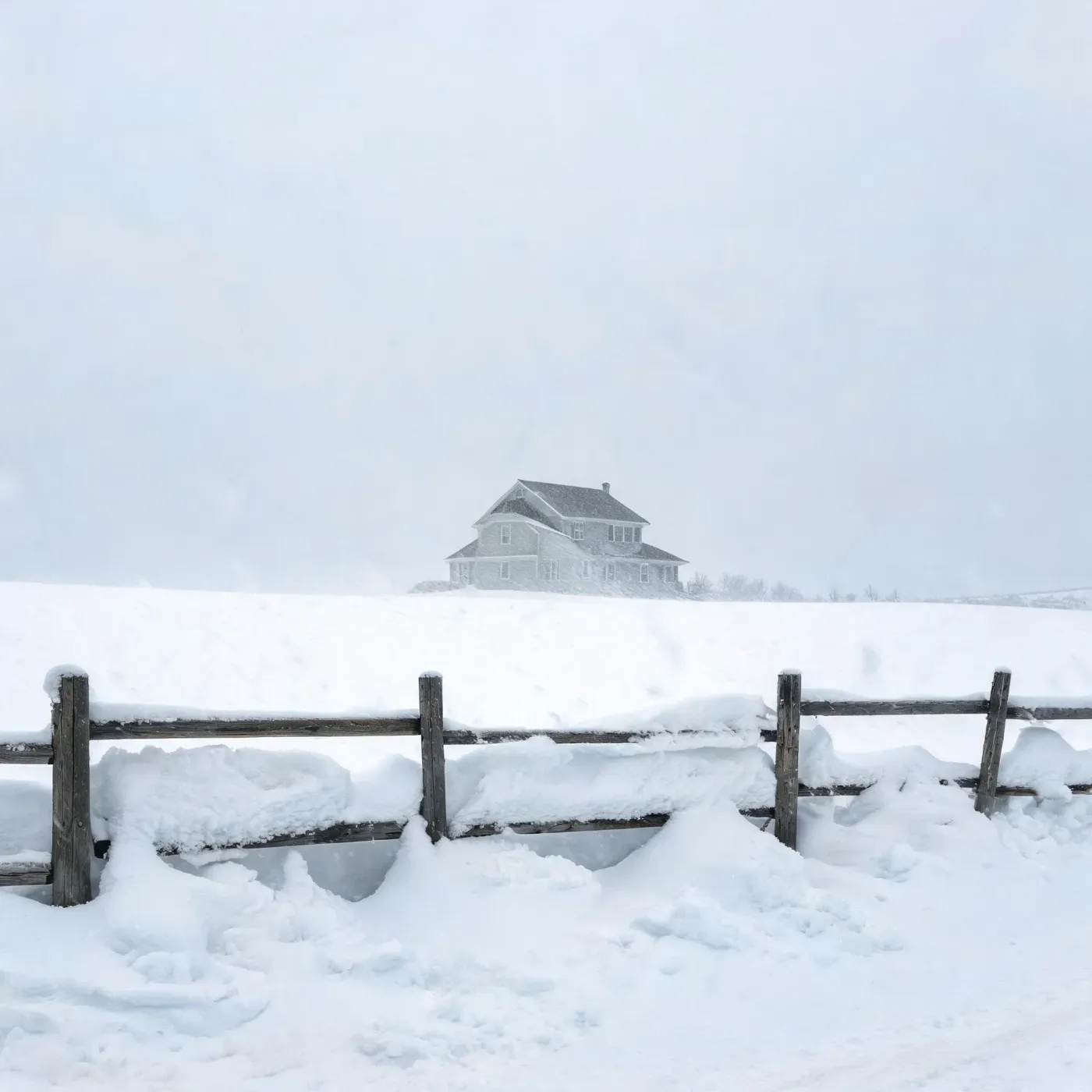
A two-story gabled house stands on a snow-covered rise under a pale overcast sky, with a snow-laden wooden rail fence crossing the foreground.

Winter nights statewide average 4°F, and your furnace is cycling on and off for hours to keep up with that. Each cycle heats the exchanger metal, then lets it cool, and a North Dakota winter runs that cycle over and over from one night to the next. That's the kind of use that eventually opens a hairline crack. At home you might notice the furnace running longer stretches than it used to, or kicking on more often than it seems like it should. If a crack has already started, more run time means more flexing at that same weak spot. Source: National Weather Service.

NOAA nClimDiv 1991-2020 county normals weighted by homes

An older beige furnace with a louvered vent panel stands on a concrete basement floor beside galvanized sheet-metal ductwork, a metal flue pipe and vertical pipes along a concrete wall.
Before you get your furnace repair
A beige high-efficiency furnace with white PVC vent pipes stands beside galvanized sheet-metal ductwork in a basement with a concrete floor, exposed wood studs, and metal piping along the wall.
After you get your furnace repair

Before you get your furnace repair

You're calling around for someone licensed to check a heat exchanger, explaining the smell and the ticking noise over and over, and weighing quotes with no way to tell who's right.

Hand it over

After you get your furnace repair

The form is sent and the search for a contractor is done. Someone qualified takes it from here, with a borescope and a combustion analyzer to tell you what's actually going on inside.

Hand it over

A cracked heat exchanger comes down to a few things you can check: a strange smell when the burners fire, soot or rust around the cabinet, ticking from inside the unit after it shuts off, a carbon monoxide detector that goes off for no clear reason. One of those on its own might mean nothing. A few together, in a furnace that's been cycling all winter, mean it's worth getting a straight answer. You don't have to figure out whether what you're hearing or smelling is serious. Once you send the form, you're done hunting for a licensed technician, done calling around to ask who even works on this, done explaining the smell and the ticking a second and third time to different people, done guessing at quotes with no way to tell who's giving you a fair one. A technician gets you that answer with a borescope and a combustion analyzer, in one visit, and you know where you stand instead of listening for the next tick and wondering.

A gas furnace with attached PVC and metal piping and sheet-metal ductwork stands on a concrete pad in a dim unfinished basement with concrete walls and exposed floor joists.

Done looking for a furnace pro

Describe your furnace job once, to one pro.

Step 1 of 3: Equipment