Profile view of a bearded man wearing a dark baseball cap and a dark gray T-shirt against a plain off-white background.

How long a furnace lasts in North Dakota

Step 1 of 3: Equipment

How long does a furnace last in North Dakota?

North Dakota winters put a furnace to work for months at a time, and once a system gets past the ten or fifteen year mark, it's natural to start wondering how much runway is left. You're not looking to replace it before you need to, but you also don't want to find out it's done in the middle of January.

15 to 20 years, if it's been kept up

A gas furnace in North Dakota typically runs 15 to 20 years. That range exists because of how hard the system works here. Heat runs for most of the year, often starting in September and not letting up until April or May, so the burner and blower log far more hours than they would somewhere milder. Cheap power doesn't change that math much, since it's the gas furnace doing the heavy lifting, not electric resistance. A furnace that's past 15 years and starting to cycle oddly, run longer than it used to, or need repairs more than once a season is closer to the end than the middle. One that's been serviced every year and still fires clean can often get closer to 20.

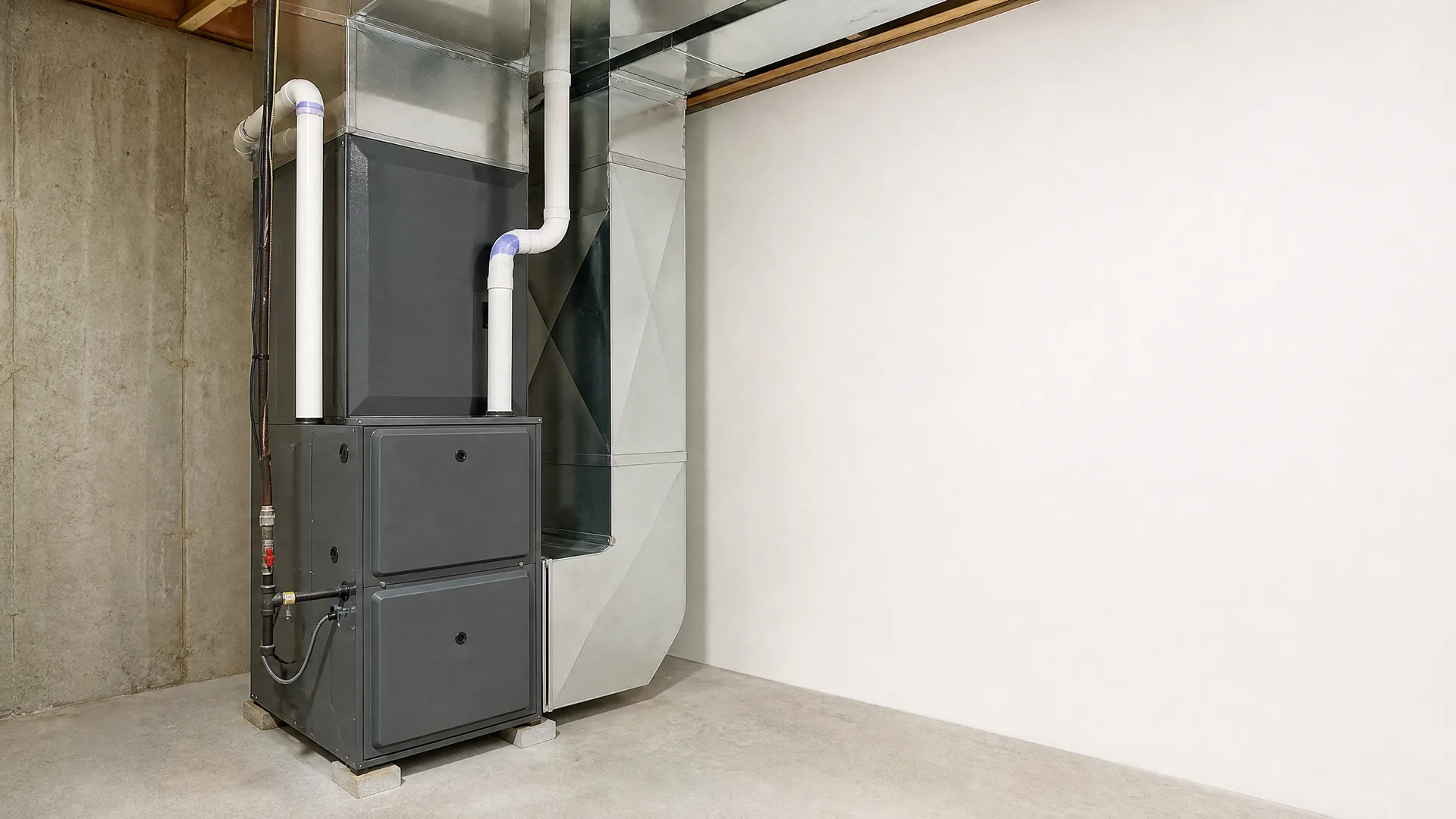
A gray high-efficiency furnace with white PVC venting pipes stands on blocks in a basement next to sheet-metal ductwork, with exposed wood framing on the left and a concrete wall and floor.

A furnace holding up

A furnace running the way it should heats evenly and cycles on and off without drama. The cabinet is clean, the flue and condensate lines are intact, and nothing around it smells like gas or exhaust. If yours still does this through a North Dakota winter, it's doing its job.


An older gas furnace with two white PVC vent pipes stands on a concrete basement floor beside galvanized sheet-metal ductwork, flexible conduit, and piping along a wall.

A furnace wearing out

Age shows up as longer cycles, cold rooms that used to heat fine, and a burner that takes a few tries to light. A furnace with a metal cabinet and a look like this one has likely been running for well over a decade. That's worth a second look before the cold really sets in.

A man in a gray sweater reclines in a brown leather armchair with his eyes closed, beside a wooden side table holding a mug, a folded newspaper and a potted plant, with a bookshelf and sunlit window behind him.
A man with greying hair and a dark sweater leans back on an armchair with his eyes closed and a slight smile, in a living room with a bookshelf, plant, folded newspaper and mug on a wooden table.
A man in a gray fleece jacket sits reclined in a leather chair with his eyes closed, in a room with bookshelves, a table lamp, a window, and a desk holding a folded newspaper and a dark mug.
A bearded man in a gray fleece pullover sits with eyes closed in a brown leather armchair in a living room, with a floor lamp, bookshelf, potted plants, a side table holding newspapers and a dark mug, and a bright window behind him.

15 to 20 years

That is the typical working life of a gas furnace. A system running longer than that in North Dakota has already outlasted a lot of winters.

Find a licensed furnace pro

One cold snap away

An aging furnace that struggles to keep up can fail during the stretch it's needed most. A local contractor can tell you if yours is close to that point.

Find a licensed furnace pro

Repair the Furnace or Replace It

Repair it

  • A cracked heat exchanger can't be patched, but an igniter, pressure switch, or draft inducer motor usually can be replaced in an afternoon.
  • If the furnace is under 15 years old and this is its first real breakdown, a repair gets you through this winter without a big outlay.
  • Parts stay available for most gas furnaces for years after they're built, so finding the right igniter or flame sensor isn't usually the holdup.
  • A single repair bill is easier to plan around than a full installation, especially if the failure hits mid-January.
  • Fixing what broke doesn't touch the cabinet, the heat exchanger, or anything else that's aged alongside the part that failed.

Replace it

  • Past 15 to 20 years, the parts failing one at a time are a sign the whole system is winding down, not a string of bad luck.
  • A new furnace carries a warranty on the heat exchanger and other major parts, so the next decade and a half isn't a gamble.
  • If the blower runs constantly or the burners cycle short, replacing the unit fixes the cause instead of chasing the next symptom.
  • A furnace sized and installed correctly for your house heats more evenly through a North Dakota winter than one that's been patched to keep up.
  • Paying for a repair on a furnace already past its expected life just delays the replacement cost without avoiding it.
A dark gray high-efficiency furnace with white PVC vent pipes stands against a concrete basement wall, connected to sheet-metal ductwork running along the ceiling joists.

What a failing furnace costs you here

A furnace that's struggling doesn't fail quietly. It runs longer to hit the same temperature, so the gas bill climbs before anything breaks outright. Rooms farthest from the furnace stop getting warm. You might notice the thermostat says 68 but the back bedroom feels closer to 60. By the time it short cycles or won't fire at all, you've likely been paying extra for weeks without knowing why.

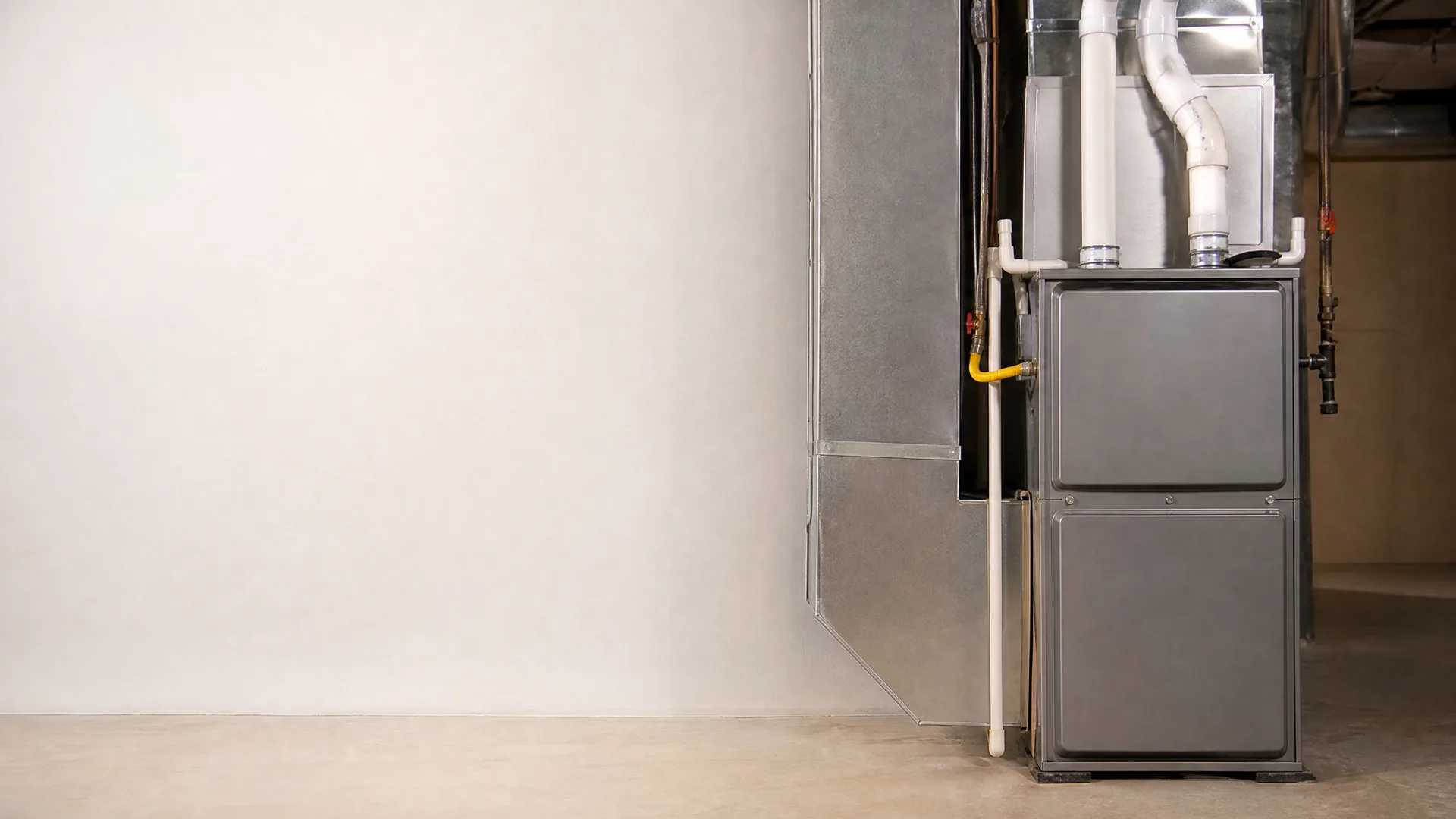
A gray high-efficiency furnace with white PVC vent pipes, a yellow gas line and metal ductwork stands against a plain light wall in a basement with a concrete floor.

What's at risk waiting it out

A furnace that quits in January doesn't wait for a convenient week. Pipes can freeze fast once the house loses heat, and in a place where the temperature doesn't climb back above freezing for days, that risk is real. Deciding now whether you're repairing or replacing means you're not making that call at 2 a.m. with the house getting cold and a contractor's schedule already full for the week.

Is your furnace telling you something right now

Walk past it tonight and pay attention. A furnace nearing the end runs longer to reach the same temperature, so you hear it more than you used to. It might start with a bang instead of a quiet whoosh, or take a few tries to catch. The air coming out of the vents feels cooler than it should. Some rooms lag behind others no matter how high you set the thermostat. You might catch a short burning smell when it first kicks on, or notice the pilot light or flame looks yellow instead of blue. None of this means tonight's the night it quits. But in a North Dakota winter, a furnace that's already struggling has less room to handle a hard cold snap, and that's when a small problem turns into no heat at all.

A beige high-efficiency furnace stands on a concrete basement floor beside sheet-metal ductwork, with white PVC vent pipes, flexible conduit and copper and steel piping running up a concrete wall to an electrical box.

Clean install, clear signs

A furnace set up right has tight, solid duct connections and flue and condensate lines running straight with no sagging or gaps. The gas line has a proper shutoff and the connectors sit secure. There's no dust buildup around the base, which usually means the air moving through it is doing what it should.

An older gas furnace with a louvered front panel stands on a concrete basement floor beside large sheet-metal ductwork, a metal flue pipe, copper piping and wood framing.

Age showing underneath

An older furnace like this one often sits under a layer of dust that's settled over years of running. The flue pipe and gas lines are original equipment, which tells you the furnace is too. If this is what yours looks like, it's worth having someone check the heat exchanger before next winter.

A gray-haired man in a blue quarter-zip sweater sits in an armchair with his eyes closed, beside a large window with bare trees outside and a potted plant and lamp nearby.
A woman in a cream knit sweater sits in an armchair indoors, eyes closed and smiling, beside a window showing yellow and orange autumn foliage, with a mug on a wooden side table and shelves holding vases behind her.
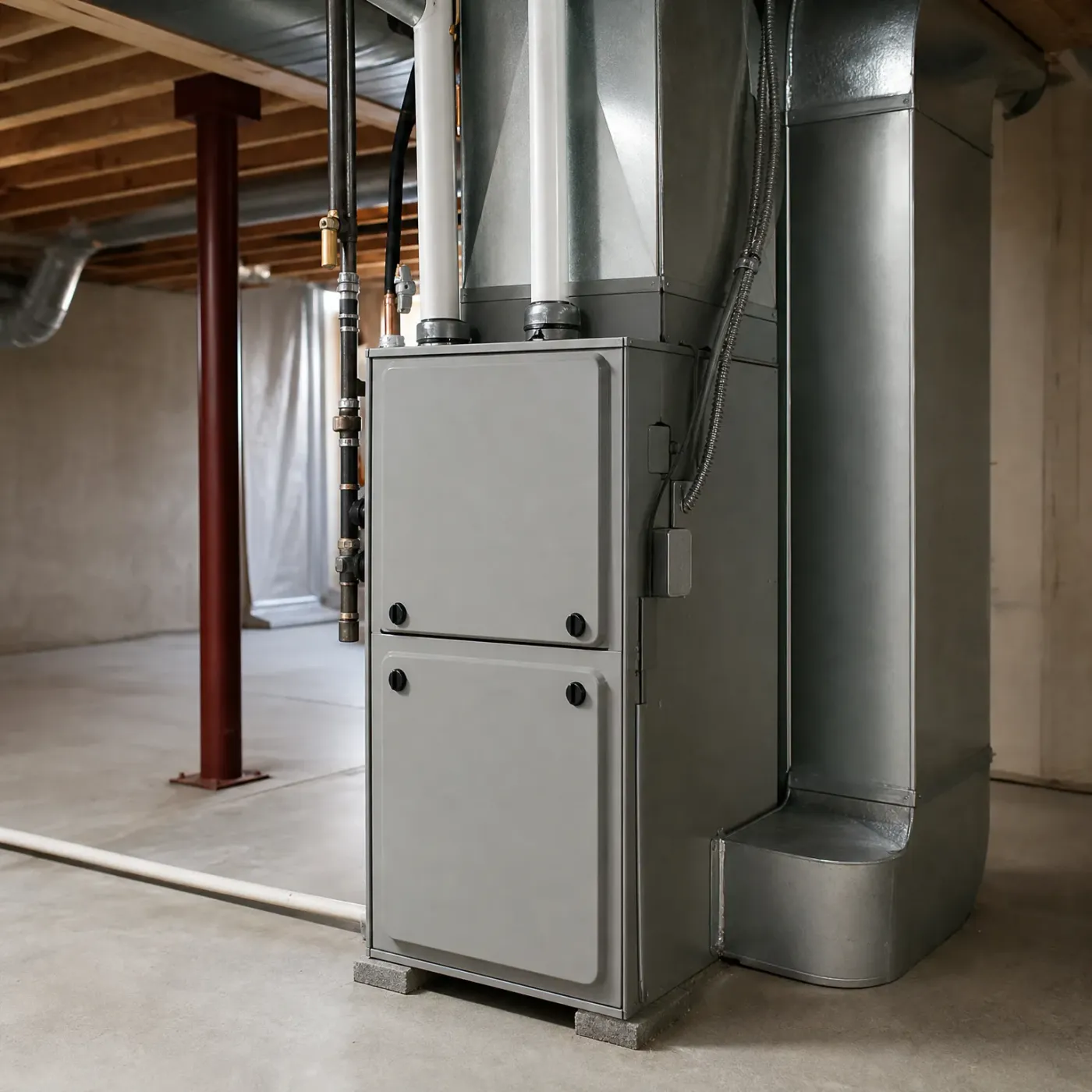
A gray high-efficiency furnace with two access panels stands on blocks in a basement, connected to sheet-metal ductwork, PVC vent pipes, flexible conduit, and gas and water piping, beside a red support column and exposed wood joists.

It's off your list after this

Your request stays with one local pro.

Send the form and stop researching installers for the new furnace.

Get one local pro

You only hire the pro if you want to.

A gray high-efficiency furnace with white PVC vent pipes stands in an unfinished basement beside sheet-metal ductwork, gas piping, and insulated stud walls on a concrete floor.
A high-efficiency furnace like this vents through PVC, and when the lines run clean with no soot or staining, it's drawing and exhausting the way it should.
A beige sheet-metal furnace with a louvered upper panel stands on a concrete basement floor, connected to galvanized ductwork, white PVC vent pipes, and a metal gas line with an electrical box.
Galvanized ductwork and a louvered cabinet like this are common on older mid-efficiency furnaces, and once the metal starts showing rust, the cabinet underneath is usually not far behind.
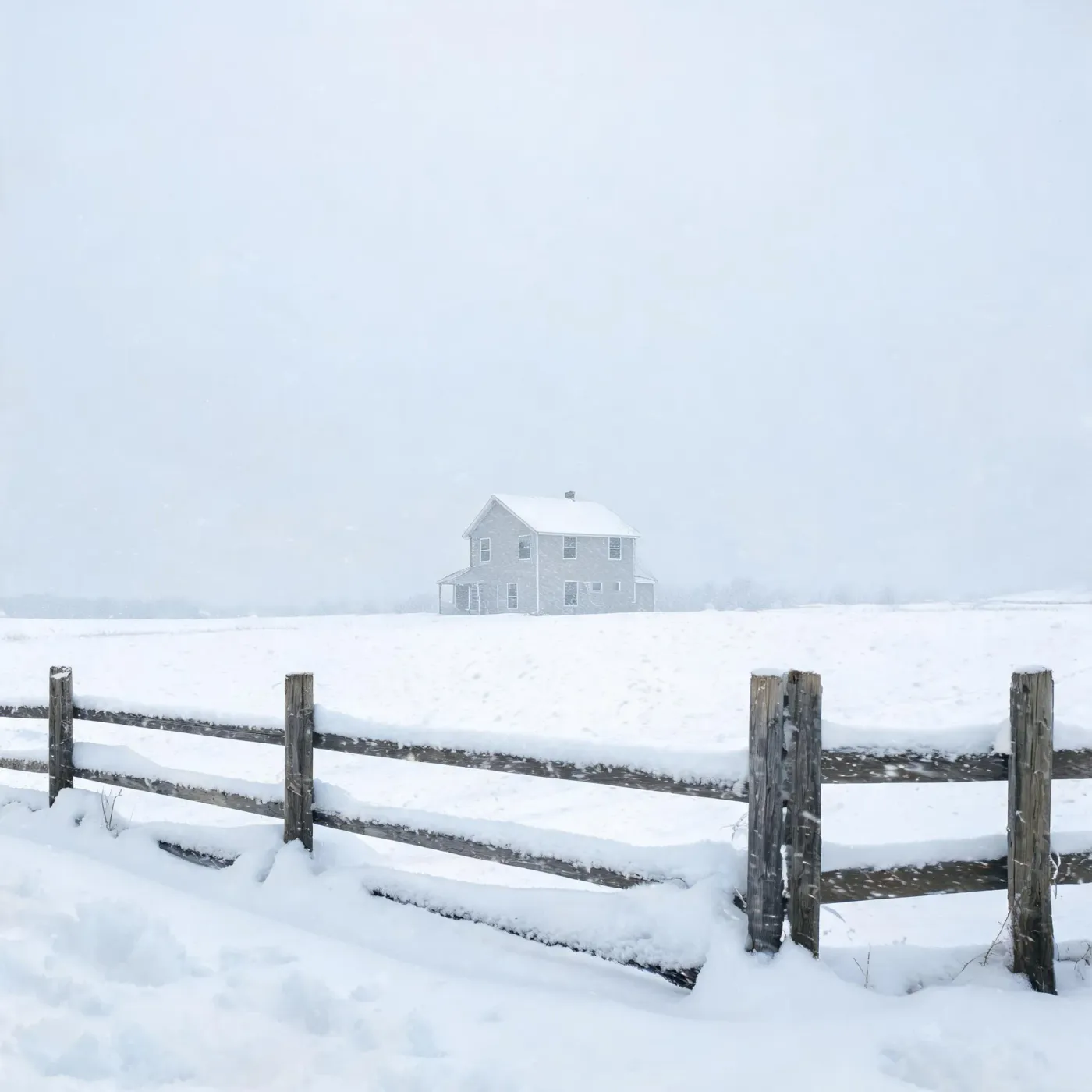
A two-story light-colored house stands alone in a snow-covered field under a pale sky, with a weathered wooden rail fence in the foreground.

Winter nights average 4°F across North Dakota, per the National Weather Service. That's the kind of cold a furnace can't ease into. It has to hit target temperature and hold it for hours on end, often running through the whole night without a real break. The burner cycles longer, the blower runs more, and every part in the system logs more hours than it would somewhere milder. Over a decade or two, that adds up faster here than in most places. If your furnace is already past 15 years, nights like these are exactly what wear it down, and exactly when you'd notice it struggling to keep the house at temperature.

NOAA nClimDiv 1991-2020 county normals weighted by homes

An older gas furnace with louvered panels sits on a concrete pad in a basement, connected to sheet-metal ductwork and PVC and metal pipes, with a water heater and wooden stair framing in the background.
Before you get your furnace installation
A gray high-efficiency furnace with white PVC vent pipes stands beside galvanized sheet-metal ductwork in a basement with a concrete floor, with a wooden staircase and railing at left.
After you get your furnace installation

Replacing now, on your schedule

Replacing a furnace in September or October means picking the unit, the size, and the install date without anything forcing your hand. A contractor can size it to your house properly, walk you through venting options, and schedule the work for a day that's convenient. If the old furnace still runs, it can keep heating the house while you wait for install day. There's no pressure to accept whatever's sitting in a warehouse, and no space heaters running in the meantime. You get to ask questions and think it over before anything's torn out.

Replacing after it quits

Replacing a furnace after it fails in January looks different. Whoever answers the call first gets the job, whether or not they're the best fit for your house. The unit installed is whatever's in stock nearby, not necessarily the size or model you'd have picked with time to compare. Meanwhile the house is cooling off, pipes are a concern, and someone in the home may need to go stay somewhere warmer for a night or two. None of this means a rushed install is a bad one. It just means fewer of the choices are yours.

Winter nights average 4°F statewide

At 4 below zero, your furnace isn't cycling, it's holding a line all night long. That kind of steady load is what wears out an igniter or a blower motor years before a milder state would see it happen.

NOAA nClimDiv 1991-2020 county normals weighted by homes

Where your furnace stands now

  • Fifteen to twenty years is the range for a gas furnace here, and a hard North Dakota winter uses up every bit of that life.
  • A furnace that bangs on startup, runs long, or heats one room better than another is past due for a look.
  • Once a heat exchanger cracks, replacement is the only safe option, no matter how many winters the furnace has left in theory.
  • A local contractor who services this equipment every winter knows which parts tend to go first in this kind of cold.
  • Matching with one licensed local contractor means a single point of contact, not a round of competing calls to sort through.
  • Whatever shape your furnace is in, you now know what to check and what it means for how much longer it runs.

A gas furnace in North Dakota has fifteen to twenty years in it, and the cold here spends that life faster than a milder state would. If yours bangs on startup, runs longer than it used to, or leaves one room colder than the rest, that's the system telling you where it stands. None of that means you're buying a furnace today. It means you know what to watch, and what it means if it gets worse.

A cracked heat exchanger is the one thing that ends the conversation regardless of age. Everything else, an igniter, a pressure switch, a draft inducer motor, can usually be repaired. That's worth knowing before anyone tells you otherwise.

If a repair isn't enough, or the furnace is simply at the end of its years, the contractor who looks at it should be someone who works on this equipment all winter in this state, not somewhere warmer. That's who knows which part tends to fail first at four below zero, and what a furnace needs to hold up through a North Dakota winter rather than just survive one. The match you'd get through this page is a single contractor, licensed and local, so you're dealing with one call back and one person who knows the system, not a handful of competing bids to sort through on top of everything else. Whatever shape your furnace is in tonight, you now have a way to check it and someone local to call when it's time.

A curving paver walkway runs alongside a house with beige lap siding and a white-trimmed window, bordered by low shrubs, grassy plants, and trees in sunlight.
A dark-framed casement window with divided upper panes set in a stucco wall beside a stone-clad section, with hydrangeas, hostas and trimmed shrubs in a mulched bed above a lawn.
White horizontal lap siding wall with a single six-pane double-hung window, above a mulched bed of hydrangea shrubs with browning blooms, bordered by mown grass in low sunlight.
Interior corner with tan plaster walls, a potted olive tree in a large terracotta urn beside a floor-to-ceiling window, and a wooden bench with a beige cushion on a herringbone brick floor partly covered by a woven jute rug.
A wooden bench beneath a window holds a green linen cushion and a fringed cream throw, with a woven basket stored underneath on a wood plank floor.

Stop chasing a furnace pro

Your request goes to one pro, not a list of companies.

Find a licensed pro

Asking costs nothing, and the choice to hire stays yours.