Tell us about the job
Takes about a minute. No obligation.
A furnace in McKenzie County puts its burner and ignition system through a heavy cycle load every year. Homes in McKenzie County, ND run heat about nine months a year, from September through May. By late spring, an igniter that was already worn has been firing daily for months, and a heat exchanger that had a hairline crack in August has been flexing through thousands of thermal cycles since. A contractor quoting a repair here checks those parts first, because that is where the accumulated wear actually shows up.
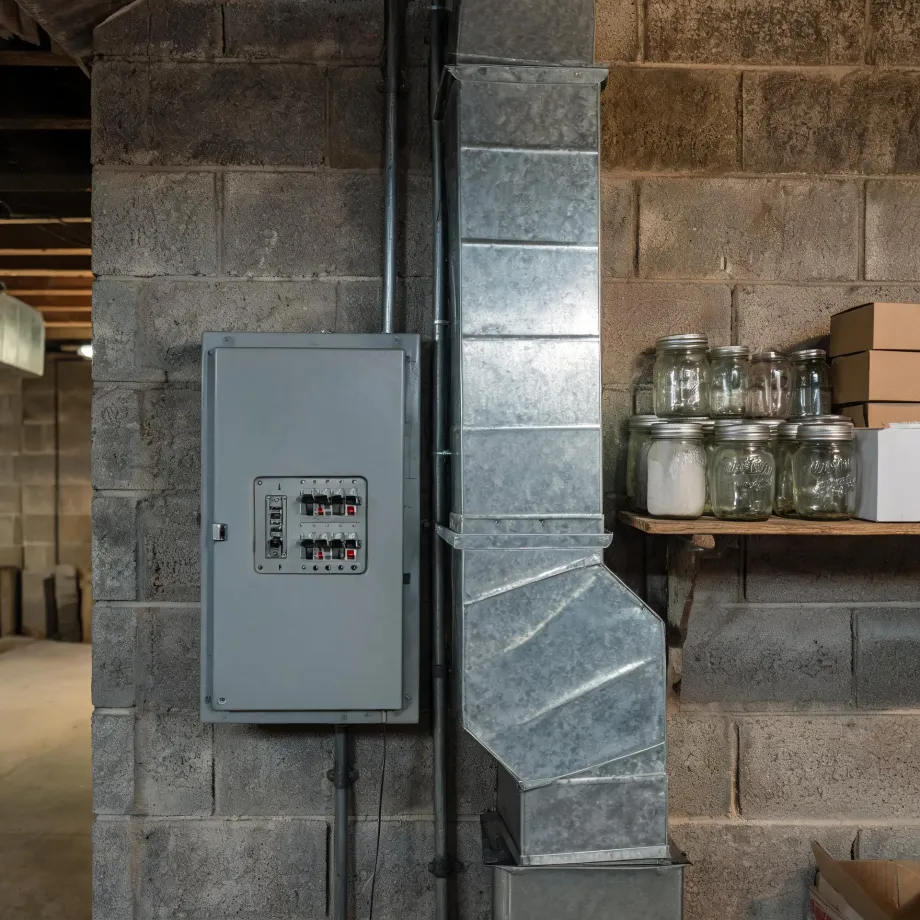
Half the homes in McKenzie County, North Dakota were built in 2011 or earlier (2020-2024 ACS 5-year). That puts the median build of this county's housing stock within a range where the ductwork and furnace configurations were not cobbled together from an earlier era. When a furnace fails here, the repair turns on what the opened unit actually contains: heat exchanger condition, control board state, the wear pattern on the inducer. The house itself is unlikely to be complicating that picture. A contractor who prices the repair around structural or duct constraints specific to the building's age is solving for something this stock does not present.
The Parts of a Furnace a Contractor Checks First
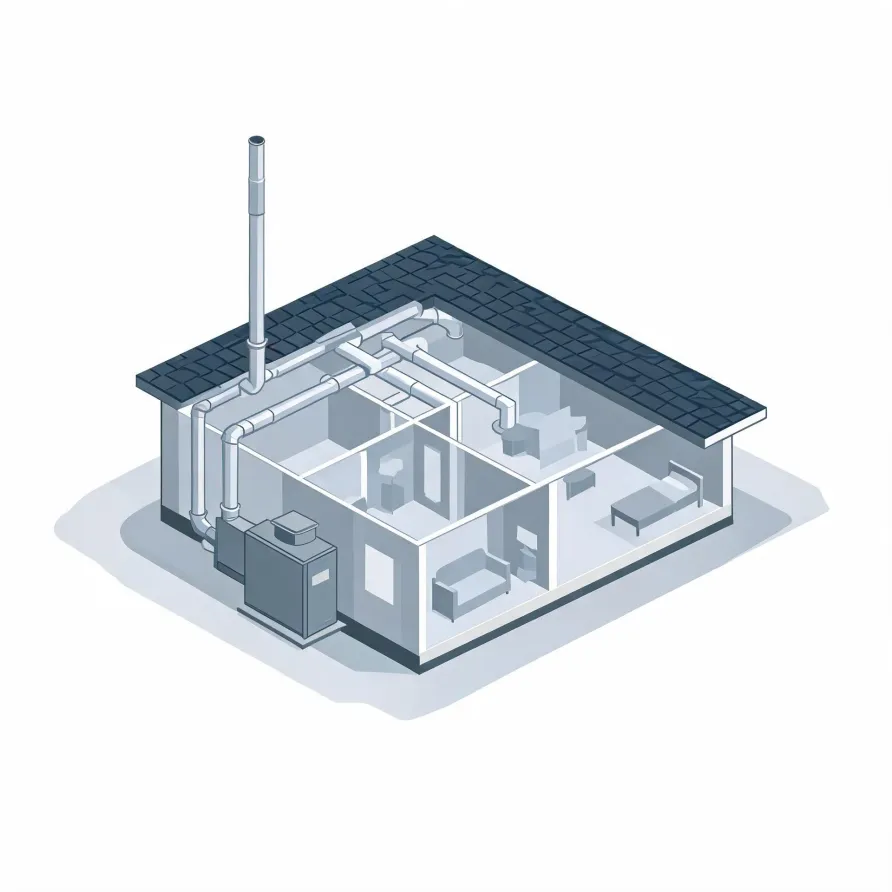
The furnace itself sits in a utility space, basement, or closet and is the piece that produces the heat. Inside it, the heat exchanger, burners, and blower motor each carry a share of the work. When a furnace stops heating or behaves erratically, a contractor starts here, because a failed igniter, a cracked heat exchanger, or a seized blower motor each produces its own distinct set of symptoms.
The flue pipe exits the furnace and vents combustion gases out through the wall or roof. The filter housing sits at the air return, and the thermostat mounts on a living-area wall and signals the furnace to fire. A failing thermostat or a clogged filter can mimic a mechanical problem inside the furnace itself, so a contractor checks both before opening the cabinet.
The drawing shows a typical layout, and a licensed contractor determines which components apply to your specific house and system.
Find a contractor in McKenzie CountyMcKenzie County, by the numbers
167 severe weather events were recorded in McKenzie County, North Dakota between 2015 and 2024.
NOAA National Centers for Environmental Information, Storm Events Database, bulk CSV export, events 2015-01-01 through 2024-12-31.Half the homes in McKenzie County, North Dakota were built in 2011 or earlier (2020-2024 ACS 5-year).
U.S. Census Bureau, 2020-2024 American Community Survey 5-Year EstimatesMcKenzie County, North Dakota holds 7,752 housing units (2020-2024 ACS 5-year).
U.S. Census Bureau, 2020-2024 American Community Survey 5-Year EstimatesOwners occupy 53.4% of the occupied homes in McKenzie County, North Dakota (2020-2024 ACS 5-year).
U.S. Census Bureau, 2020-2024 American Community Survey 5-Year EstimatesCodes & Standards Governing Furnace Repair in McKenzie County, North Dakota5 sourced rules and standards
What HVAC Repair Looks Like in McKenzie County
Non-weatherized gas furnaces manufactured on or after November 19, 2015 must reach 80.0 percent AFUE.
Non-weatherized oil-fired furnaces manufactured on or after November 19, 2015 must reach 83.0 percent AFUE.
Mobile home gas furnaces manufactured on or after November 19, 2015 must reach 80.0 percent AFUE.
Non-weatherized gas furnaces manufactured on or after December 18, 2028 must reach 95.0 percent AFUE, up from the 80.0 percent minimum that applies to units manufactured before that date.
Licensing Rules for HVAC Repair in McKenzie County, North Dakota
North Dakota requires a contractor licence once the cost, value or price of a job exceeds four thousand dollars, and an unlicensed contractor may not bring a claim or a lawsuit in a North Dakota court over the work.
Severe Weather Events in McKenzie County
Hard weather puts real hours on a furnace. What drives repair frequency in McKenzie County is largely a local question, and the pattern of recorded weather events here is part of that answer.
167 severe weather events, 2015–2024. Source: NOAA National Centers for Environmental Information, Storm Events Database.