Tell us about the job
Takes about a minute. No obligation.
Sizing a furnace correctly here matters more than it does in places where the heating system gets a long rest. Homes in Richland County, ND run heat about nine months a year, from September through May. The burner, heat exchanger, and ignition system cycle repeatedly across those months, and a unit that was undersized at install or sealed poorly at the plenum starts showing that in the components that work hardest. A contractor quoting a replacement in this county has to run a proper load calculation before settling on equipment, because a furnace that is off by even a modest margin runs longer cycles to compensate, and there is little off-season for wear to stay hidden.
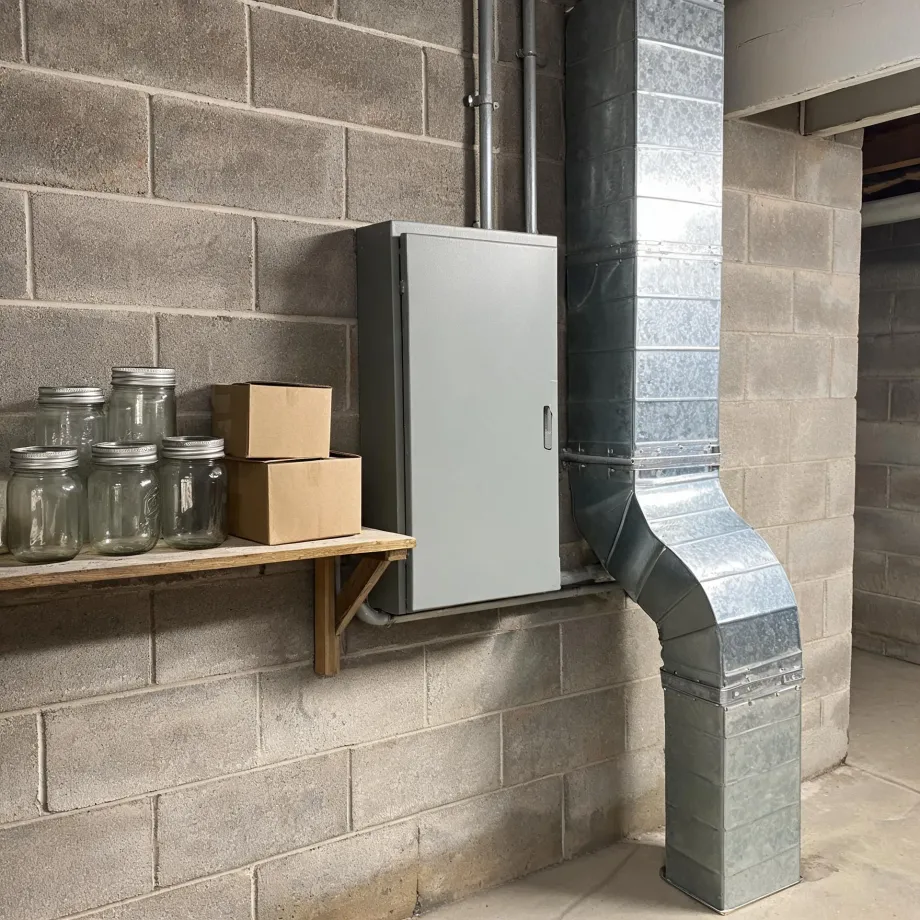
Existing ductwork is what drives an installation quote here. Half the homes in Richland County, North Dakota were built in 1972 or earlier (2020-2024 ACS 5-year). A furnace built for today's efficiency ratings pushes more air, moves it differently, and draws on electrical service in ways the original builders did not plan for. A contractor will open registers, check trunk lines, and look at the panel before the new unit is even selected, because what the house already contains sets the scope as much as the equipment does.
What Gets Installed With a New Furnace
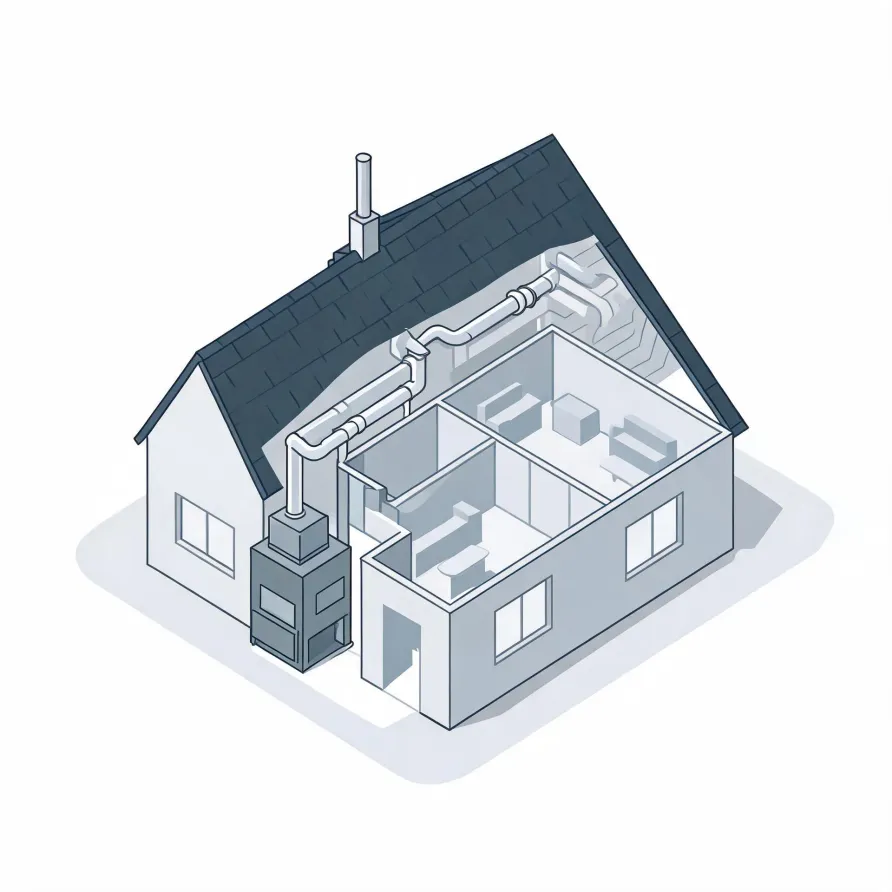
The furnace itself sits in a utility space, basement, or mechanical room and is the box that generates heat for the house. A burner assembly inside it produces heat from natural gas or propane, and a heat exchanger transfers that warmth to moving air. The blower motor pushes that air out into the home.
The flue pipe runs from the furnace to an exterior wall or through the roof, carrying combustion gases out of the house. A thermostat mounts on an interior wall and tells the furnace when to fire and when to shut down. The filter housing sits at the air return and holds the filter that keeps debris out of the system.
The drawing shows the general layout of a furnace system, and a licensed contractor determines what applies to your specific house.
Find a contractor in Richland CountyRichland County, by the numbers
197 severe weather events were recorded in Richland County, North Dakota between 2015 and 2024.
NOAA National Centers for Environmental Information, Storm Events Database, bulk CSV export, events 2015-01-01 through 2024-12-31.Half the homes in Richland County, North Dakota were built in 1972 or earlier (2020-2024 ACS 5-year).
U.S. Census Bureau, 2020-2024 American Community Survey 5-Year EstimatesRichland County, North Dakota holds 7,530 housing units (2020-2024 ACS 5-year).
U.S. Census Bureau, 2020-2024 American Community Survey 5-Year EstimatesOwners occupy 68.1% of the occupied homes in Richland County, North Dakota (2020-2024 ACS 5-year).
U.S. Census Bureau, 2020-2024 American Community Survey 5-Year EstimatesFurnace Installation Rules and Codes for Richland County, North Dakota5 sourced standards and regulations
What the Installation Actually Looks Like
Non-weatherized gas furnaces manufactured on or after November 19, 2015 must reach 80.0 percent AFUE.
Non-weatherized oil-fired furnaces manufactured on or after November 19, 2015 must reach 83.0 percent AFUE.
Mobile home gas furnaces manufactured on or after November 19, 2015 must reach 80.0 percent AFUE.
Non-weatherized gas furnaces manufactured on or after December 18, 2028 must reach 95.0 percent AFUE, up from the 80.0 percent minimum that applies to units manufactured before that date.
Licensing and Legal Requirements in Richland County, North Dakota
North Dakota requires a contractor licence once the cost, value or price of a job exceeds four thousand dollars, and an unlicensed contractor may not bring a claim or a lawsuit in a North Dakota court over the work.
Severe Weather Events in Richland County
Weather in Richland County puts real demands on heating equipment, and those demands vary by how hard local conditions push a system over time. A furnace sized and installed for this climate works differently than one that was not.
197 severe weather events, 2015–2024. Source: NOAA National Centers for Environmental Information, Storm Events Database.