Tell us about the job
Takes about a minute. No obligation.
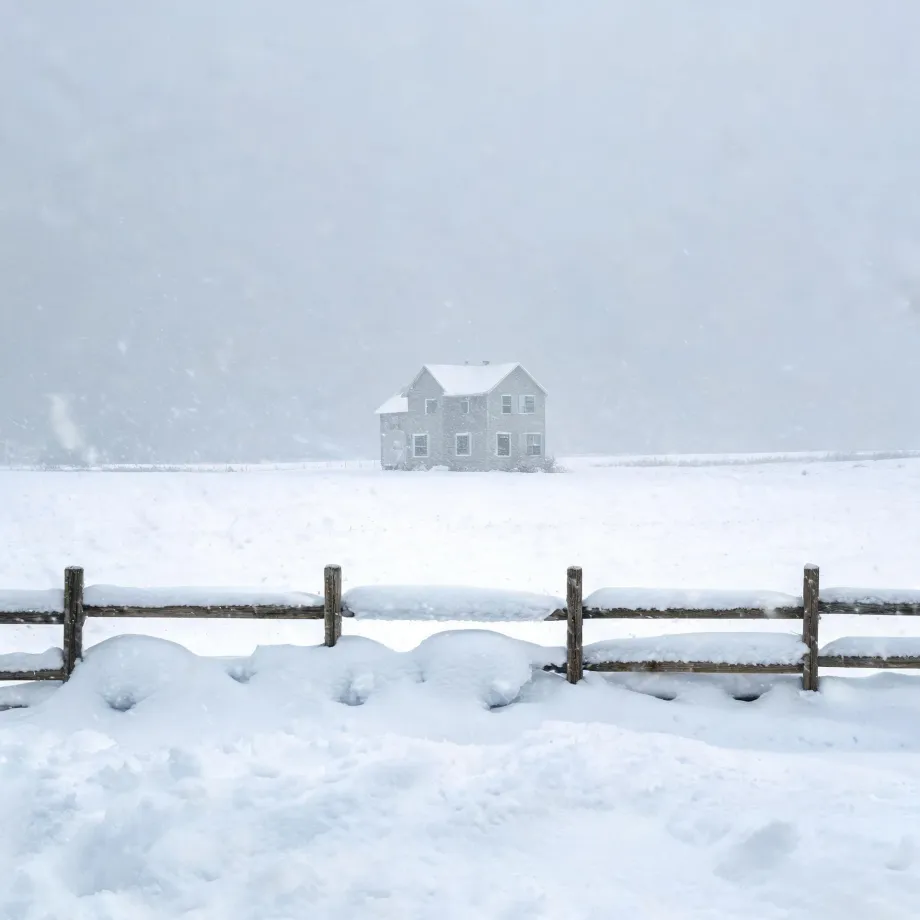
Sizing a furnace for McHenry County starts with how long the burner actually runs. Homes in McHenry County, ND run heat about nine months a year, from September through May. A heat exchanger and ignition system cycling through that span accumulate wear in ways that a rushed or generic install accelerates. If a contractor underestimates the heating load or leaves airflow unbalanced, the furnace compensates by running longer cycles, and the burner assembly takes that strain every time. Getting the load calculation right before equipment is ordered is what determines whether a new furnace performs or labors through each successive winter.
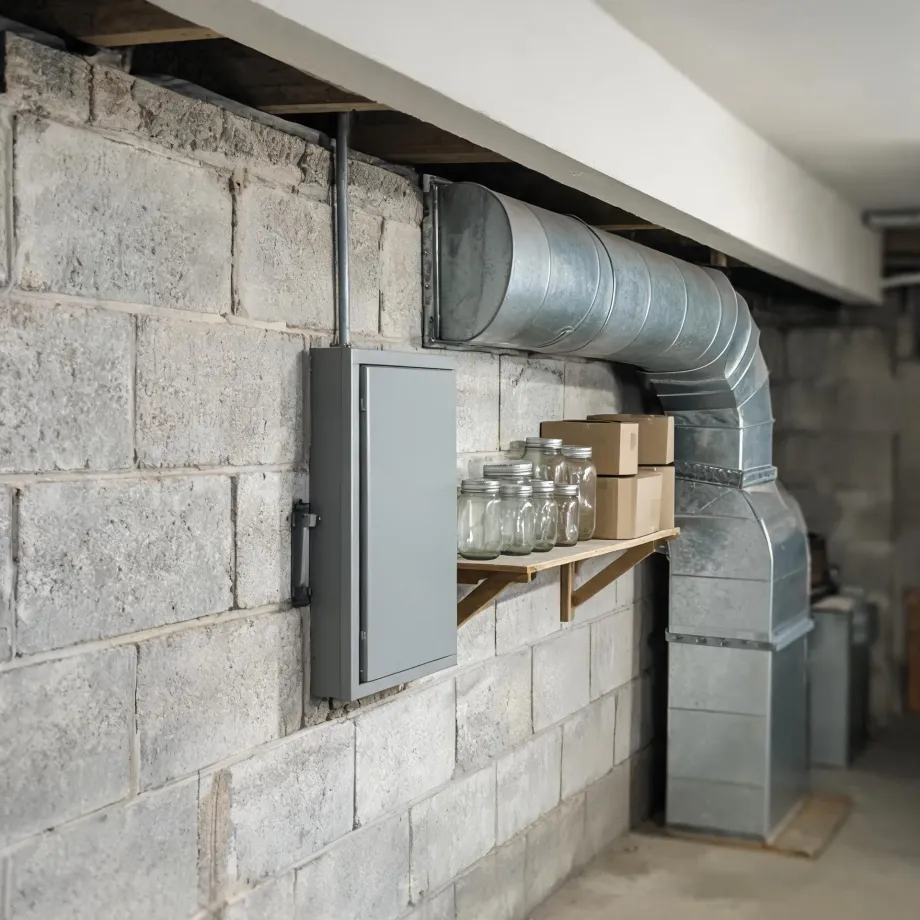
Ductwork laid down for an earlier generation of equipment is what a contractor has to assess before any other decision gets made on a furnace installation here. Half the homes in McHenry County, North Dakota were built in 1966 or earlier (2020-2024 ACS 5-year). That vintage of construction was ducted around systems whose sizing and airflow assumptions differ from what a new furnace delivers, and a run that looked adequate for the old unit may restrict the new one. Electrical service is a second check. What the contractor finds in both determines the scope of the job before any equipment is ordered.
What Gets Installed With a New Furnace
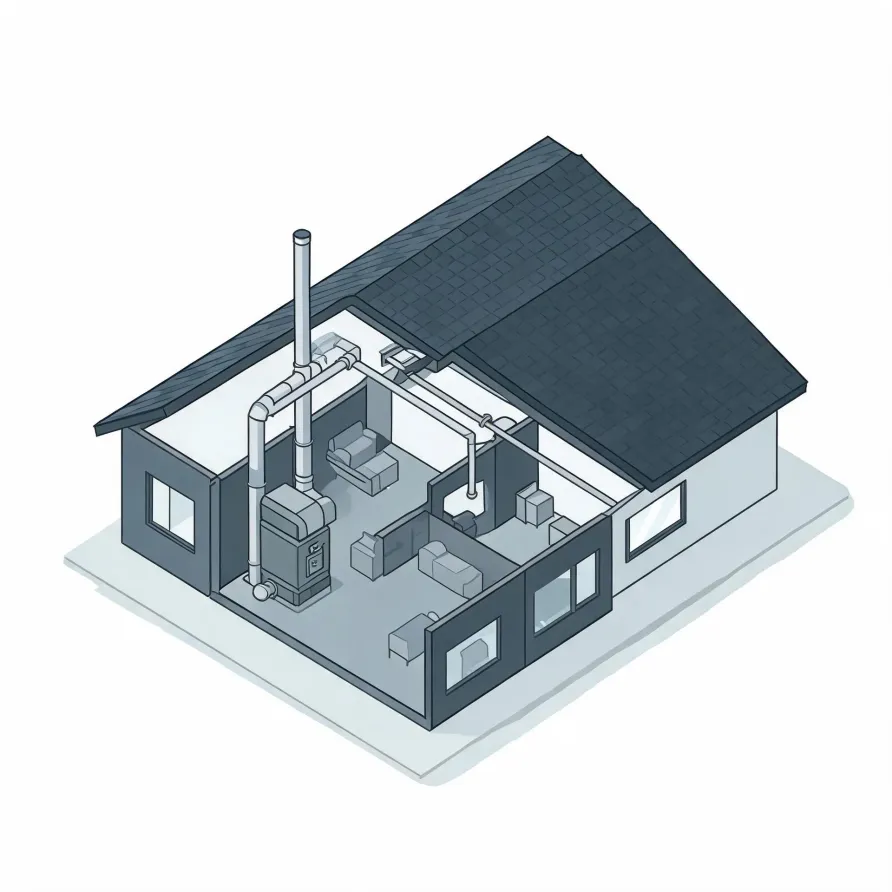
The furnace itself sits in a mechanical room, basement, or utility closet and is the unit a homeowner sees most clearly. It houses the heat exchanger and the blower, which together pull air through the system and push it out warm. The thermostat mounts on a main living-area wall and is what the homeowner touches to set temperatures.
The flue pipe runs from the furnace to an exterior wall or through the roof, carrying combustion gases out of the house. A filter housing or rack sits at the air return inlet, usually where the large return grille meets the equipment. On high-efficiency units a condensate drain line also runs to a floor drain or utility sink nearby.
The drawing shows a typical layout, and a licensed contractor determines exactly what applies to this house based on what is already there and how it is built.
Find a contractor in McHenry CountyMcHenry County, by the numbers
123 severe weather events were recorded in McHenry County, North Dakota between 2015 and 2024.
NOAA National Centers for Environmental Information, Storm Events Database, bulk CSV export, events 2015-01-01 through 2024-12-31.Half the homes in McHenry County, North Dakota were built in 1966 or earlier (2020-2024 ACS 5-year).
U.S. Census Bureau, 2020-2024 American Community Survey 5-Year EstimatesMcHenry County, North Dakota holds 2,833 housing units (2020-2024 ACS 5-year).
U.S. Census Bureau, 2020-2024 American Community Survey 5-Year EstimatesOwners occupy 81.4% of the occupied homes in McHenry County, North Dakota (2020-2024 ACS 5-year).
U.S. Census Bureau, 2020-2024 American Community Survey 5-Year EstimatesFurnace Installation Rules for McHenry County, North Dakota5 sourced standards and codes
What HVAC Installation Looks Like in McHenry County
Non-weatherized gas furnaces manufactured on or after November 19, 2015 must reach 80.0 percent AFUE.
Non-weatherized oil-fired furnaces manufactured on or after November 19, 2015 must reach 83.0 percent AFUE.
Mobile home gas furnaces manufactured on or after November 19, 2015 must reach 80.0 percent AFUE.
Non-weatherized gas furnaces manufactured on or after December 18, 2028 must reach 95.0 percent AFUE, up from the 80.0 percent minimum that applies to units manufactured before that date.
Licensing Rules for McHenry County, North Dakota
North Dakota requires a contractor licence once the cost, value or price of a job exceeds four thousand dollars, and an unlicensed contractor may not bring a claim or a lawsuit in a North Dakota court over the work.
Severe Weather Events in McHenry County
Weather in McHenry County puts real demands on heating equipment. A furnace that fits the local climate lasts longer and costs less to run, which is why installation decisions here are not the same as they are somewhere else.
123 severe weather events, 2015–2024. Source: NOAA National Centers for Environmental Information, Storm Events Database.