Tell us about the job
Takes about a minute. No obligation.
Sizing a furnace for Traill County is not a calculation a contractor can guess at and correct later. Homes in Traill County, ND run heat about nine months a year, from September through May. The burner and heat exchanger cycle through that entire run, and a unit that was spec'd too small short-cycles, which loads the heat exchanger harder than sustained firing does. An installer who skips a proper load calculation here leaves the homeowner with a system that reveals the mistake during peak demand, not during a mild stretch when adjustments are easy.
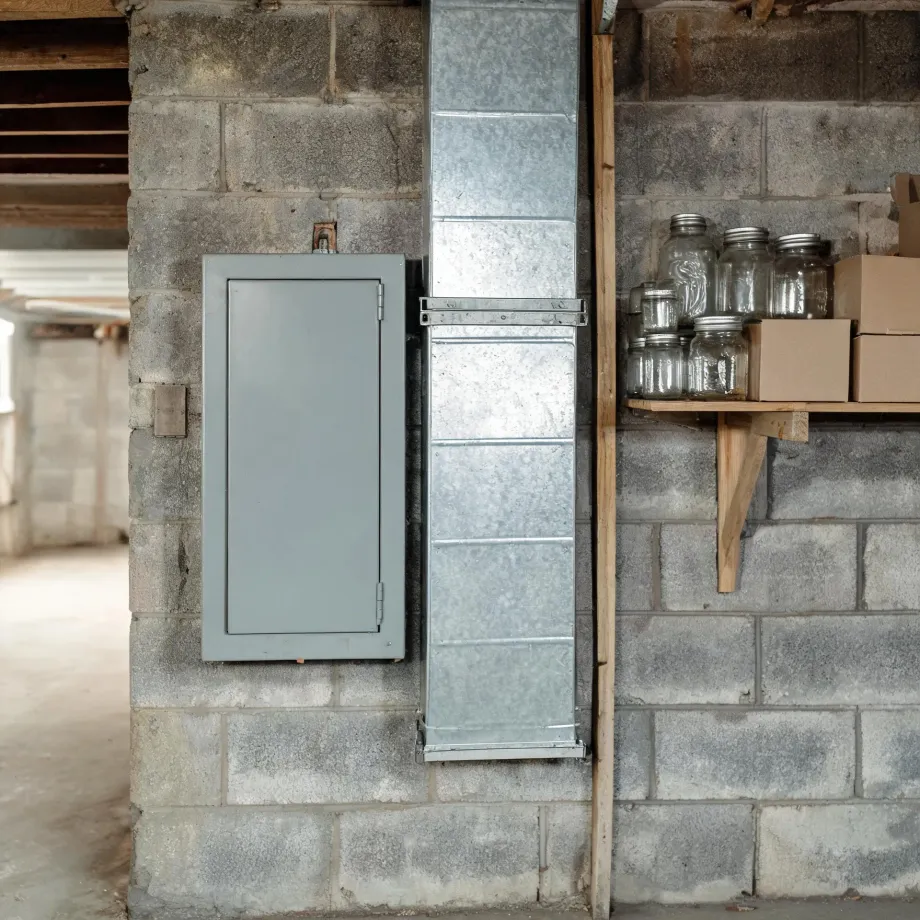
Ductwork sized and routed for equipment that has since been replaced twice over is what a contractor runs into in a significant share of Traill County houses. Half the homes in Traill County, North Dakota were built in 1964 or earlier (2020-2024 ACS 5-year). That depth of housing history means the duct layout a new furnace has to connect to was designed around a system with different static pressure requirements, different return air assumptions, and different branch sizing. The unit itself can be specified in an afternoon. What takes longer is determining whether the existing trunk and branch configuration will move air the way the new furnace needs it to, or whether sections of it have to be rebuilt before the install makes sense.
What Gets Installed With a New Furnace
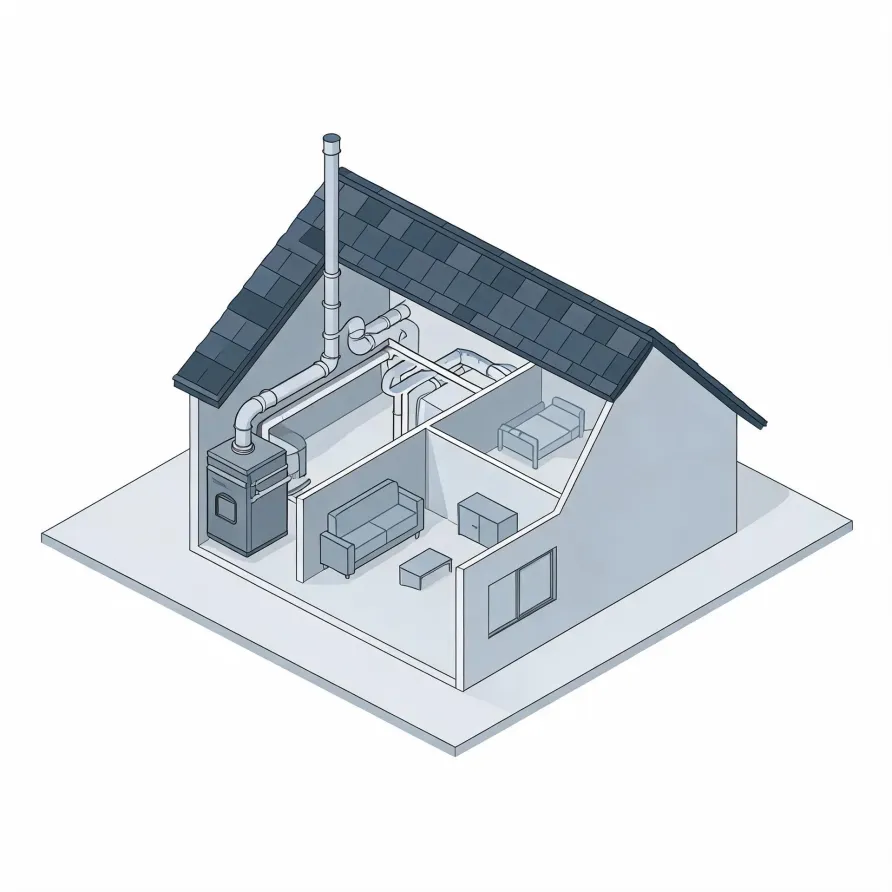
The furnace itself sits in the basement, utility room, or mechanical closet and is the unit that produces heat for the house. A heat exchanger inside it transfers heat to the air moving through, and a burner assembly below that holds the gas valve and igniter that start combustion.
The blower motor sits inside the furnace cabinet and pushes conditioned air out through the supply side of the duct system. The flue pipe exits the top or side of the cabinet and runs to an exterior wall or up through the roof, carrying combustion gases out of the house. A thermostat on an interior wall ties the whole system together, signaling the furnace when to fire and when to stop.
The drawing shows a typical layout, and a licensed contractor determines what applies to your specific house and setup.
Find a contractor in Traill CountyTraill County by the numbers
187 severe weather events were recorded in Traill County, North Dakota between 2015 and 2024.
NOAA National Centers for Environmental Information, Storm Events Database, bulk CSV export, events 2015-01-01 through 2024-12-31.Half the homes in Traill County, North Dakota were built in 1964 or earlier (2020-2024 ACS 5-year).
U.S. Census Bureau, 2020-2024 American Community Survey 5-Year EstimatesTraill County, North Dakota holds 3,664 housing units (2020-2024 ACS 5-year).
U.S. Census Bureau, 2020-2024 American Community Survey 5-Year EstimatesOwners occupy 74.3% of the occupied homes in Traill County, North Dakota (2020-2024 ACS 5-year).
U.S. Census Bureau, 2020-2024 American Community Survey 5-Year EstimatesFurnace Installation Rules for Traill County, North Dakota5 codes & standards
What HVAC Installation Looks Like in Traill County
Non-weatherized gas furnaces manufactured on or after November 19, 2015 must reach 80.0 percent AFUE.
Non-weatherized oil-fired furnaces manufactured on or after November 19, 2015 must reach 83.0 percent AFUE.
Mobile home gas furnaces manufactured on or after November 19, 2015 must reach 80.0 percent AFUE.
Non-weatherized gas furnaces manufactured on or after December 18, 2028 must reach 95.0 percent AFUE, up from the 80.0 percent minimum that applies to units manufactured before that date.
Licensing and Legal Requirements for HVAC Installation in Traill County, North Dakota
North Dakota requires a contractor licence once the cost, value or price of a job exceeds four thousand dollars, and an unlicensed contractor may not bring a claim or a lawsuit in a North Dakota court over the work.
Severe Weather Events in Traill County
Weather in Traill County puts real demands on heating equipment, and those demands shape what a furnace needs to handle over its working life. What gets installed here should be sized and specified for conditions here, not for some average place.
187 severe weather events, 2015–2024. Source: NOAA National Centers for Environmental Information, Storm Events Database.